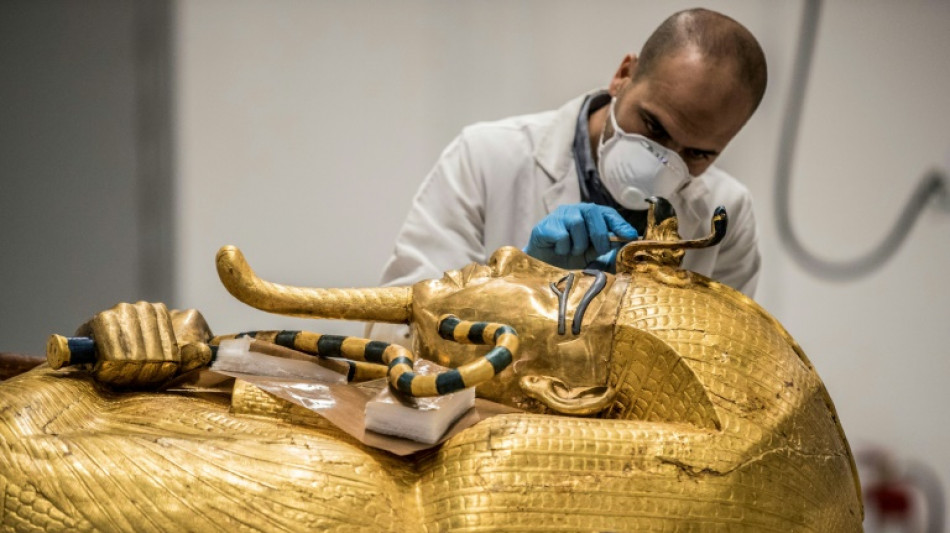
Egyptian conservators give King Tut's treasures new glow / Photo: Khaled DESOUKI - AFP/File

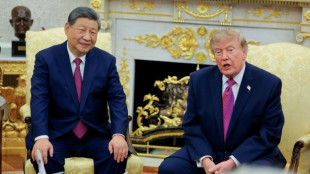
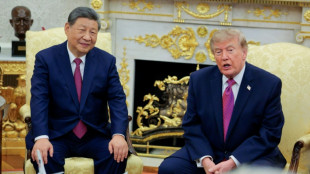
 Trump's photo of Xi greeting carries signs of AI

 First US trial against TikTok to open Monday

 French literary prize removes novel from longlist after AI claims

 Trump accuser E. Jean Carroll finally has her damages

 Heavy fighting, internet disruption as Ethiopia conflict rages

 Asian markets mixed after oil gains

 UN approves resolution on dealing with rising sea levels
 Global stocks mostly fall as oil prices and bond yields rise

 Starbucks to close 250 more cafes in North America

 Stocks fall as oil prices rise and bonds back under pressure

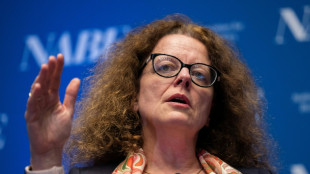 Top ECB official to resign to take up IMF role

 Eviction of pensioner puts Spain housing crisis in spotlight
 Average EU diesel price hits record 2.23 euros a litre: AFP analysis

 Whitetip Investments Marks 10 Years of Regulation, Transparency & Responsible Trading

 Stocks fall, oil prices rise as global bonds under pressure
 Hungary detects invasive spotted lanternfly for first time in EU

 Forex Expo Dubai 2026 Breaks Guinness World Record Again With 23,816 Attendees

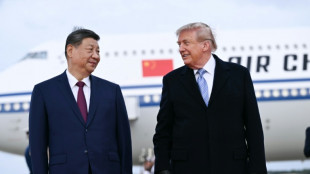
 Asian markets fall on US-China jitters as leaders meet

 As Moscow steps up attacks, Kyiv residents brace for harsh winter
 Markets mixed as China's Xi arrives for US talks
 Archaeological 'breakthrough' could confirm origins of Paris

 Australian PM says OpenAI hacked government health website

 Rio breaks record for rainiest September amid powerful El Nino

 Mandela Digital Extends Early Access Programme to 11 February 2027 Following Strong Response

 McDonald's to boost franchisees as inflation weighs on consumers
As a teenager, Eid Mertah would pore over books about King Tutankhamun, tracing hieroglyphs and dreaming of holding the boy pharaoh's golden mask in his hands.
Years later, the Egyptian conservator found himself gently brushing centuries-old dust off one of Tut's gilded ceremonial shrines -- a piece he had only seen in textbooks.
"I studied archaeology because of Tut," Mertah, 36, told AFP. "It was my dream to work on his treasures -- and that dream came true."
Mertah is one of more than 150 conservators and 100 archaeologists who have laboured quietly for over a decade to restore thousands of artefacts ahead of the long-awaited opening of the Grand Egyptian Museum (GEM) -- a $1 billion project on the edge of the Giza Plateau.
Originally slated for July 3, the launch has once again been postponed -- now expected in the final months of the year -- due to regional security concerns.
The museum's opening has faced delays over the years for various reasons, ranging from political upheaval to the Covid-19 pandemic.
But when it finally opens, the GEM will be the world's largest archaeological museum devoted to a single civilisation.
It will house more than 100,000 artefacts, with over half on public display, and will include a unique feature: a live conservation lab.
From behind glass walls, visitors will be able to watch in real time as experts work over the next three years to restore a 4,500-year-old boat buried near the tomb of Pharaoh Khufu and intended to ferry his soul across the sky with the sun god Ra.
But the star of the museum remains King Tut's collection of more than 5,000 objects -- many to be displayed together for the first time.
Among them are his golden funeral mask, gilded coffins, golden amulets, beaded collars, ceremonial chariots and two mummified foetuses believed to be his stillborn daughters.
- 'Puzzle of gold' -
Many of these treasures have not undergone restoration since British archaeologist Howard Carter discovered them in 1922.
The conservation methods used by Carter's team were intended to protect the objects, but over a century later, they have posed challenges for their modern-day successors.
Coating gold surfaces in wax, for instance, "preserved the objects at the time", said conservator Hind Bayoumi, "but it then hid the very details we want the world to see".
For months, Bayoumi, 39, and her colleagues painstakingly removed the wax applied by British chemist Alfred Lucas, which had over decades trapped dirt and dulled the shine of the gold.
Restoration has been a joint effort between Egypt and Japan, which contributed $800 million in loans and provided technical support.
Egyptian conservators -- many trained by Japanese experts -- have led cutting-edge work across 19 laboratories covering wood, metal, papyrus, textiles and more.
Tut's gilded coffin -- brought from his tomb in Luxor -- proved one of the most intricate jobs.
At the GEM's wood lab, conservator Fatma Magdy, 34, used magnifying lenses and archival photos to reassemble its delicate gold sheets.
"It was like solving a giant puzzle," she said. "The shape of the break, the flow of the hieroglyphs -- every detail mattered."
- Touching history -
Before restoration, the Tutankhamun collection was retrieved from several museums and storage sites, including the Egyptian Museum in Tahrir Square, the Luxor Museum and the tomb itself.
Some items were given light restoration before their relocation to ensure they could be safely moved.
Teams first conducted photographic documentation, X-ray analysis and material testing to understand each item's condition before touching it.
"We had to understand the condition of each piece -- the gold layers, the adhesives, wood structure -- everything," said Mertah, who worked on King Tut's ceremonial shrines at the Egyptian Museum.
Fragile pieces were stabilised with Japanese tissue paper -- thin but strong -- and adhesives like Paraloid B-72 and Klucel G, both reversible and minimally invasive.
The team's guiding philosophy throughout has been one of restraint.
"The goal is always to do the least amount necessary -- and to respect the object's history," said Mohamed Moustafa, 36, another senior restorer.
Beyond the restoration work, the process has been an emotional journey for many of those involved.
"I think we're more excited to see the museum than tourists are," Moustafa said.
"When visitors walk through the museum, they'll see the beauty of these artefacts. But for us, every piece is a reminder of the endless working hours, the debates, the trainings."
"Every piece tells a story."
M.García--CPN