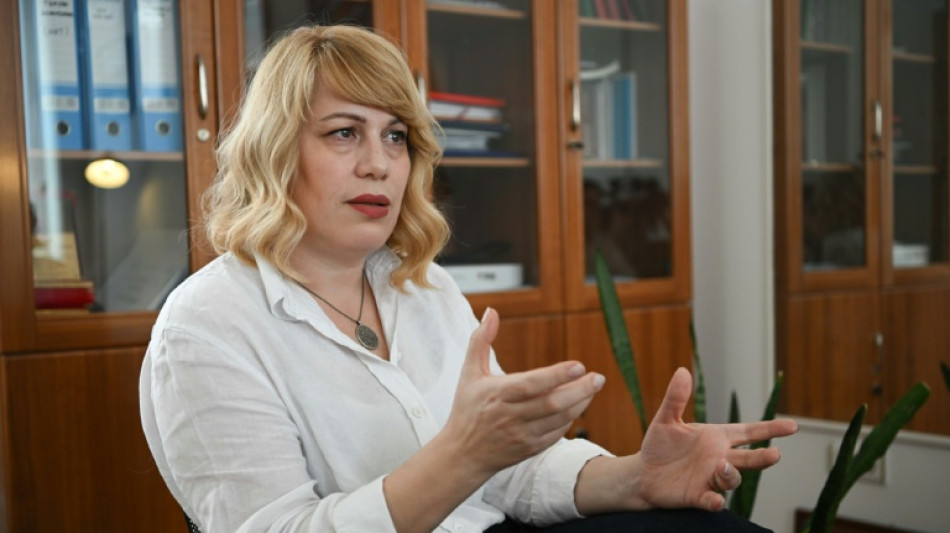
Ozempic slimming craze sweeps Kosovo despite side effects / Photo: Armend NIMANI - AFP

 Kenya's economy faces climate change risks: World Bank

 'Beginning of the end': Relief but no party as French wildfire winds down

 Southern Europe 'becoming more flammable' in hotter climate, experts say

 Mammoth bones found on parched bed of Danube in Bulgaria

 MEXC Lists Grvt (GRVT) with $60,000 Worth of GRVT and 10,000 USDT in Airdrop+ Rewards

 George and Amal Clooney flee French home due to wildfire

 MEXC Ventures Supports Alpha Arena's APAC Debut at Coinfest Bali

 AI data centre supplier Zhongji InnoLight slips on Hong Kong debut

 May, June heatwaves caused 2,877 extra deaths in England: govt

 BMW profit down a third as carmaker plans job cuts

 Seoul extends losses as most Asian markets drop, oil rises again

 Gambling.com Group Is Now Grandstand

 Meet the astronomer digging into the Milky Way's 'fossils'

 AI data centre supplier Zhongji InnoLight falls on Hong Kong debut

 Samsung operating profit up 1,800% in second quarter on AI boom

 Japanese population below 120 million for first time in decades

 US actor Jared Leto denies latest accusations of sexual assault

 Danube drops to 'historic lows' as fresh heatwave hits

 BTS pulls out of Grammys after Asian pop category introduction
 OpenAI says rogue AI agent attack hit other companies

 How an AFP beach snap became emblem of Europe's wildfire summer

 TRX Spot and Perpetuals Listing Launches on Backpack, Expanding Access to the TRON Ecosystem
 Nepal's tiger numbers climb 20 percent to estimated 429: survey

 FIFA's plans to sell $4.2bn stake in its tournaments widely criticised

 BMW aims to cut 8,000 jobs by end 2027: company source

Kosovo influencer Tringa Kadriu sees the slimming drug Ozempic as a chance to shed excess pounds -- and she is not the only one in her Balkan nation, where more than half the population is overweight.
"I want to lose 15-16 kilos (33-35 pounds) in two months," Kadriu, 29, told AFP, "and then I'll continue with fitness".
Ozempic, approved in the United States to treat diabetes in 2017, has found an international market for people trying to lose weight.
Despite its cost, the drug has soared in popularity in Kosovo, a country of 1.7 million.
While Kosovo authorities have not sanctioned the drug's use for weight loss, they have noted their limited means to confront use of a drug widely available in the country.
Merita Emini-Sadiku, who heads the Kosovo university hospital's endocrinology clinic, said the cost of the drug had soared.
"The monthly dose used to be 75-80 euros ($85-91), while now it is 130-140 euros ($147-159), probably due to high demand," she said.
But she warned that "Ozempic has side effects that people are not aware of".
Ozempic use can potentially cause issues including thyroid cancer, pancreatitis, gastroparesis and bowel obstruction, according to the latest studies.
- 'Constant demand' -
Meant to treat Type 2 diabetes -- of which the WHO says Kosovo has lower than average levels -- the drug regulates blood sugar levels but also helps suppress hunger, leading to a lower calorie intake.
As a result, its potentially cancerous complications have done little to stem the drug's popularity or availability.
"I checked a lot of pharmacies in Kosovo and I noticed that Ozempic is very easy to get," said Kadriu, adding that pharmacists even suggested she gradually increase her dosage.
A worker at a pharmacy in the capital Pristina's downtown, who asked to remain anonymous, said she had trouble recalling when someone last came into her pharmacy to buy Ozempic with a diabetes prescription.
"But we have a constant demand for Ozempic without a prescription. You can guess why," she said.
Given its availability, Emini-Sadiku said authorities should exercise greater control over Ozempic's distribution.
But Bujar Vitija, a journalist specialising in health, said that would be tricky to achieve given Kosovo's poor health record-keeping.
"Unfortunately there is no data," Vitija said.
With 1,500 to 1,600 private pharmacies in Kosovo, the country's 20 pharmaceutical inspectors have their work cut out for them, he added.
- Ozempic 'every day' -
While Kosovo has lower levels of obesity than the European average, more than 57 percent of the population is overweight and 20 percent is clinically obese, according to a 2019 World Health Organization report.
And women, who are more likely to face societal pressure to be thin, were 66 percent more likely to be obese than men, the WHO report found.
But not every Kosovar who has used Ozempic had the best experience with the drug.
"I took Ozempic on the advice of a doctor for two years but it had no effect," said 48-year-old merchant Lulzim Rrahmani, adding that three of his relatives even experienced "a negative effect of the drug".
"It was just a waste of money and time."
Given the risk of side effects, Emini-Sadiku said Ozempic was "by no means to be taken without a doctor's prescription".
Yet Kadriu said she would not be deterred, adding that she saw colleagues taking the drug "every day at work".
"I don't see any symptom that would deter me."
X.Wong--CPN