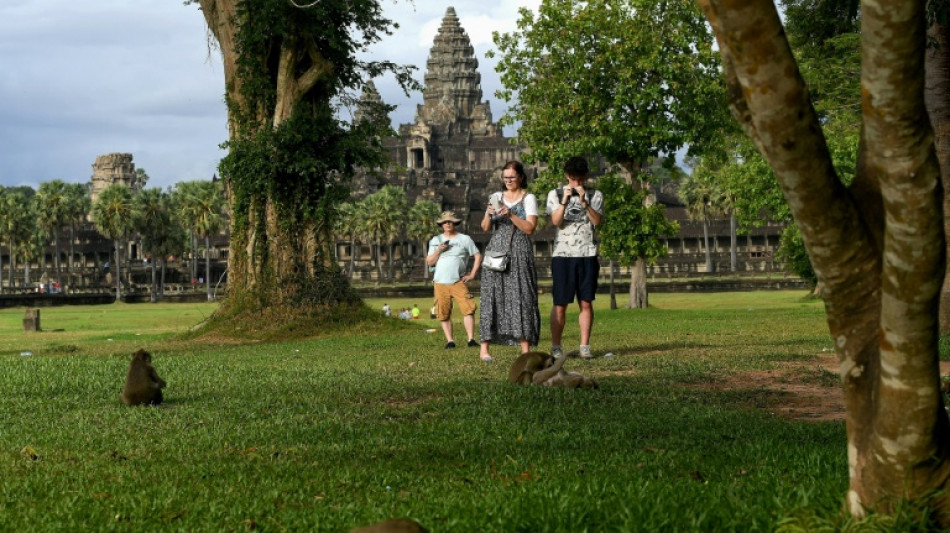
YouTubers causing monkeys to attack tourists at Cambodia's Angkor Wat / Photo: TANG CHHIN SOTHY, TANG CHHIN SOTHY - AFP/File

 Kenya's economy faces climate change risks: World Bank

 Apple tops estimates in CEO Cook's final quarter, but shares fall

 Milei demands expulsion of foreigners expressing 'hate' against Argentina

 Italy's Po River valley on drought alert

 Prada profits pinched as growth hard to chase

 Stocks climb on earnings and rates, oil retreats

 US economic growth slows in second quarter, missing expectations

 Russia adds Telegram founder Durov to 'terrorist' blacklist

 Stocks diverge on earnings, as oil steadies

 Eurozone economy grows despite Middle East war

 Singapore group will develop 'most promising' Ebola vaccine

 Shell profit surges as Mideast war fuels oil prices

 Car maker Stellantis says back in profit in second quarter

 Samsung quarterly operating profit up 1,800% on AI boom

 South Korean stocks bounce after rout, oil holds gains on Mideast woes

 South Korea's women web sleuths fight AI deepfake porn

 Anything but programmable: New cost-efficient EC-power-supply-series for the DIN rail by CAMTEC PS

 Meta misses profit expectations, sticks to massive AI spending

 Campari - king of the spritz - hopes to conquer American heartland

 Air France-KLM and Lufthansa bid for Portugal's TAP airline

 Profits soar at Airbus as it delivers more planes

 Rheinmetall shares surge after armsmaker reports record profit
 FIFA hit by furious backlash over plans to sell stake in competitions

 MEXC Integrates World-Check to Fortify Institutional Grade Compliance Architecture
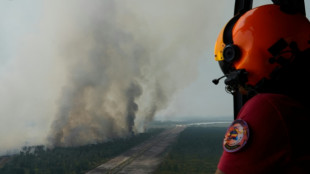 Spain returns wildfire evacuees as France braces for worsening weather

Wild monkeys egged on by YouTubers have been rampaging at Cambodia's famed Angkor Wat complex, attacking tourists, wrecking temple stonework and damaging information boards, officials said Wednesday.
The agency that runs the UNESCO-listed site warned visitors to steer clear of the growing gangs of "aggressive" macaques that live around the sprawling complex of ruins and have been biting tourists.
The macaques are native to the lush forests that surround Angkor Wat, but Apsara National Authority said human interaction -- particularly by people filming content to post online -- had changed their behaviour.
A small number of YouTubers regularly fed monkeys to create videos and this has "changed the monkeys' natural behaviour from being wild animals to domestic ones that are aggressive, steal foods, and cause injuries among people", it said in a statement.
Some have reportedly even filmed themselves abusing macaques.
Long Kosal, a spokesman for the Apsara National Authority, told AFP that as well as the danger posed to tourists, the agency was increasingly worried about the monkeys damaging the centuries-old stonework.
"On top of biting visitors, they have been climbing up and pushing stones down, damaging temples," he said, adding that the macaques had also damaged information boards.
The agency has urged tourists to leave the monkeys alone while visiting the ruins, and said it is looking for "an appropriate solution" to the problem.
Angkor Wat, built from the 9th to the 15th centuries, was the capital of the Khmer Empire and is Cambodia's top tourist attraction, bringing in valuable revenue to a poor country.
More than a million foreign tourists visited the park last year.
Since it became a world heritage site in 1992, Angkor Wat and the surrounding jungle have benefited from increased legal and physical protections.
There are hopes that wildlife sightings will also spark interest in local and foreign tourists and boost conservation education efforts.
Last year, the agricultural ministry announced a plan to conduct a census of monkeys in public areas and to identify and relocate those posing a danger to humans.
M.P.Jacobs--CPN