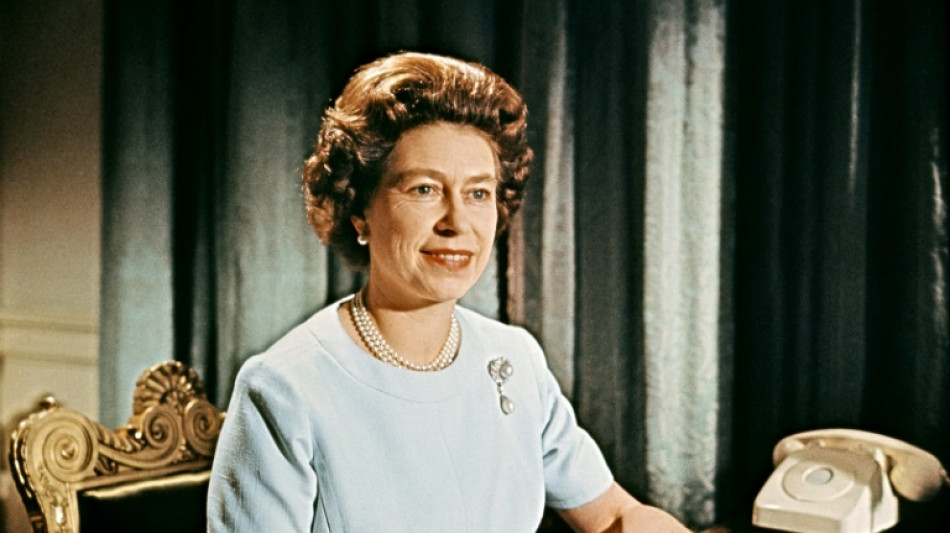
Queen was not told aide was Soviet spy for years, UK records show / Photo: - - CENTRAL PRESS PHOTOS/AFP/File

 Kenya's economy faces climate change risks: World Bank
 Apple tops estimates in CEO Cook's final quarter, but shares fall

 Milei demands expulsion of foreigners expressing 'hate' against Argentina

 Italy's Po River valley on drought alert

 Prada profits pinched as growth hard to chase

 Stocks climb on earnings and rates, oil retreats

 US economic growth slows in second quarter, missing expectations

 Russia adds Telegram founder Durov to 'terrorist' blacklist

 Stocks diverge on earnings, as oil steadies

 Eurozone economy grows despite Middle East war
 Singapore group will develop 'most promising' Ebola vaccine
 Shell profit surges as Mideast war fuels oil prices
 Car maker Stellantis says back in profit in second quarter

 Samsung quarterly operating profit up 1,800% on AI boom
 South Korean stocks bounce after rout, oil holds gains on Mideast woes

 South Korea's women web sleuths fight AI deepfake porn
 Anything but programmable: New cost-efficient EC-power-supply-series for the DIN rail by CAMTEC PS
 Meta misses profit expectations, sticks to massive AI spending
 Campari - king of the spritz - hopes to conquer American heartland
 Air France-KLM and Lufthansa bid for Portugal's TAP airline
 Profits soar at Airbus as it delivers more planes

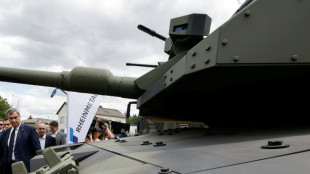 Rheinmetall shares surge after armsmaker reports record profit

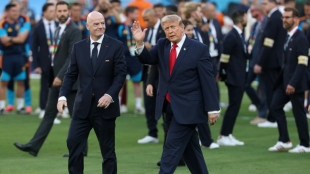 FIFA hit by furious backlash over plans to sell stake in competitions

 MEXC Integrates World-Check to Fortify Institutional Grade Compliance Architecture
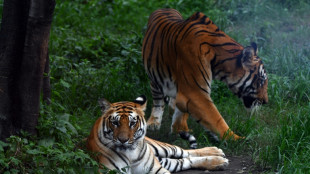
 Spain returns wildfire evacuees as France braces for worsening weather
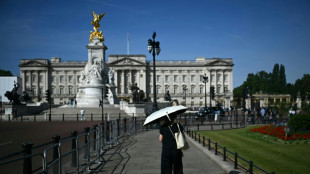
Queen Elizabeth II was not told officially for nearly a decade that one of her most senior courtiers had admitted he was a Soviet spy, newly declassified British files revealed Tuesday.
Anthony Blunt, an art historian and the Surveyor of the Queen's Pictures overseeing the official Royal Art Collection, confessed in 1964 that he had been a Soviet agent since the 1930s.
However, the queen was not fully informed about Blunt for around another nine years, according to files from Britain's domestic MI5 spy agency released by the National Archives.
She took it "very calmly and without surprise", according to the records.
It was decided to tell the monarch when ministers became concerned that the truth would become public when Blunt died.
He had been recruited by the Soviets while he was at the University of Cambridge, joining a spy ring that included other infamous double agents Donald Maclean, Guy Burgess and Kim Philby.
Blunt was a senior MI5 officer during World War II and passed vast quantities of secret intelligence to his handlers from the KGB Soviet spy agency.
He was questioned several times after Maclean and Burgess fled to the Soviet Union in the 1950s.
But without a confession, he was allowed to keep his position at the heart of the British establishment until the early 1960s.
By then, the queen -- who died in 2022 after a record-breaking seven-decade reign -- "was not at all keen on Blunt and saw him rarely", the records show.
Blunt was publicly unmasked by former prime minister Margaret Thatcher in a parliamentary statement in 1979 and he died four years later.
The files are being released now ahead of the opening of an exhibition focusing on the work of MI5 at the National Archives in west London.
Exhibits will include a vivid report of Blunt's interview when he finally confessed.
A.Levy--CPN