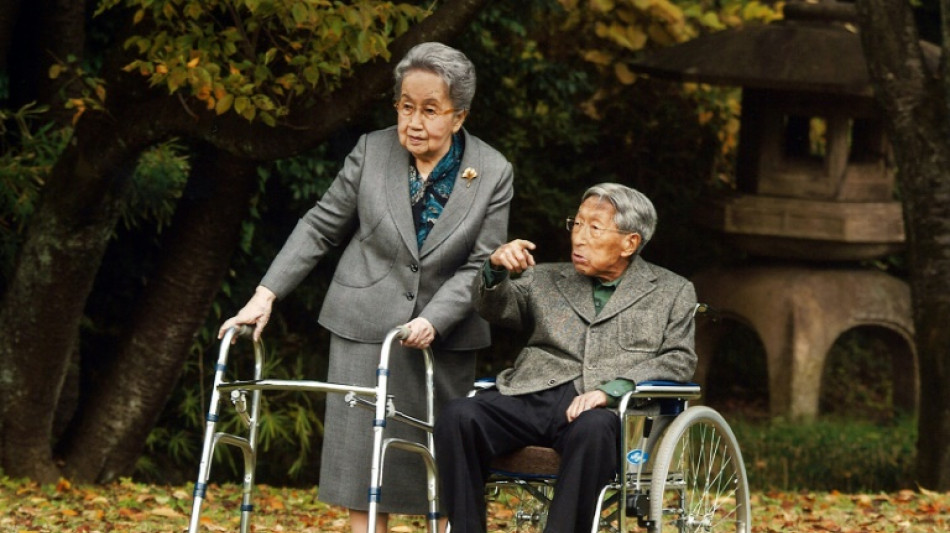
Japan's Princess Mikasa, great aunt to emperor, dies aged 101 / Photo: Handout - Imperial Household Agency/AFP/File

 Billionaire Ambani's Jio soars in market debut after India's biggest IPO
 AI chip giant SK hynix posts seven-fold surge in quarterly operating profit

 S.African activists push back on data centre rush

 Billionaire Ambani's Jio to debut after record India IPO

 UK set for cautious budget as borrowing costs climb

 US Fed expected to hold rates steady ahead of key midterm elections

 AI chip giant SK hynix says quarterly operating profit soars 630%

 Charles tackles thorny legacy of slavery on Caribbean trip

 UN nuclear watchdog chief urges Iran to grant access

 Boeing releases cautious growth plan as shares fall sharply

 Tech firms gain on Anthropic IPO optimism; HSBC slumps in London

Princess Mikasa, the oldest member of Japan's royal family and great aunt to the emperor, died aged 101 on Friday in a Tokyo hospital, the Imperial Household Agency said.
She had been hospitalised since March after suffering a stroke and pneumonia and had been recuperating there following treatment in intensive care.
Born Yuriko Takagi to an aristocratic family on June 4, 1923, the princess was 18 when she married the younger brother of wartime emperor Hirohito.
The couple had five children -- two girls and three boys. She gave birth to her first, a daughter, in 1944 during World War II.
The imperial couple's house burned down in an air raid and she was forced to stay in a shelter with her baby, according to Japan's Asahi Shimbun daily.
Hirohito -- who served as Japan's commander-in-chief during its brutal march across Asia in the 1930s and 40s -- surrendered in an August 1945 speech, after the United States dropped atomic bombs on Hiroshima and Nagasaki.
Princess Mikasa's husband Prince Mikasa, who died in 2016 at 100, was in favour of the decision to end the war.
But young officers who disagreed would come regularly to the shelter to try and change his mind.
Princess Mikasa recalled that the atmosphere was "very frightening" with "heated arguments and tension, as if bullets were about to fly", the Asahi Shimbun said.
Having lost their home, the decades that followed were far from luxurious for the princess, who took on domestic duties as the family struggled financially.
"When I was raising my children, Japanese society was still in a difficult period," she said on her 100th birthday in a statement released by the Imperial Household Agency.
"I recall with deep gratitude how many people, including my husband, always supported me," the princess added.
All three of Princess Misaka's sons passed away before her, including one who died aged 47 while playing squash at the Canadian embassy.
Male-only succession rules mean that Japan's royal women cannot ascend to the throne and must forgo their imperial status if they marry outside the family.
Princess Misaka has three granddaughters who remain princesses, including Akiko, whose 2015 book was a hit in Japan, describing her studies at Oxford and an incident in which her diplomatic passport caused suspicion at an airport.
The 101-year-old's passing followed reports since early November that her condition had begun to deteriorate.
Current Emperor Naruhito's 18-year-old nephew Prince Hisahito is the only young heir to the throne. Naruhito's daughter Princess Aiko is barred from the throne under the Imperial Household Law, in place since 1947.
H.Meyer--CPN