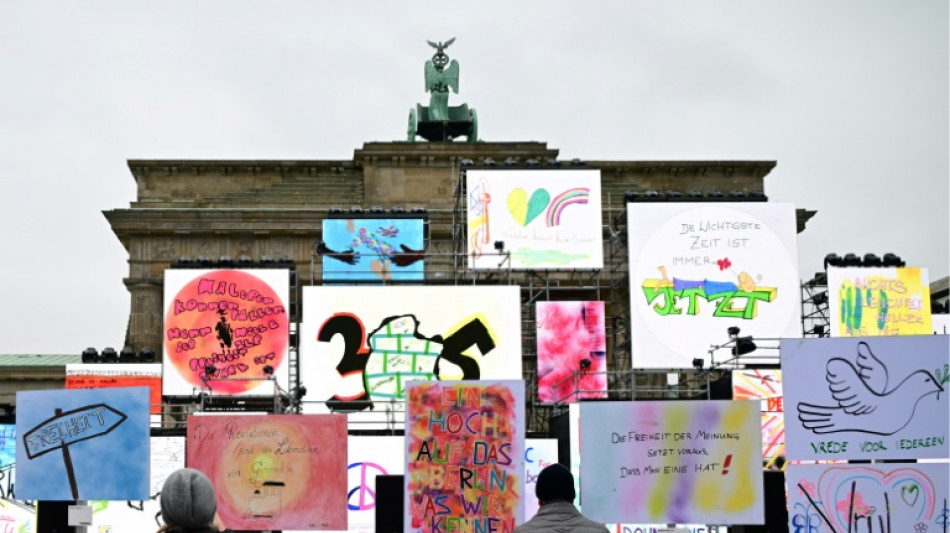
Germany marks 1989 Berlin Wall fall with 'Preserve Freedom' party / Photo: Tobias SCHWARZ - AFP

 Kenya's economy faces climate change risks: World Bank

 Anthropic's models gained unauthorized 'real-world' access during testing

 Apple tops estimates in CEO Cook's final quarter, but shares fall

 Milei demands expulsion of foreigners expressing 'hate' against Argentina

 Italy's Po River valley on drought alert

 Prada profits pinched as growth hard to chase

 Stocks climb on earnings and rates, oil retreats

 US economic growth slows in second quarter, missing expectations

 Russia adds Telegram founder Durov to 'terrorist' blacklist

 Stocks diverge on earnings, as oil steadies

 Eurozone economy grows despite Middle East war

 Singapore group will develop 'most promising' Ebola vaccine

 Shell profit surges as Mideast war fuels oil prices

 Car maker Stellantis says back in profit in second quarter

 Samsung quarterly operating profit up 1,800% on AI boom

 South Korean stocks bounce after rout, oil holds gains on Mideast woes

 South Korea's women web sleuths fight AI deepfake porn

 Anything but programmable: New cost-efficient EC-power-supply-series for the DIN rail by CAMTEC PS

 Meta misses profit expectations, sticks to massive AI spending

 Campari - king of the spritz - hopes to conquer American heartland

 Air France-KLM and Lufthansa bid for Portugal's TAP airline
 Profits soar at Airbus as it delivers more planes

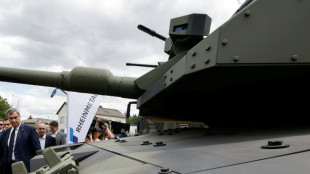 Rheinmetall shares surge after armsmaker reports record profit
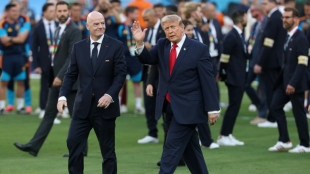 FIFA hit by furious backlash over plans to sell stake in competitions

 MEXC Integrates World-Check to Fortify Institutional Grade Compliance Architecture
Germany marks 35 years since the Berlin Wall fell with festivities from Saturday under the theme "Preserve Freedom!" as Russia's war rages in Ukraine and many fear democracy is under attack.
Chancellor Olaf Scholz -- whose coalition dramatically collapsed this week -- said in a message to the nation that the liberal ideals of 1989 "are not something we can take for granted".
"A look at our history and at the world around us shows this," added Scholz, whose three-party ruling alliance imploded on the day Donald Trump was reelected, plunging Germany into political turmoil and towards new elections.
November 9, 1989 is celebrated as the day East Germany's dictatorship opened the borders to the West after months of peaceful mass protests, paving the way for German reunification and the collapse of Soviet communism.
One Berliner who remembers those momentous events, retiree Jutta Krueger, 75, said about the political crisis hitting just ahead of the anniversary weekend: "It's a shame that it's coinciding like this now."
"But we should still really celebrate the fall of the Wall," she said, hailing it as the moment East Germans could travel and "freedom had arrived throughout Germany."
President Frank-Walter Steinmeier will kick off events on Saturday at the Berlin Wall Memorial, honouring the at least 140 people killed trying to flee the Moscow-backed German Democratic Republic (GDR) during the Cold War.
In the evening, a "freedom party" with a music and light show will be held at Berlin's iconic Brandenburg Gate, on the former path of the concrete barrier that had cut the city in two since 1961.
On Sunday, the Russian protest punk band Pussy Riot will perform in front of the former headquarters of the Stasi, former East Germany's feared secret police.
Pro-democracy activists from around the world have been invited for the commemorations -- among them Belarusian opposition leader Svetlana Tikhanovskaya and Iranian dissident Masih Alinejad.
Talks, performances and a large-scale open-air art exhibition will also mark what culture minister Claudia Roth called "one of the most joyous moments in world history".
Replica placards from the 1989 protests will be on display along four kilometres of the Wall's route, past the historic Reichstag building and the famous Checkpoint Charlie.
Also among the art installations will be thousands of images created by citizens on the theme of "freedom", to drive home the enduring relevance of the historical event.
- 'Populism and division' -
Berlin's top cultural affairs official Joe Chialo said the theme was crucial "at a time when we are confronted by rising populism, disinformation and social division".
Axel Klausmeier, head of the Berlin Wall foundation, said the values of the 1989 protests "are the power-bank for the defence of our democracy, which today is being gnawed at from the left and the right".
Most East Germans are grateful the GDR regime ended but many also have unhappy memories of the perceived arrogance of West Germans, and resentment lingers about a remaining gap in incomes and pensions.
These sentiments have been cited to explain the strong support for the far-right Alternative for Germany (AfD) in eastern Germany, as well as for the Russia-friendly and anti-capitalist BSW.
Strong gains for both at three state elections in the east in September highlighted the enduring political divisions between eastern and western Germany over three decades since reunification.
While the troubled government led by Scholz's Social Democrats and the opposition CDU strongly supports Ukraine's fightback against Russia, the anti-establishment AfD and BSW oppose it.
The AfD, which rails against immigration, was embarrassed this week when several of its members were arrested as suspected members of a racist paramilitary group that had practiced urban warfare drills.
On the eve of the anniversary of the Berlin Wall's fall, government spokeswoman Christiane Hoffmann recalled that the weekend will also mark another, far darker chapter in German history.
During the Nazis' Kristallnacht or Night of Broken Glass pogrom of November 9-10, 1938, at least 90 Jews were murdered, countless properties destroyed and 1,400 synagogues torched in Germany and Austria.
Hoffmann said that "it is very important for our society to remember the victims... and learn the correct lessons from those events for our conduct today".
Y.Ibrahim--CPN