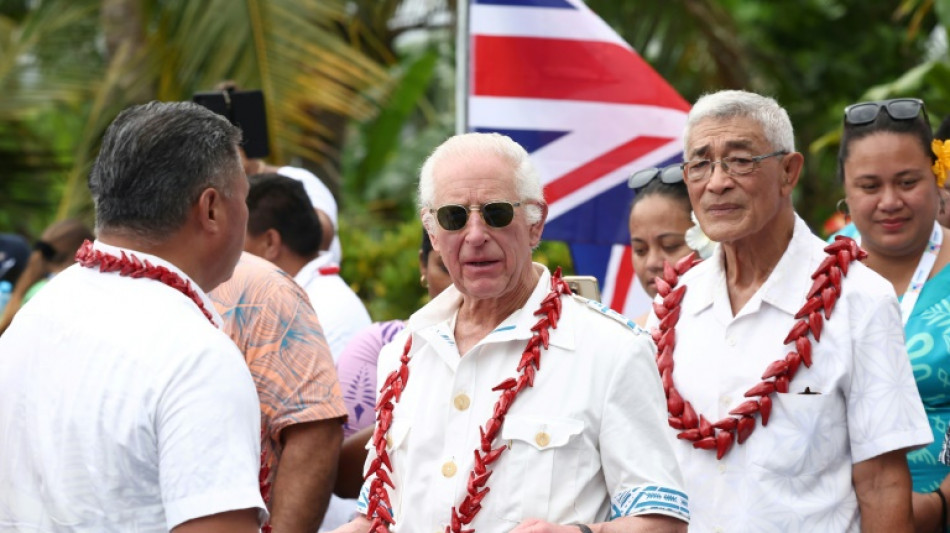
Commonwealth struggles to overcome splits over brutal past / Photo: Manaui Faulalo - POOL/AFP

 Billionaire Ambani's Jio soars in market debut after India's biggest IPO
 AI chip giant SK hynix posts seven-fold surge in quarterly operating profit
 S.African activists push back on data centre rush

 Billionaire Ambani's Jio to debut after record India IPO
 UK set for cautious budget as borrowing costs climb

 US Fed expected to hold rates steady ahead of key midterm elections
 AI chip giant SK hynix says quarterly operating profit soars 630%
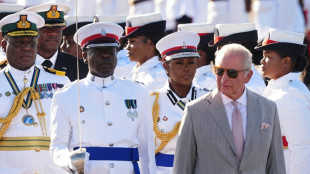 Charles tackles thorny legacy of slavery on Caribbean trip

 UN nuclear watchdog chief urges Iran to grant access
 Boeing releases cautious growth plan as shares fall sharply
 Tech firms gain on Anthropic IPO optimism; HSBC slumps in London
Britain's King Charles deflected calls to atone for his country's colonial past Friday, as a summit of Commonwealth allies turned into a factious debate about the legacy of slavery and empire.
Leaders from the 56-nation Commonwealth -- made up mostly of British ex-colonies -- gathered for a summit in Samoa, hoping to prove the bloc is united and still relevant.
But instead of finding common cause on pressing issues like climate change, Charles III's maiden summit as king has been overshadowed by history.
Many African, Caribbean and Pacific nations want to see Britain -- and other European powers -- pay financial compensation for slavery, or to at least make political amends.
They want UK leaders to commit to a discussion on reparatory justice -- which could involve financial payments.
It is a debate Britain's cash-strapped government has worked hard to avoid.
But the Bahamas' Prime Minister Philip Davis told AFP that a real discussion about the past was vital.
"The time has come to have a real dialogue about how we address these historical wrongs," he said. "Reparatory justice is not an easy conversation, but it's an important one."
"The horrors of slavery left a deep, generational wound in our communities, and the fight for justice and reparatory justice is far from over".
Experts estimate that over four centuries about 10-15 million slaves were brought from Africa to the Americas.
The true figure and human toll may never be known. The practice finally ended around 1870.
The British royal family, which benefited from the slave trade over centuries, has faced calls to apologise.
But the monarch stopped well short of that on Friday, asking delegates to "reject the language of division".
"I understand, from listening to people across the Commonwealth, how the most painful aspects of our past continue to resonate," he said.
"None of us can change the past. But we can commit, with all our hearts to learning its lessons and to finding creative ways to right inequalities that endure."
- 'Honesty and integrity' -
UK Prime Minister Keir Starmer has also dismissed calls to pay reparations, and aides have ruled out an apology at the summit.
"The slave trade, slave practise was abhorrent and it's very important that we start from that place", Starmer told UK public broadcaster the BBC at the summit.
"The question then is 'where do we go from there?' My posture, if you like, is that we should look forward, that we should look at what are today's challenges".
A summit communique, calling for debate on colonialism, is still the subject of fierce negotiations.
One diplomatic source, who spoke on condition of anonymity, told AFP that developed countries were trying to water down the language in the final text.
"The call for reparations isn't simply about financial compensation; it's about recognising the enduring impact of centuries of exploitation and ensuring that the legacy of slavery is addressed with honesty and integrity," Davis insisted.
Lesotho's Joshua Setipa -- one of three candidates vying to be the Commonwealth's next secretary-general -- said reparations could include non-traditional forms of payment such as climate financing.
"We can find a solution that will begin to address some injustices of the past and put them in the context happening around us today," he told AFP ahead of the summit.
Kingsley Abbott, director of the Institute of Commonwealth Studies at the University of London, said the apparent inclusion of the text on reparatory justice was a "significant advancement" for the Commonwealth.
He told AFP it "reveals the door to meaningful dialogue is opening".
The British monarch is concluding an 11-day tour of Australia and Samoa, both independent Commonwealth states -- the first major foreign trip since his cancer diagnosis earlier this year.
O.Ignatyev--CPN