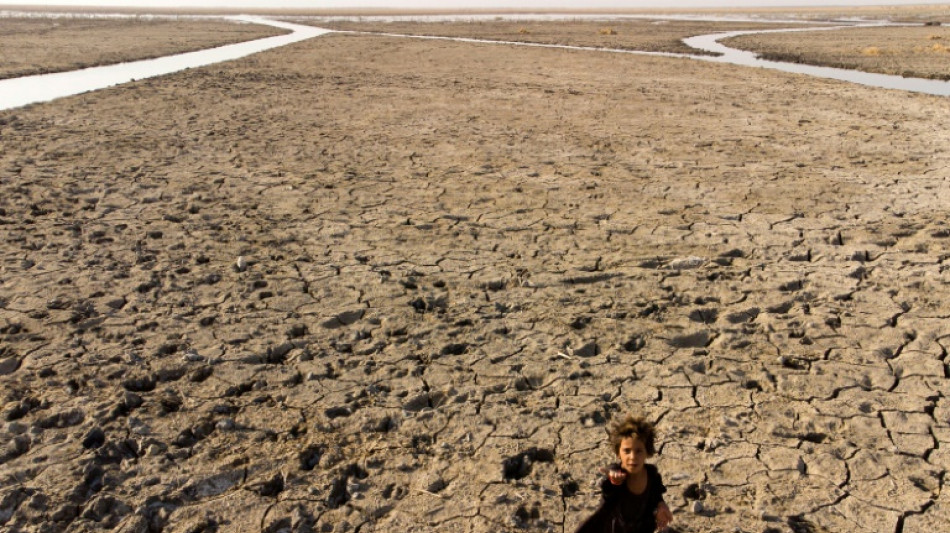
Iraq drought displaces 1,200 families in parched south / Photo: Hussein FALEH - AFP/File

 US House faces test on sweeping Russia sanctions bill

 British PM says to make 'difficult decisions' as inflation rises

 Global fuel price demos: a round-up

 Leverate Launches MCP for Traders to Connect AI Assistants With Trading Platforms

 MEXC Launches $1M "Discover Your Wall Street DNA" Campaign to Help Traders Find Their Market Fit

 Stocks edge higher ahead of US Fed rate call

 BASIS.pro Expands On-Chain Infrastructure with XDC Network Partnership and Zypher DAO as Auto Earn Goes Live

 Pickle-flavoured tart? AI inspires Japan's convenience stores

 EU chief hosts Canada's Carney in push to 'deepen' alliance

 Meta chief pushes back on AI slowdown calls

 US Fed to deliver rate decision with markets betting on hike

 Sanders, Bannon warn of AI dangers in rare US left-right alignment

 Empty benches as schools reopen in Venezuela's quake-hit Guaira

 Tiny English village holds 'independence' vote over asylum seeker housing

 US Treasury chief says to meet Chinese counterpart at weekend

 BingX Evolves into a Multi-Asset Trading Platform, Connecting Users to Global Opportunities

 International Trading Institute Expands Professional Trader Development Beyond the Master’s in Trading

 Lake Energy Secures $80 Million for U.S. Renewable Energy Expansion

 Stocks drop, oil climbs and Treasury yields hit 19-year high

 SkySail Strategies Outperforms Wall Street's 30-Year Risk Standard With Proprietary AI Inference Model

 Just add fish: Scientists pursue more rice, less disease in Senegal paddies

 Belgium completes outer structure of offshore energy island

 China retail sales growth weakens further in August
 In Kashmir, lake weeds mix with traditional art
 'Widow's Bay' and 'The Pitt' take key Emmy awards

Some 1,200 Iraqi families have been forced out of southern marshes and farmlands over the past six months, a local official told AFP, as drought ravages swathes of the country.
The Mesopotamian Marshes, a UNESCO World Heritage site, have been battered by low rainfall and reduced flows in the Tigris and Euphrates rivers due to dams built upstream in Turkey and Iran.
Oil-rich Iraq, battered by decades of war, is also the world's fifth-most vulnerable country to some key effects of climate change, including water scarcity and desertification, say the United Nations.
Saleh Hadi, head of the agriculture authority in Dhi Qar province, said "about 1,200 families of buffalo herders and farmers in the marshes and other areas of the province were displaced from their homes do to water shortages".
The mass exodus began in April, Hadi said, adding that more than 2,000 buffaloes had died as a result of the drought.
"Half of the families have moved closer to the river in areas of north of Nasiriyah," the regional capital, he added, while others have relocated to central and southern provinces such as Babylon, Kut, Karbala and Basra.
According to Hadi, the Dhi Qar's Chibayish marshes and the village of Manar in the Hammar marshes were hit particularly hard, but families have also left Umm al-Wadaa and farming lands in Sayyed Dakhil, Suk al-Shuyukh and al-Islah.
Iraq's water resources minister last month said that 2022 has been "one of the driest years Iraq has seen since 1930," citing three consecutive years of low precipitation and reduced river flow.
This summer, vast swathes of wetland in Hawizah, along the border with Iran, as well as in the touristic Chibayish region have dried up.
The UN Food and Agriculture Organization noted in July "unprecedented low water levels" in the marshes, "one of the poorest regions in Iraq and one of the most affected by climate change".
The agency underlined the "disastrous impact" on more than 6,000 families living in that area who "are losing their buffaloes, their unique living asset".
H.Cho--CPN

