
-
 US House faces test on sweeping Russia sanctions bill
-
IR-MED and Dice Technologies Announce collaboration to Evaluate and Advance Pressure-Injury Prevention Platform in Japan

-
 British PM says to make 'difficult decisions' as inflation rises
-
Watts, Pitt, Cruz to light up Spain's top film festival

-
 Global fuel price demos: a round-up
-
Toogood Gold's Table Mountain Sits in the Shadow of a Nevada Gold Rush

-
 Leverate Launches MCP for Traders to Connect AI Assistants With Trading Platforms
-
MEXC July–August Security Report: 38.66M USDT in Risk Funds Intercepted, Futures Insurance Fund Hits 792M USDT

-
 MEXC Launches $1M "Discover Your Wall Street DNA" Campaign to Help Traders Find Their Market Fit
-
Emporio Armani names Dario Vitale new creative director

-
 Stocks edge higher ahead of US Fed rate call
-
EU to ban social media for under 13s, curb access until 15

-
 BASIS.pro Expands On-Chain Infrastructure with XDC Network Partnership and Zypher DAO as Auto Earn Goes Live
-
Wildfires push endangered Sumatran elephants to brink: Indonesian NGO

-
 Pickle-flavoured tart? AI inspires Japan's convenience stores
-
Bank of Japan set to raise rates under pressure from inflation, US

-
 EU chief hosts Canada's Carney in push to 'deepen' alliance
-
EU chief to unveil social media, gaming curbs for under-15s

-
 Meta chief pushes back on AI slowdown calls
-
'Resident Evil' film brings video game's ethos to the big screen

-
 US Fed to deliver rate decision with markets betting on hike
-
i-payout Expands U.S. Money Transmitter Licensing Footprint and Advances European EMI Strategy

-
 Sanders, Bannon warn of AI dangers in rare US left-right alignment
-
US Senate crypto bill collapses amid partisan deadlock

-
 Empty benches as schools reopen in Venezuela's quake-hit Guaira
-
OpenAI, Anthropic and Google are working to create an AI standards body

-
 Tiny English village holds 'independence' vote over asylum seeker housing
-
Protesting shepherds, farmers clash with Romanian police

-
 US Treasury chief says to meet Chinese counterpart at weekend
-
Foundation Lets Ledger Users Switch to Open Source Without Starting Over

-
 BingX Evolves into a Multi-Asset Trading Platform, Connecting Users to Global Opportunities
-
EU to propose curbing social media, online games for under 15s

-
 International Trading Institute Expands Professional Trader Development Beyond the Master’s in Trading
-
FX Junction Reaches 40,600 Members and 26 Million Trades

-
 Lake Energy Secures $80 Million for U.S. Renewable Energy Expansion
-
'We unleashed the beast': the world's fears and hopes about AI

-
 Stocks drop, oil climbs and Treasury yields hit 19-year high
-
Hospitality leaders ask Burnham to halve VAT amid rising costs

-
 SkySail Strategies Outperforms Wall Street's 30-Year Risk Standard With Proprietary AI Inference Model
-
Worcestershire invited to nominate groups for 2027 King’s volunteer award

-
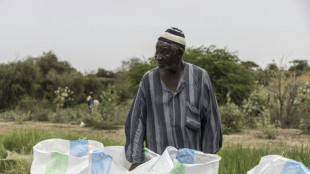 Just add fish: Scientists pursue more rice, less disease in Senegal paddies
-
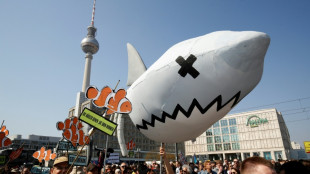
Berlin's run-down public spaces at heart of election campaign
-
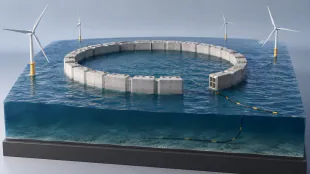 Belgium completes outer structure of offshore energy island
-
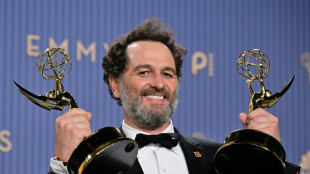
'Widow's Bay' and 'The Pitt' win big at Emmy Awards
-
 China retail sales growth weakens further in August
-
Most markets drop as oil extends gains ahead of expected US rate hike
-
 In Kashmir, lake weeds mix with traditional art
-
Sri Lanka's famed beach shack battles demolition

-
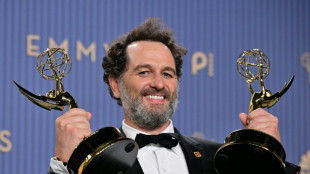 'Widow's Bay' and 'The Pitt' take key Emmy awards
-
Vserv targets ₹1,000 crore revenue by 2030 through AI expansion

The five scientists who won two Nobel prizes
American Barry Sharpless on Wednesday became only the fifth person ever to win a second Nobel Prize, two decades after being awarded his first.
AFP looks at the four other people who received the illustrious award twice for their services to mankind:
- Marie Curie (1903, 1911) -
The mother of modern physics was the first woman ever to win not one, but two, Nobel prizes for her seminal discoveries in physics and chemistry.
Born Maria Sklodowska in Poland, Curie moved to Paris as a student and is famed for having isolated the elements of polonium and radium as well as for promoting radium to alleviate suffering.
In 1903, she was awarded the Nobel Prize in Physics, along with her husband Pierre Curie and French physicist Antoine Henri Becquerel for their research into spontaneous radiation.
A second Nobel followed in 1911, this time for chemistry, when Curie was honoured alone for her work on radioactivity.
- Linus Pauling (1954, 1962) -
Linus Pauling, the US chemist who posited that huge doses of vitamin C can ward off the common cold, is the only person to have been awarded two unshared Nobel Prizes – the 1954 Nobel Prize in Chemistry and the 1962 Nobel Peace Prize.
Pauling won his first Nobel in 1954 for his work in molecular chemistry, particularly in the field of proteins and anti-bodies.
His second award came eight years later in 1962 was in recognition for his campaigning against nuclear testing.
- John Bardeen (1956, 1972) -
US engineer John Bardeen shared the Nobel Prize in Physics twice.
In 1956, he and two colleagues at Bell Labs, William Shockley and Walter Brattain, won for inventing the transistor, which revolutionised the field of electronics by leading to smaller and cheaper radios, calculators and computers, amongst other objects.
In 1972, he picked up his second Nobel for developing the BSC-theory of superconductivity, with fellow American physicists Leon Cooper and John Robert Schrieffer.
- Frederick Sanger (1958, 1980) -
British biochemist Frederick Sanger, dubbed the father of genomics, was the only person to win the chemistry Nobel twice.
Sanger was the sole winner of the prize in 1958 for his work on the structure of proteins, notably insulin, and then shared it with two others, Paul Berg and Walter Gilbert of the United States, in 1980 for pioneering developments in DNA sequencing that are still being used today.
His work allowed long stretches of DNA to be rapidly and accurately sequenced and was central to the Human Genome Project's mammoth achievement in mapping more than three billion units of human DNA.
- ICRC and UNHCR -
Two organisations have won multiple Nobel Peace Prizes.
The International Committee of the Red Cross won in 1917, 1944 and 1963 and the Office of the UN High Commissioner for Refugees won in 1954 and 1981.
C.Peyronnet--CPN

