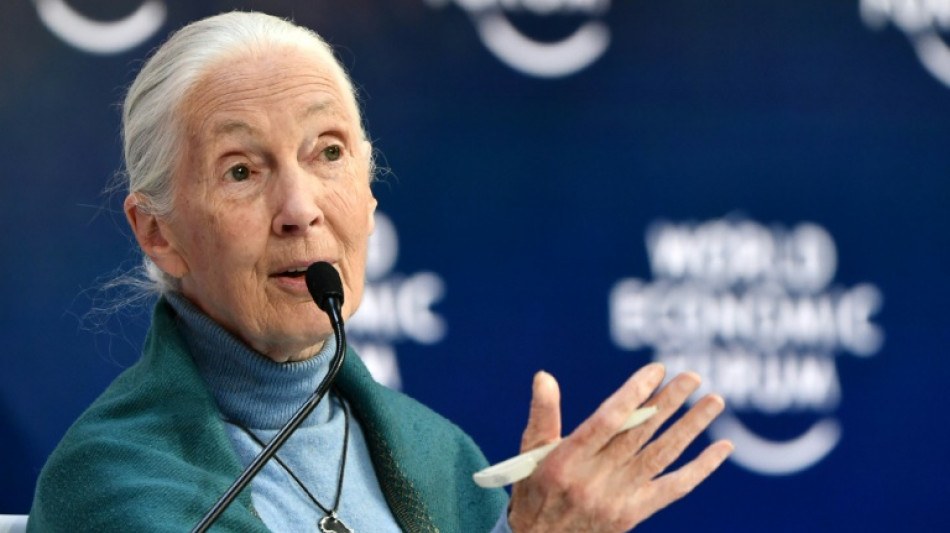
Climate change at 'point of no return': primatologist Goodall
/ Photo: Fabrice COFFRINI - AFP/File

 US House faces test on sweeping Russia sanctions bill

 British PM says to make 'difficult decisions' as inflation rises

 Global fuel price demos: a round-up

 Leverate Launches MCP for Traders to Connect AI Assistants With Trading Platforms

 MEXC Launches $1M "Discover Your Wall Street DNA" Campaign to Help Traders Find Their Market Fit

 Stocks edge higher ahead of US Fed rate call

 BASIS.pro Expands On-Chain Infrastructure with XDC Network Partnership and Zypher DAO as Auto Earn Goes Live

 Pickle-flavoured tart? AI inspires Japan's convenience stores

 EU chief hosts Canada's Carney in push to 'deepen' alliance

 Meta chief pushes back on AI slowdown calls

 US Fed to deliver rate decision with markets betting on hike

 Sanders, Bannon warn of AI dangers in rare US left-right alignment

 Empty benches as schools reopen in Venezuela's quake-hit Guaira

 Tiny English village holds 'independence' vote over asylum seeker housing

 US Treasury chief says to meet Chinese counterpart at weekend

 BingX Evolves into a Multi-Asset Trading Platform, Connecting Users to Global Opportunities

 International Trading Institute Expands Professional Trader Development Beyond the Master’s in Trading

 Lake Energy Secures $80 Million for U.S. Renewable Energy Expansion

 Stocks drop, oil climbs and Treasury yields hit 19-year high

 SkySail Strategies Outperforms Wall Street's 30-Year Risk Standard With Proprietary AI Inference Model

 Just add fish: Scientists pursue more rice, less disease in Senegal paddies

 Belgium completes outer structure of offshore energy island
 China retail sales growth weakens further in August
 In Kashmir, lake weeds mix with traditional art

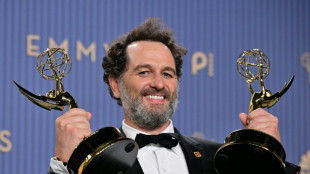 'Widow's Bay' and 'The Pitt' take key Emmy awards

Earth's climate is changing so quickly that humanity is running out of chances to fix it, primatologist Jane Goodall has warned in an interview.
Goodall, a grandee of environmentalism whose activism has spanned decades, said time was rapidly shortening to halt the worst effects of human-caused global warming.
"We are literally approaching a point of no return," Goodall told AFP in Los Angeles.
"Look around the world at what's happening with climate change. It's terrifying.
"We are part of the natural world and we depend on healthy ecosystems."
Goodall is best known for her pioneering six-decade study of chimpanzees in Tanzania, which found "human-like" behavior among the animals, including a propensity to wage war, as well as an ability to display emotions.
Now 88 years old, the Briton is a prolific writer and the subject of a number of films. She has also been immortalized as both a Lego figure and a Barbie doll.
Goodall said her own environmental awakening came in the 1980s while working in Mongolia, where she realized that hillsides had been denuded of tree cover.
"The reason the people were cutting down the trees was to make more land, to grow food as their families grew, and also to make money from charcoal or timber," she said.
"So if we don't help these people find ways of making a living without destroying their environment, we can't save chimpanzees, forests, or anything else."
Goodall says she has seen some changes for the better over recent decades, but urged quicker action.
"We know what we should be doing. I mean, we have the tools. But we come up against the short-term thinking of economic gain versus long-term protection of the environment for the future," she said.
"I don't pretend to be able to solve the problems that this creates because there are major problems. And yet, if we look at the alternative, which is continuing to destroy the environment, we're doomed."
Goodall was speaking Sunday on the sidelines of a celebration of her $1.3 million Templeton Prize.
The prize is an annual award for an individual whose work harnesses science to explore the questions facing humanity.
The cash went to the Jane Goodall Institute, a global wildlife and environment conservation organization, which runs youth programs in 66 countries.
"The program's main message is that every single one of us makes an impact on the planet every day, and we get to choose what sort of impact we make," Goodall said.
"It’s actually my greatest reason for hope."
J.Bondarev--CPN

