
Twilight of the Tigris: Iraq's mighty river drying up / Photo: Ayman HENNA - AFP

 US House faces test on sweeping Russia sanctions bill

 British PM says to make 'difficult decisions' as inflation rises

 Global fuel price demos: a round-up

 Leverate Launches MCP for Traders to Connect AI Assistants With Trading Platforms

 MEXC Launches $1M "Discover Your Wall Street DNA" Campaign to Help Traders Find Their Market Fit

 Stocks edge higher ahead of US Fed rate call

 BASIS.pro Expands On-Chain Infrastructure with XDC Network Partnership and Zypher DAO as Auto Earn Goes Live

 Pickle-flavoured tart? AI inspires Japan's convenience stores

 EU chief hosts Canada's Carney in push to 'deepen' alliance

 Meta chief pushes back on AI slowdown calls

 US Fed to deliver rate decision with markets betting on hike

 Sanders, Bannon warn of AI dangers in rare US left-right alignment

 Empty benches as schools reopen in Venezuela's quake-hit Guaira

 Tiny English village holds 'independence' vote over asylum seeker housing

 US Treasury chief says to meet Chinese counterpart at weekend

 BingX Evolves into a Multi-Asset Trading Platform, Connecting Users to Global Opportunities

 International Trading Institute Expands Professional Trader Development Beyond the Master’s in Trading

 Lake Energy Secures $80 Million for U.S. Renewable Energy Expansion

 Stocks drop, oil climbs and Treasury yields hit 19-year high

 SkySail Strategies Outperforms Wall Street's 30-Year Risk Standard With Proprietary AI Inference Model

 Just add fish: Scientists pursue more rice, less disease in Senegal paddies

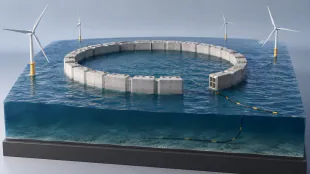 Belgium completes outer structure of offshore energy island

 China retail sales growth weakens further in August
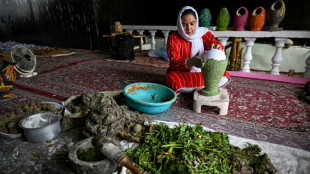 In Kashmir, lake weeds mix with traditional art
 'Widow's Bay' and 'The Pitt' take key Emmy awards

It was the river that is said to have watered the biblical Garden of Eden and helped give birth to civilisation itself.
But today the Tigris is dying.
Human activity and climate change have choked its once mighty flow through Iraq, where -- with its twin river the Euphrates -- it made Mesopotamia a cradle of civilisation thousands of years ago.
Iraq may be oil-rich but the country is plagued by poverty after decades of war and by droughts and desertification.
Battered by one natural disaster after another, it is one of the five countries most exposed to climate change, according to the UN.
From April on, temperatures exceed 35 degrees Celsius (95 degrees Fahrenheit) and intense sandstorms often turn the sky orange, covering the country in a film of dust.
Hellish summers see the mercury top a blistering 50 degrees Celsius -- near the limit of human endurance -- with frequent power cuts shutting down air-conditioning for millions.
The Tigris, the lifeline connecting the storied cities of Mosul, Baghdad and Basra, has been choked by dams, most of them upstream in Turkey, and falling rainfall.
An AFP video journalist travelled along the river's 1,500-kilometre (900-mile) course through Iraq, from the rugged Kurdish north to the Gulf in the south, to document the ecological disaster that is forcing people to change their ancient way of life.
D.Philippon--CPN

