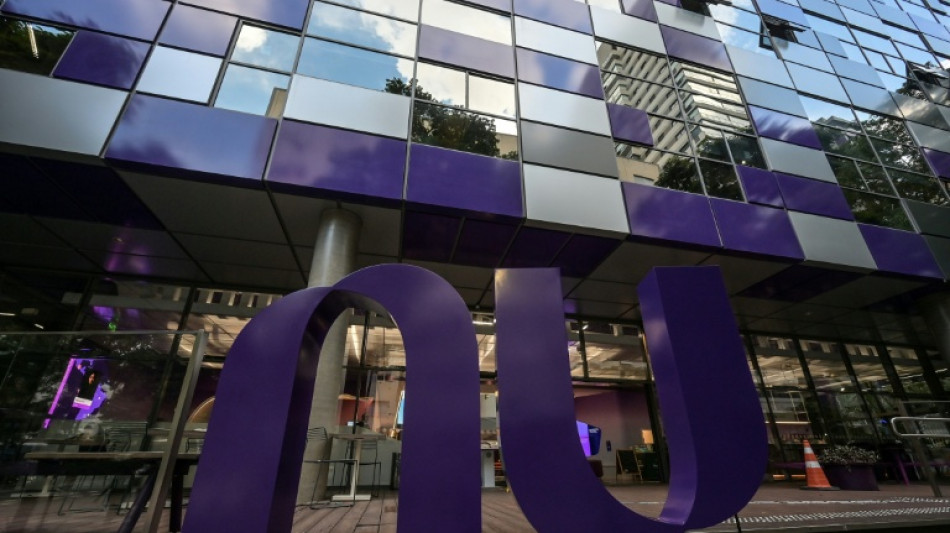
CEO of Brazil's Nubank on pending US market entry, Trump, AI: interview / Photo: Nelson ALMEIDA - AFP

 US House faces test on sweeping Russia sanctions bill

 British PM says to make 'difficult decisions' as inflation rises

 Global fuel price demos: a round-up

 Leverate Launches MCP for Traders to Connect AI Assistants With Trading Platforms

 MEXC Launches $1M "Discover Your Wall Street DNA" Campaign to Help Traders Find Their Market Fit

 Stocks edge higher ahead of US Fed rate call

 BASIS.pro Expands On-Chain Infrastructure with XDC Network Partnership and Zypher DAO as Auto Earn Goes Live

 Pickle-flavoured tart? AI inspires Japan's convenience stores

 EU chief hosts Canada's Carney in push to 'deepen' alliance

 Meta chief pushes back on AI slowdown calls

 US Fed to deliver rate decision with markets betting on hike

 Sanders, Bannon warn of AI dangers in rare US left-right alignment

 Empty benches as schools reopen in Venezuela's quake-hit Guaira

 Tiny English village holds 'independence' vote over asylum seeker housing

 US Treasury chief says to meet Chinese counterpart at weekend

 BingX Evolves into a Multi-Asset Trading Platform, Connecting Users to Global Opportunities

 International Trading Institute Expands Professional Trader Development Beyond the Master’s in Trading

 Lake Energy Secures $80 Million for U.S. Renewable Energy Expansion

 Stocks drop, oil climbs and Treasury yields hit 19-year high

 SkySail Strategies Outperforms Wall Street's 30-Year Risk Standard With Proprietary AI Inference Model

 Just add fish: Scientists pursue more rice, less disease in Senegal paddies

 Belgium completes outer structure of offshore energy island
 China retail sales growth weakens further in August
 In Kashmir, lake weeds mix with traditional art
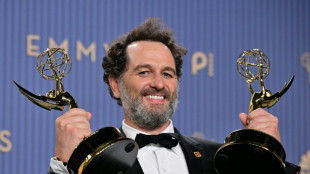 'Widow's Bay' and 'The Pitt' take key Emmy awards

Nubank CEO David Velez, whose massive Brazil-based digital bank is on the verge of entering the prized US market, hailed a "positive" regulatory climate under President Donald Trump in an interview with AFP.
Promising to free users from banking bureaucracy, the company -- which has 131 million clients in Brazil, Mexico and Colombia -- has become one of the most valuable firms in the region.
In 2025 it posted record revenues of $16.3 billion, a 45 percent increase from the previous year.
Founded by Colombian entrepreneur Velez and two partners, the company was launched in 2013 in Brazil's financial capital Sao Paulo with the aim of eliminating physical bank branches.
More than a decade later, six in ten Brazilian adults are customers.
Nubank received conditional approval in January to operate as a bank in the United States, the world's largest financial market, and is now awaiting a final license.
Velez, 44 -- whose family left Colombia because of drug-related violence when he was a child -- says the company has long-term "global" ambitions, with artificial intelligence (AI) as a central pillar.
Below are excerpts from AFP's interview with Velez, edited for clarity.
QUESTION: Why do you think Nubank will succeed in the United States, typically a hostile market for foreign fintechs?
ANSWER: "For a long time the United States was closed to granting new banking licenses. That changed with the Trump administration.
"We can reach many consumers who are currently underserved financially. Our operational cost advantage -- because we are 100 percent digital -- gives us an interesting opportunity."
Q: How do you view the financial sector under Trump?
A: "It has been positive. The previous administration created uncertainty around new business models, for example cryptocurrencies. The regulator was also very reluctant to allow new banks. That benefited large banks a lot. This administration has begun to promote more competition and lower barriers to entry."
Q: Will traditional banks disappear?
A: "The digital banking model is the winning model for digitizing 90 percent of the world's population. Our cost to serve a customer is 4 percent or 5 percent of the cost of a traditional bank. In the future some traditional banks will have transformed and will still be around, and others won't."
Q: Will physical banking services disappear?
A: "There will always be some space for them, but much smaller. Ninety to 95 percent of global financial services can be digitized."
- Customers aged 90 -
Q: Could digitization exclude older people?
A: "They eventually become digital too. We have 90-year-old customers. They don't give us quality metrics as high as those of 25-year-olds, but they can use the product quite well. AI allows much more specific personalization."
Q: What problems does AI pose in the financial sector?
A: "The biggest challenge is data control and respecting user data. What AI executes must be based on existing regulation. For example, if an algorithm gives financial advice to a client, it must comply with the same regulation that already requires a human to give correct advice."
Q: Will AI replace human jobs in the sector?
A: "Not completely. Efficiency can be improved with automation in many processes. But there are also key areas, such as credit models, that require human verification and decisions. Many of these AI models still have hallucination problems, which can be a huge risk for any bank."
Q: How do you see Brazil's financial market under the government of Luiz Inacio Lula da Silva?
A: "One thing Brazil has done very well is that financial regulation has been surprisingly consistent across administrations. Competent players in the financial industry have made money in Brazil."
Y.Jeong--CPN