
Chinese astronauts set up new lab on space station / Photo: - - CNS/AFP/File

 Watts, Pitt, Cruz to light up Spain's top film festival

 Toogood Gold's Table Mountain Sits in the Shadow of a Nevada Gold Rush

 MEXC July–August Security Report: 38.66M USDT in Risk Funds Intercepted, Futures Insurance Fund Hits 792M USDT

 Emporio Armani names Dario Vitale new creative director

 EU to ban social media for under 13s, curb access until 15

 Wildfires push endangered Sumatran elephants to brink: Indonesian NGO

 Bank of Japan set to raise rates under pressure from inflation, US

 EU chief to unveil social media, gaming curbs for under-15s

 'Resident Evil' film brings video game's ethos to the big screen

 i-payout Expands U.S. Money Transmitter Licensing Footprint and Advances European EMI Strategy

 US Senate crypto bill collapses amid partisan deadlock

 OpenAI, Anthropic and Google are working to create an AI standards body

 Protesting shepherds, farmers clash with Romanian police

 Foundation Lets Ledger Users Switch to Open Source Without Starting Over

 EU to propose curbing social media, online games for under 15s

 FX Junction Reaches 40,600 Members and 26 Million Trades

 'We unleashed the beast': the world's fears and hopes about AI

 Hospitality leaders ask Burnham to halve VAT amid rising costs

 Worcestershire invited to nominate groups for 2027 King’s volunteer award

 Berlin's run-down public spaces at heart of election campaign
 'Widow's Bay' and 'The Pitt' win big at Emmy Awards
 Most markets drop as oil extends gains ahead of expected US rate hike
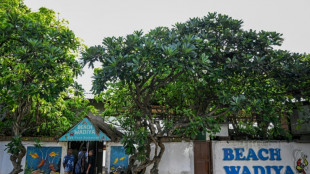 Sri Lanka's famed beach shack battles demolition

 Vserv targets ₹1,000 crore revenue by 2030 through AI expansion

 India prohibits bank fees on UPI payments up to ₹2,000
Astronauts entered the new lab module of China's space station for the first time Monday, in a major step towards completing the orbital outpost by the end of the year.
The station is one of the crown jewels of Beijing's ambitious space programme, which has landed robotic rovers on Mars and the Moon, and made China only the third nation to put humans in orbit.
Once completed, Tiangong -- or "heavenly palace" -- will be constantly crewed by rotating teams of three astronauts, who will conduct scientific experiments and help test new technologies.
Wentian, the second of Tiangong's three main sections, docked with the station's core module Tianhe on Monday after successfully launching from southern China a day earlier, state media reported.
A few hours after docking, the three astronauts -- who have been living in the core module since June -- opened the hatch and entered Wentian, footage from state broadcaster CCTV showed.
The crew, dressed in blue jumpsuits, were seen floating around the brightly lit module before facing the camera and saluting.
Wentian will focus on life sciences and biotechnology research, according to official news agency Xinhua, including cell research and growth experiments on plants, fruit flies and zebrafish.
The module will have living space for three additional astronauts, housing up to six people during crew transitions, state media said.
The third and final module, another lab named Mengtian, is scheduled for launch in October.
Tiangong, once completed, is expected to remain in low orbit 400-450 kilometres (250-280 miles) above Earth for at least 10 years.
Next year, China is also planning to launch a space telescope with a field of view 350 times that of NASA's Hubble Space Telescope.
The telescope will be positioned in the same orbit as Tiangong, allowing the station to dock with it for refuelling and servicing when needed.
China has poured billions of dollars into space flight and exploration as it seeks to build a programme that reflects its stature as a rising global power.
The programme has rapidly yielded successes in the last two decades, including launching the first Chinese astronauts, a historic first controlled landing on the far side of the Moon, and delivering a rover to the surface of Mars.
And after several missions to test the technologies needed for a constantly crewed outpost, it is set to finish Tiangong this year.
The station when completed is expected to have a mass of 90 tonnes, around a quarter of the International Space Station -- from which China has been excluded by the United States.
The ISS -- a collaboration between the United States, Russia, Canada, Europe and Japan -- is due to be retired after 2024, although NASA has said it could potentially remain functional beyond 2028.
U.Ndiaye--CPN