Canada launches billion dollar plan to recruit top researchers / Photo: Andrej Ivanov - GETTY IMAGES NORTH AMERICA/AFP

 US House faces test on sweeping Russia sanctions bill

 British PM says to make 'difficult decisions' as inflation rises

 Global fuel price demos: a round-up

 Leverate Launches MCP for Traders to Connect AI Assistants With Trading Platforms

 MEXC Launches $1M "Discover Your Wall Street DNA" Campaign to Help Traders Find Their Market Fit

 Stocks edge higher ahead of US Fed rate call

 BASIS.pro Expands On-Chain Infrastructure with XDC Network Partnership and Zypher DAO as Auto Earn Goes Live

 Pickle-flavoured tart? AI inspires Japan's convenience stores

 EU chief hosts Canada's Carney in push to 'deepen' alliance

 Meta chief pushes back on AI slowdown calls

 US Fed to deliver rate decision with markets betting on hike

 Sanders, Bannon warn of AI dangers in rare US left-right alignment

 Empty benches as schools reopen in Venezuela's quake-hit Guaira

 Tiny English village holds 'independence' vote over asylum seeker housing

 US Treasury chief says to meet Chinese counterpart at weekend

 BingX Evolves into a Multi-Asset Trading Platform, Connecting Users to Global Opportunities

 International Trading Institute Expands Professional Trader Development Beyond the Master’s in Trading

 Lake Energy Secures $80 Million for U.S. Renewable Energy Expansion

 Stocks drop, oil climbs and Treasury yields hit 19-year high

 SkySail Strategies Outperforms Wall Street's 30-Year Risk Standard With Proprietary AI Inference Model

 Just add fish: Scientists pursue more rice, less disease in Senegal paddies

 Belgium completes outer structure of offshore energy island

 China retail sales growth weakens further in August

 In Kashmir, lake weeds mix with traditional art

 'Widow's Bay' and 'The Pitt' take key Emmy awards

Canada on Tuesday launched a CAN$1.7 billion ($1.2 billion) program to recruit leading global researchers, part of the effort to poach intellectual talent looking to leave the United States because of President Donald Trump's policies.
Top Canadian institutions -- including the country's largest hospital network and the University of Toronto -- have previously announced multimillion dollar strategies to recruit experts whose work has been impacted by Trump's broad cuts to scientific research.
Canada's federal government has now joined this effort, in what it called "one of the largest recruitment programs of its kind globally."
The plan is not strictly catered to US-based researchers impacted by Trump.
A statement from the ministries of industry and health says the goal is "to attract and support more than 1,000 leading international and expatriate researchers," including French speakers.
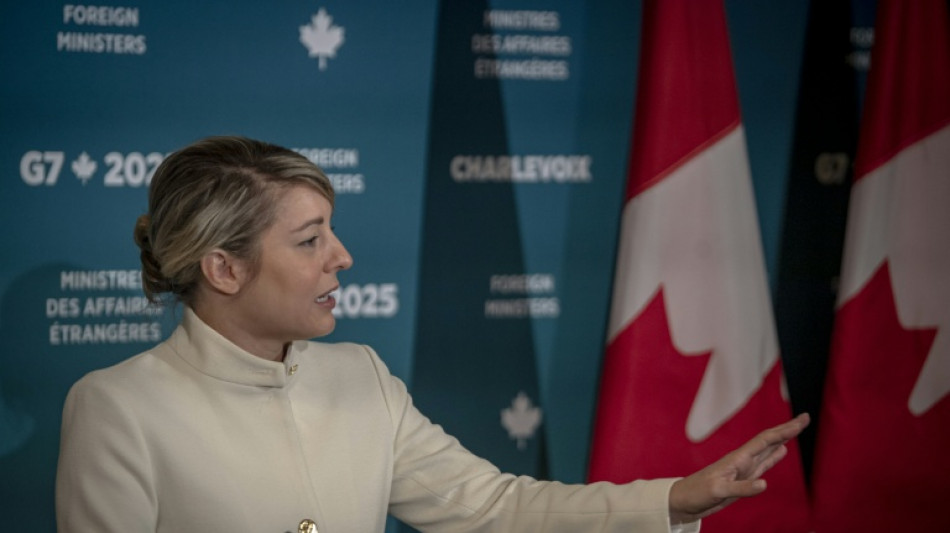
But asked by AFP at a press conference on Tuesday if scientists alienated by the president would be targeted for recruitment, Joly said, "some countries are turning their backs on academic freedom. We won't do that."
The recruitment effort would be global, she said, but added: "We know that many people south of the border are raising their hands and are already showing interest. Our universities have already started having these conversations."
Experts have warned that Trump's policies could trigger major shifts in the global competition to hire some of the world's brightest minds, which for decades has been dominated by deep-pocketed US universities backed by robust federal funding.
Trump's funding cuts have impacted a range of research projects, and studies that involve climate change or diversity, equity and inclusion have been heavily affected.
The European Union also made a push to draw US researchers, announcing an incentives package worth €500 million ($582 million) earlier this year to make the 27-nation bloc "a magnet for researchers."
Joly said a priority would be to encourage leading Canadian researchers working abroad to return.
"I think that for a long time in Canada, we've talked about brain drain," Joly said, voicing hope the country would now be able to "bring our people back home."
D.Avraham--CPN

