
Teen saving India's ponds says everyone can be a leader / Photo: Fabrice COFFRINI - AFP

 Candidate for UN chief calls for AI regulation akin to nuclear weapons

 'We're losing control,' AI pioneer Yoshua Bengio tells AFP

 IR-MED and Dice Technologies Announce collaboration to Evaluate and Advance Pressure-Injury Prevention Platform in Japan

 Watts, Pitt, Cruz to light up Spain's top film festival

 Toogood Gold's Table Mountain Sits in the Shadow of a Nevada Gold Rush

 MEXC July–August Security Report: 38.66M USDT in Risk Funds Intercepted, Futures Insurance Fund Hits 792M USDT

 Emporio Armani names Dario Vitale new creative director

 EU to ban social media for under 13s, curb access until 15

 Wildfires push endangered Sumatran elephants to brink: Indonesian NGO

 Bank of Japan set to raise rates under pressure from inflation, US

 EU chief to unveil social media, gaming curbs for under-15s

 'Resident Evil' film brings video game's ethos to the big screen

 GA-ASI Mojave First UAS To Complete Battlefield Short Field Ops

 Sanders, Bannon warn of AI dangers in rare US left-right alignment

 Empty benches as schools reopen in Venezuela's quake-hit Guaira

 Tiny English village holds 'independence' vote over asylum seeker housing

 US Treasury chief says to meet Chinese counterpart at weekend

 BingX Evolves into a Multi-Asset Trading Platform, Connecting Users to Global Opportunities

 International Trading Institute Expands Professional Trader Development Beyond the Master’s in Trading

 Lake Energy Secures $80 Million for U.S. Renewable Energy Expansion

 Stocks drop, oil climbs and Treasury yields hit 19-year high

 SkySail Strategies Outperforms Wall Street's 30-Year Risk Standard With Proprietary AI Inference Model

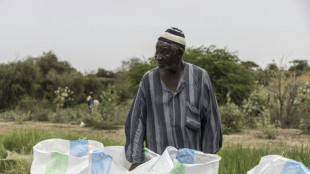 Just add fish: Scientists pursue more rice, less disease in Senegal paddies

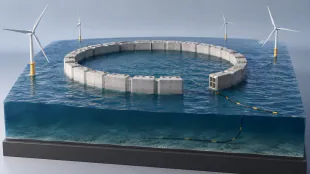 Belgium completes outer structure of offshore energy island

 China retail sales growth weakens further in August
Dev Karan recalls the first time he saw a purple pond, "filled with dyes and chemicals, and choked with plastic".
"It was heart-wrenching," the 17-year-old from Haryana state in northern India told AFP in an interview.
That sight during a school trip two years ago made him realise that "the climate crisis is happening everywhere".
He decided he had to act.
Speaking on the sidelines of the annual Young Activists Summit (YAS) at the United Nations in Geneva, Karan described his path to becoming the youngest of five laureates at this year's event.
He won on Thursday for his efforts to restore India's traditional ponds, which help prevent floods and soil erosion by storing water.
Ponds are "often used by villages as a source of drinking water during droughts, help in carbon sequestration, nourish groundwater and they are biodiversity hotspots", he said.
- 'Climate literacy' -
Yet there is far less attention on protecting and preserving these vital small water bodies than on oceans and rivers, he said.
He and his friends noticed that even when huge investment goes into cleaning up ponds, they often slip back into decay after a few years due to lacking maintenance.
Karan co-founded Pondora, an organisation that helps villages monitor their water quality using IT-based sensors and mobile tools.
The team visits schools and teaches students how to use their kits, consisting of Bluetooth-connected monitors with sensors registering things like temperature, salinity and pH levels, as well as chemical strips to detect various compounds.
They have trained an army of "Pond Ambassadors" to support local maintenance.
"We focus on climate literacy and basically show them the importance of preserving such water bodies," Karan said.
"They now go around themselves and take the data from the ponds... (they are) going from being passive observers to activists."
YAS hailed Karan's "replicable model for water ecosystem restoration -- one pond at a time".
- 'Your voice matters' -
The aspiring engineering student told AFP that exploring how digital technologies could simplify pond monitoring and using social media to spread the word had come naturally to him.
"Growing up in a generation which had phones in their hands from a very long time, my thought process always goes to how we can use this as the medium," he said.
Karan said Pondora was currently seeking to create a database for all Indian ponds, pointing out that in New Delhi, half of those on paper had disappeared, with many covered up to make room for an expanding population.
The goal is to raise awareness about the need to protect remaining ponds, including through a social media campaign urging people to post their photo with the one nearest them.
Karan had one message for other young people: "Your voice matters."
"Even if you contribute something which is small, it has ripple effects," he said.
"Everyone can be a leader. You just have to have the courage to start."
X.Wong--CPN