
Drones take on Everest's garbage / Photo: - - Airlift Technology/AFP

 亞歷克斯・博迪獲任命為 SCANDIC FINANCE 集團副總裁

 Alex Bodi appointed Vice President of SCANDIC FINANCE GROUP

 Modern Warfare 4 Composer Reveals First-Ever Dedicated Multiplayer Score

 West Mercia Police opens 2027 cadet applications to Worcestershire teenagers
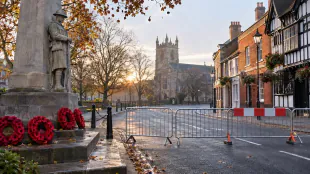
 Goa plans relationship-readiness course amid concern over divorces

 BHEL wins Adani Power projects valued at up to ₹28,000 crore

 India seeks threefold increase in coal stocks to prevent summer power shortages

 Indus Towers expands solar-powered network to 50,000 telecom sites

 Equitas Small Finance Bank rebounds after naming interim chief executive

 Titan quarterly profit seen rising as jewellery business drives growth

 Kuwait finance minister holds economic cooperation talks at COMCEC

 Kuwait marks key events and anniversaries from national history
A team of drone operators joined climbers and guides at Everest Base Camp this climbing season, armed with heavy-duty drones to help clear rubbish from the world's highest peak.
Tonnes of trash -- from empty cans and gas canisters, to bottles, plastic and discarded climbing gear -- have earned once-pristine Everest the grim nickname of the "highest dumpster in the world".
Two DJI FC 30 heavy-lifter drones were flown to Camp 1 at 6,065 metres (19,900 feet), where they airlifted 300 kilograms (660 pounds) of trash down during the spring climbing season, which usually lasts from April to early June.
"The only options were helicopters and manpower, with no option in between," said Raj Bikram Maharjan, of Nepal-based Airlift Technology, which developed the project.
"So, as a solution for this problem, we came up with a concept of using our heavy-lift drone to carry garbage."
After a successful pilot on Everest last year, the company tested the system on nearby Mount Ama Dablam, where it removed 641 kilos of waste.
"This is a revolutionary drive in the mountains to make it cleaner and safer," said Tashi Lhamu Sherpa, vice chairman of the Khumbu Pasang Lhamu rural municipality, which oversees the Everest area.
- 'Game changer' -
The drones are proving to be far more efficient, cost-effective and safer than earlier methods, said Tshering Sherpa, chief of the Sagarmatha Pollution Control Committee.
"In just 10 minutes, a drone can carry as much garbage as 10 people would take six hours to carry," Sherpa told AFP.
The powerful drones cost around $20,000 each, but were supplied by the China-headquartered manufacturer to support the cleanup operation and promote its brand.
Other costs were borne partially by the local authorities.
Beyond waste removal, the drones have also been deployed to deliver essential climbing gear such as oxygen cylinders, ladders, and ropes -- reducing the number of dangerous trips across the Khumbu Icefall, one of Everest's deadliest sections.
That can help improve safety for the guides and porters, especially the early "fixing" teams who establish routes at the start of the new season.
"People in the fixing team were very happy," said record-holding climber Nima Rinji Sherpa, the youngest to summit all 14 of the world's highest peaks.
"They can simply just go by themselves and the drone will carry ladders or the oxygen and ropes for them. It saves a lot of time and energy."
Next month, Airlift Technology will take the drones to Mount Manaslu, the world's eighth-highest peak.
"It's not just in war that drones are useful," Maharjan said.
"They can save lives and protect the environment. For climate and humanitarian work, this technology is going to be a game changer."
M.Anderson--CPN
