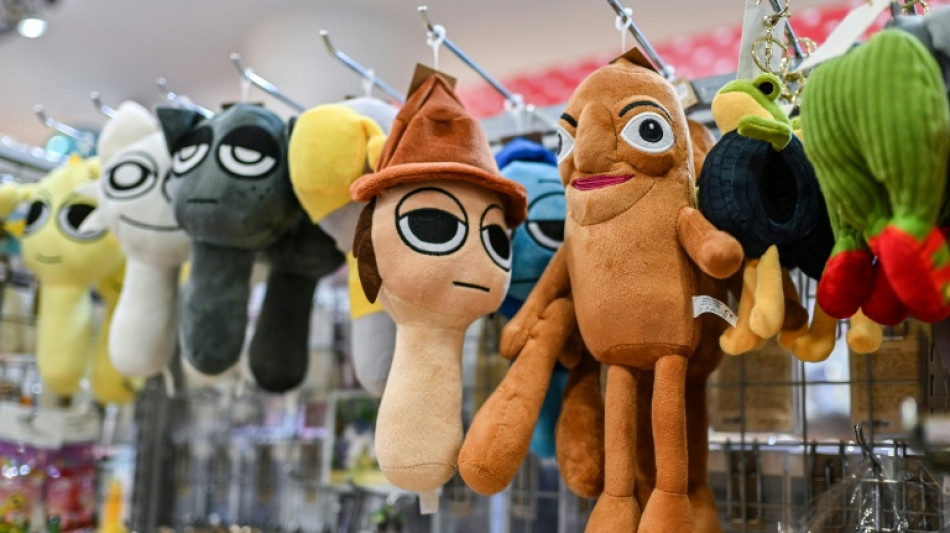
Italian Brainrot: the AI memes only kids know / Photo: Richard A. Brooks - AFP

 Argentine judge orders suspension of Falklands oil project

 US Fed raises rates to tackle 'too high' inflation, irking Trump

 Turkey releases 106 protesters, jails more LGBTQ activists

 Candidate for UN chief calls for AI regulation akin to nuclear weapons

 'We're losing control,' AI pioneer Yoshua Bengio tells AFP

 IR-MED and Dice Technologies Announce collaboration to Evaluate and Advance Pressure-Injury Prevention Platform in Japan

 Watts, Pitt, Cruz to light up Spain's top film festival

 Toogood Gold's Table Mountain Sits in the Shadow of a Nevada Gold Rush

 MEXC July–August Security Report: 38.66M USDT in Risk Funds Intercepted, Futures Insurance Fund Hits 792M USDT

 Emporio Armani names Dario Vitale new creative director

 EU to ban social media for under 13s, curb access until 15

 Wildfires push endangered Sumatran elephants to brink: Indonesian NGO

 Bank of Japan set to raise rates under pressure from inflation, US

 EU chief to unveil social media, gaming curbs for under-15s

 'Resident Evil' film brings video game's ethos to the big screen

 GA-ASI Mojave First UAS To Complete Battlefield Short Field Ops

 Sanders, Bannon warn of AI dangers in rare US left-right alignment

 Empty benches as schools reopen in Venezuela's quake-hit Guaira

 Tiny English village holds 'independence' vote over asylum seeker housing

 US Treasury chief says to meet Chinese counterpart at weekend

 BingX Evolves into a Multi-Asset Trading Platform, Connecting Users to Global Opportunities

 International Trading Institute Expands Professional Trader Development Beyond the Master’s in Trading

 Lake Energy Secures $80 Million for U.S. Renewable Energy Expansion

 Stocks drop, oil climbs and Treasury yields hit 19-year high

 SkySail Strategies Outperforms Wall Street's 30-Year Risk Standard With Proprietary AI Inference Model

In a Japanese shop selling pocket-money trinkets, there is a rack of toys, stickers and keyrings based on a global crew of AI-generated characters that almost every child knows about -- and very few adults.
A walking shark in oversized sneakers, an orange with muscular arms and a twirling "Ballerina Cappuccina" with a mug for a head are among the strange stars of the online phenomenon called Italian Brainrot.
"At first it's not funny at all, but it kind of grows on you," 16-year-old Yoshi Yamanaka-Nebesney from New York told AFP.
"You might use it to annoy someone and find that funny."
The name nods to the stupefying effect of scrolling through mindless social media posts, especially over-the-top images created with artificial intelligence tools.
Shouty, crude and often nonsensical Italian voiceovers feature in many of the clips made by people in various countries that began to spread this year on platforms such as TikTok, embraced by young Gen Z and Gen Alpha members.
The dozen-plus cartoonish AI creatures have fast become memes, inspiring a stream of new content such as "Brainrot Rap", viewed 116 million times on YouTube.
A YouTube Short titled "Learn to Draw 5 Crazy Italian Brainrot Animals" -- including a cactus-elephant crossover named "Lirili Larila" -- has also been watched 320 million times.
"There's a whole bunch of phrases that all these characters have," said Yamanaka-Nebesney, in Tokyo with his mother Chinami, who had no idea what he was talking about.
School-age Italian Brainrot fans can be found from Kenya to Spain and South Korea, while some of the most popular videos reference Indonesia's language and culture instead.
"I went on trips with my boys to Mexico" and people would "crack jokes about it" there too, Yamanaka-Nebesney said.
- 'Melodic language' -
Internet trends move fast, and Italian Brainrot "hit its peak maybe two months ago or a month ago", said Idil Galip, a University of Amsterdam lecturer in new media and digital culture.
Italian -- a "melodic language that has opportunities for jokes" -- has appeared in other memes before.
And "there are just so many people in Indonesia" sharing posts which have potential for global reach, Galip said.
A "multi-level marketing economy" has even emerged, with AI video-makers targeting Italian Brainrot's huge audience through online ads or merchandise sales, she added.
Nurina, a 41-year-old Indonesian NGO worker, said her seven-year-old loves the mashed-up brainrot world.
"Sometimes when I pick him up from school, or when I'm working from home, he shouts, 'Mommy! Bombardino Crocodilo!'" -- a bomber plane character with a crocodile head.
"I know it's fun to watch," said Nurina, who like many Indonesians goes by one name.
"I just need to make him understand that this is not real."
Some videos have been criticised for containing offensive messages that go over young viewers' heads, such as rambling references in Italian to "Bombardino Crocodilo" bombing children in Gaza.
"The problem is that these characters are put into adult content" and "many parents are not tech-savvy" enough to spot the dangers, warned Oriza Sativa, a Jakarta-based clinical psychologist.
- Tung Tung Tung Sahur -
The best-known Indonesian brainrot character "Tung Tung Tung Sahur" resembles a long drum called a kentongan, which is used to wake people up for a pre-dawn meal, or sahur, during Ramadan.
Indonesia has a young, digitally active population of around 280 million, and "Tung Tung Tung Sahur" is not its only viral export.
This summer, video footage -- not AI-generated -- of a sunglass-wearing boy dancing on a rowboat during a race at a western Indonesian festival also became an internet sensation.
Noxa, the TikToker behind the original "Tung Tung Tung Sahur" clip, is now represented by a Paris-based collective of artists, lawyers and researchers called Mementum Lab.
"Noxa is a content creator based in Indonesia. He's under 20," they told AFP. "He makes fast, overstimulated, AI-assisted videos."
"He doesn't call himself a 'contemporary artist', but we think he's already acting like one," said Mementum Lab, which is focused on complex emerging issues around AI intellectual property, and says it is helping Noxa negotiate deals for his work.
Noxa, in comments provided by the collective, said the character was "inspired by the sound of the sahur drum I used to hear".
"I didn't want my character to be just another passing joke -- I wanted him to have meaning," he said.
Cultural nuances can be lost at a mass scale, however, with one 12-year-old tourist in Tokyo saying he thought "Tung Tung Tung Sahur" was a baseball bat.
And the generation gap looks set to persist.
"What's that?!" laughed a woman as she puzzled at the row of Italian Brainrot dolls.
"It's not cute at all!"
M.P.Jacobs--CPN