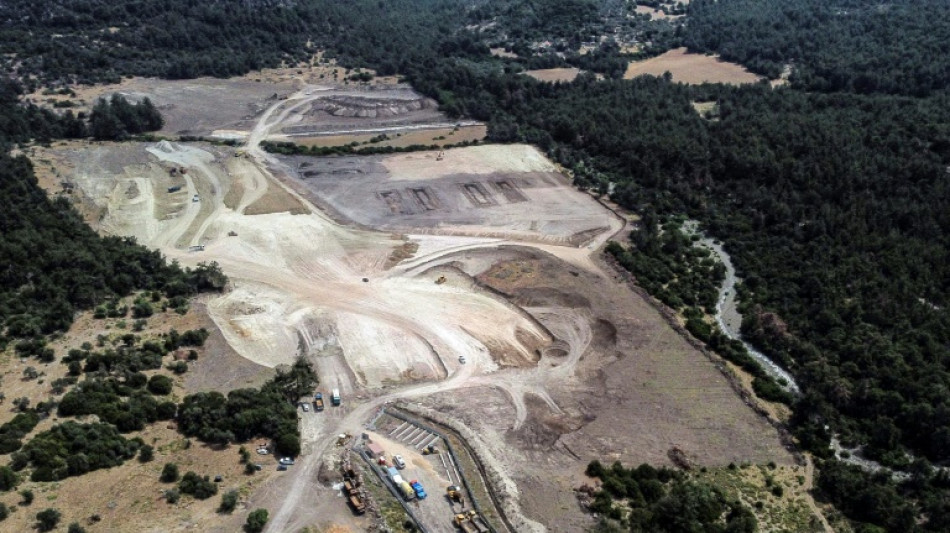
Forest fire fears over new Greek migrant camp / Photo: Manolis LAGOUTARIS - AFP

 EU to ban social media for under 13s, curb access until 15

 Wildfires push endangered Sumatran elephants to brink: Indonesian NGO

 Bank of Japan set to raise rates under pressure from inflation, US

 EU chief to unveil social media, gaming curbs for under-15s

 'Resident Evil' film brings video game's ethos to the big screen

 i-payout Expands U.S. Money Transmitter Licensing Footprint and Advances European EMI Strategy

 US Senate crypto bill collapses amid partisan deadlock

 OpenAI, Anthropic and Google are working to create an AI standards body

 Protesting shepherds, farmers clash with Romanian police

 Foundation Lets Ledger Users Switch to Open Source Without Starting Over

 EU to propose curbing social media, online games for under 15s

 FX Junction Reaches 40,600 Members and 26 Million Trades

 'We unleashed the beast': the world's fears and hopes about AI

 Hospitality leaders ask Burnham to halve VAT amid rising costs

 Worcestershire invited to nominate groups for 2027 King’s volunteer award

 Berlin's run-down public spaces at heart of election campaign
 'Widow's Bay' and 'The Pitt' win big at Emmy Awards
 Most markets drop as oil extends gains ahead of expected US rate hike
 Sri Lanka's famed beach shack battles demolition

 Vserv targets ₹1,000 crore revenue by 2030 through AI expansion

 India prohibits bank fees on UPI payments up to ₹2,000

 Brazil's Amazon defender Raoni has cancer

 Trump rejects AI slowdown concerns as UN urges coordinated controls

 Higher wages draw migrant workers to Kashmir despite attacks

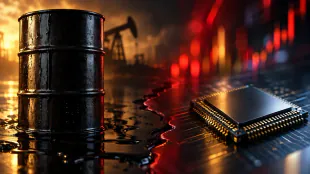 Oil supply concerns and AI warnings weigh on global markets

Months behind schedule and dogged by lawsuits, critics say a vast new migrant camp on the Greek island of Lesbos is a potential forest fire hazard that could wreak havoc on the environment.
Officials say it is desperately needed on an island at the forefront of Europe's migrant crisis, where hundreds of thousands of asylum seekers have arrived from countries such as Syria and Afghanistan since 2015.
The worksite is as far as possible from the island's main town of Mytilene and its tourist resorts. Barbed wire keeps out intruders. A private security company now guards the entrance 24 hours a day, after protesters set fire to construction machinery in February.
"It's the worst location possible to build the camp," Yiorgos Dinos, head of the firemen union in the region, tells AFP.
"Should a fire start there, it will burn down half the island."
According to local community leaders, Greece's propensity for forest fires and a troubling history of blazes at other camps makes the new facility -- on the edge of a dense pine forest in the middle of nowhere -- a potential hazard of major proportions.
"We have so many examples of what can happen to a forest in case of fire in adverse weather conditions," says Christos Tsivgoulis, head of Komi, one of six communities that oppose the project.
"Nothing can save you."
High temperatures and strong winds cause wildfires every summer in Greece, especially on islands where the rugged landscape presents an added impediment to firefighters.
Scientists say climate change has increased the frequency and intensity of the fires in recent years.
Greece's and indeed Europe's largest migrant camp of Moria, also on Lesbos, was entirely gutted by fire in 2020.
- 'Completely unsuitable' -
At the time, Moria housed more than 10,000 people. Most of them were sleeping under makeshift shelter outdoors.
Last month, a communal tent for 150 people burned down at Moria's temporary replacement of Mavrovouni, which currently houses around 1,100 people.
On Tuesday, two 18-year-old Afghan asylum seekers were sentenced to four years on appeal for starting the Moria fire. Four other Afghans were handed 10-year sentences last June.
Michael Bakas, a member of Greece's Greens party, says "dozens" of fires broke out around Moria in previous summers despite the presence of a dedicated fire response team.
Tsivgoulis, the local community representative, says the densely forested landscape around the new camp at Plati is more dangerous than Moria.
"Moria was surrounded by an olive grove, olive trees don't burn easily, imagine what can happen in a pine forest," Tsivgoulis said.
"In the summer months, locals are not allowed to enter at night because of the risk of fire. So how does the (migration) ministry ensure that there will be no accidents when hundreds will be coming and going" to build the camp, he wonders.
"This is a completely unsuitable location to build an entire community," adds Antonis Komlos, head of the community of Pighi.
"With one spark, whole villages and crops could be lost," he said.
- 'Far from our children' -
There are also fears that the remote location, accessible via a rural road, 15 kilometres (nine miles) from the closest village as the bird flies and 30 kilometres from the island's main town of Mytilene, will be hard to evacuate in an emergency.
With a capacity of 3,000, Plati is to be the largest of five new camps for which the European Union has allocated $296 million combined for Lesbos and four other Greek islands in the Aegean where migrants arrive from neighbouring Turkey.
The new camps come with barbed-wire fencing, surveillance cameras, X-ray scanners and magnetic gates that are closed at night.
Mytilene mayor Stratis Kytelis has called the camp a "starting point" for the island to "leave the migration issue behind for good -- far from the city of Mytilene, our children and our daily lives."
Yet disagreements over the location have delayed the project for months, with various alternative locations examined and rejected.
This week, Kytelis said Plati was "the only solution to restore serenity to the island."
In a statement to AFP, he insisted authorities are taking "all (necessary) fire precautions".
The camp was originally supposed to have been completed last September.
An injunction against the project will be discussed later in June.
M.Mendoza--CPN