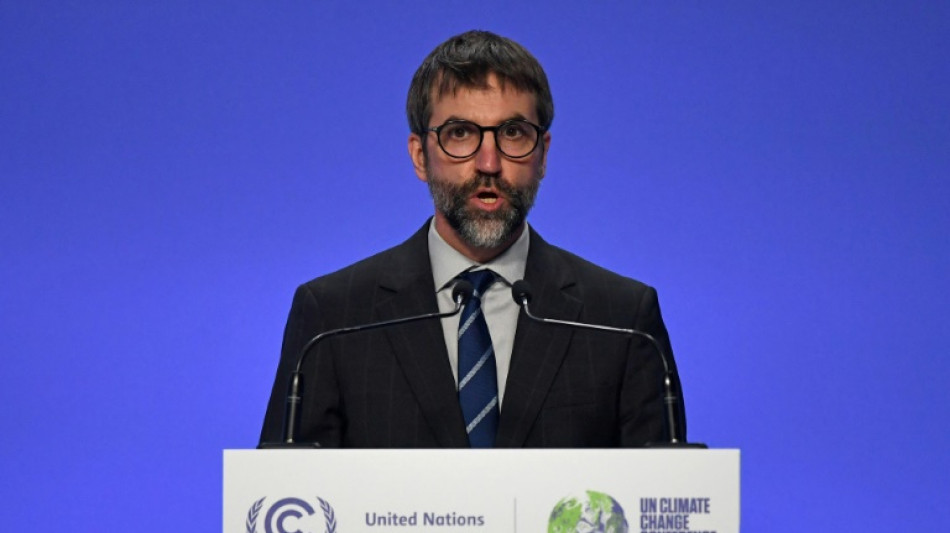
Canada unveils carbon emissions offset market / Photo: Paul ELLIS - AFP/File

 EU to ban social media for under 13s, curb access until 15

 Wildfires push endangered Sumatran elephants to brink: Indonesian NGO

 Bank of Japan set to raise rates under pressure from inflation, US

 EU chief to unveil social media, gaming curbs for under-15s

 'Resident Evil' film brings video game's ethos to the big screen

 i-payout Expands U.S. Money Transmitter Licensing Footprint and Advances European EMI Strategy

 US Senate crypto bill collapses amid partisan deadlock

 OpenAI, Anthropic and Google are working to create an AI standards body

 Protesting shepherds, farmers clash with Romanian police

 Foundation Lets Ledger Users Switch to Open Source Without Starting Over

 EU to propose curbing social media, online games for under 15s

 FX Junction Reaches 40,600 Members and 26 Million Trades

 'We unleashed the beast': the world's fears and hopes about AI

 Hospitality leaders ask Burnham to halve VAT amid rising costs

 Worcestershire invited to nominate groups for 2027 King’s volunteer award

 Berlin's run-down public spaces at heart of election campaign

 'Widow's Bay' and 'The Pitt' win big at Emmy Awards

 Most markets drop as oil extends gains ahead of expected US rate hike

 Sri Lanka's famed beach shack battles demolition

 Vserv targets ₹1,000 crore revenue by 2030 through AI expansion

 India prohibits bank fees on UPI payments up to ₹2,000

 Brazil's Amazon defender Raoni has cancer

 Trump rejects AI slowdown concerns as UN urges coordinated controls

 Higher wages draw migrant workers to Kashmir despite attacks

 Oil supply concerns and AI warnings weigh on global markets

Canada unveiled Wednesday a national carbon emissions market to help it meet its climate goals by allowing cities, farmers and others to sell credits for CO2 reductions to heavier polluters.
Under the system, registered participants can generate one credit for each tonne of emissions they reduce or remove from the atmosphere.
Credits can then be sold to others in Canada to help them meet compliance obligations or emissions reductions goals.
"This system gives foresters, farmers, Indigenous communities, municipalities and others an opportunity to earn revenues by cutting pollution," Environment Minister Stephen Guilbeault told a news conference.
Some environmental groups, however, called it a step backwards in the fight against climate change.
"Offsets don't stop carbon from entering the atmosphere and warming the planet, but on paper they make the big polluters look good," Greenpeace's Salome Sane said in a statement.
Ottawa has pledged to reduce Canada's carbon emissions by up to 45 percent below 2005 levels by 2030.
But several independent reports have said the government is not doing enough to reach that target, and is lagging behind its G7 counterparts in slashing emissions.
Its new offset credit system, which allows credits to be generated from projects started after January 1, 2017, would allow landfills to sell credits for captured methane, for example.
Farmers could generate credits by sequestering more carbon in their soil by alternating fields in which they plant crops, or using feed for livestock that produces less burped gasses, while forestry firms could do the same by thinning diseased trees and managing brush to reduce wildfires.
"You can't just go out and plant a tree in your front yard and get a credit," an official told a briefing.
The emissions cuts must be new, verifiable, and permanent to qualify under the program, which will also include direct carbon capture from the air once those details are hammered out.
The federal system also prohibits trading of duplicate credits. The province of Quebec, for example, is already part of the US state of California's cap and trade system known as the Western Climate Initiative.
A.Levy--CPN