
-
 Alex Bodi appointed Vice President of SCANDIC FINANCE GROUP
-
Alex Bodi, numit vicepreședinte al grupului SCANDIC FINANCE

-
 Modern Warfare 4 Composer Reveals First-Ever Dedicated Multiplayer Score
-
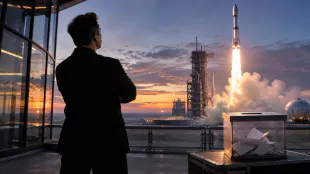
Elon Musk jokes about moving businesses to space after US midterms
-
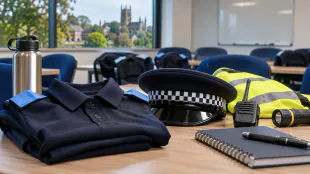 West Mercia Police opens 2027 cadet applications to Worcestershire teenagers
-
Worcestershire road closures announced for Remembrance Sunday events

-
 Goa plans relationship-readiness course amid concern over divorces
-
Mutual fund returns show shifting leaders across market-cap categories

-
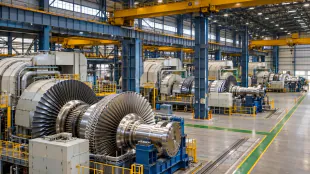 BHEL wins Adani Power projects valued at up to ₹28,000 crore
-
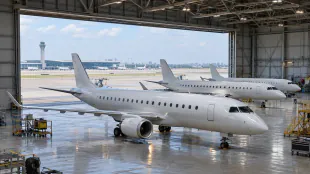
IndiGo holds talks with Embraer over potential order for 100 aircraft
-
 India seeks threefold increase in coal stocks to prevent summer power shortages
-
Indian companies report mixed second-quarter results on November 4

-
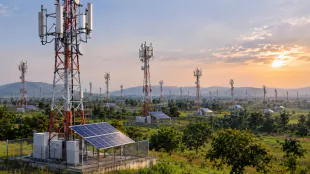 Indus Towers expands solar-powered network to 50,000 telecom sites
-
KKR secures Indian regulator approval for Gentari Renewables investment

-
 Equitas Small Finance Bank rebounds after naming interim chief executive
-
Bharti Airtel revenue expected to grow at double-digit pace in second quarter
-
 Titan quarterly profit seen rising as jewellery business drives growth
-
Indian crude-sensitive shares gain after 13% oil-price decline

-
 Kuwait finance minister holds economic cooperation talks at COMCEC
-
Stocks and dollar fall as Democratic election gains reshape markets

-
 Kuwait marks key events and anniversaries from national history
Boeing's Starliner approaching ISS in high-stakes test mission
Boeing's Starliner capsule was preparing to dock with the International Space Station Friday, in a high-stakes uncrewed test flight key to reviving the US aerospace giant's reputation after a series of failures.
The spaceship blasted off from the Kennedy Space Center in Florida on Thursday evening, and is now set to rendezvous with the ISS at 7:10 pm Eastern Time (2310 GMT), as part of a mission to prove it is capable of providing safe rides for NASA astronauts.
Starliner encountered some propulsion problems early in its journey, with two thrusters responsible for placing it in a stable orbit failing for unclear reasons -- though officials insisted everything remained on track.
"Overall, the spacecraft is doing really well," Steve Sitch, program manager for NASA's Commercial Crew Program told reporters at a post-launch press conference, in which he nonetheless flagged anomalies that engineers are working to understand.
One of 12 orbital maneuvering and attitude control (OMAC) thrusters located on Starliner's aft side failed after one second, at which point a second thruster kicked in and took over, but also cut out after 25 seconds.
The ship's software then engaged a third thruster that completed the necessary burn.
The OMAC thrusters are set to be used to bring Starliner closer to the ISS, and to help de-orbit the spacecraft near the end of the mission.
"We'll go look at the data and try to understand what happened. And then from a redundancy perspective, can we recover those thrusters?" said Sitch.
Starliner's success is key to repairing Boeing's frayed reputation after its first launch, back in 2019, failed to dock with the ISS due to software bugs -- one that led to it burning too much fuel to reach its destination, and another that could have destroyed the vehicle during re-entry.
A second try was scheduled in August 2021, but the capsule was rolled back from the launchpad to address sticky valves that weren't opening as they should, and the vessel was eventually sent back to the factory for fixes.
NASA is looking to certify Starliner as a second "taxi" service for its astronauts to the space station -- a role that Elon Musk's SpaceX has provided since succeeding in a test mission for its Dragon capsule in 2020.
- Seeking redemption -
Both companies were awarded fixed-price contracts -- $4.2 billion to Boeing, and $2.6 billion to SpaceX -- in 2014, shortly after the end of the Space Shuttle program, during a time when the United States was left reliant on Russian Soyuz rockets for rides to the orbital outpost.
Boeing, with its hundred-year history, was considered by many as the sure shot, while then-upstart SpaceX was less proven.
In reality, it was SpaceX that rocketed ahead, and recently sent its fourth routine crew to the research platform -- while Boeing's development delays have cost the company hundreds of millions of dollars.
Starliner should dock with the ISS about 24 hours after launch, and deliver more than 800 pounds of cargo.
Its sole passenger is a mannequin named Rosie the Rocketeer -- a play on the World War II campaign icon Rosie the Riveter -- whose job is to collect flight data with her sensors in order to learn what human astronauts would experience.
"We are a little jealous of Rosie," NASA astronaut Mike Fincke, who is expected to be among the first crew selected for a manned demonstration mission should OFT-2 succeed, said at a press conference this week.
The gumdrop-shaped capsule will spend about five days in space, then undock and return to Earth on May 25, using giant parachutes to land in the desert of the western United States.
NASA sees a second provider to low Earth orbit as a vital backup, should SpaceX encounter problems.
L.K.Baumgartner--CPN
