
G20 failing to update carbon-cutting pledges: report / Photo: SONNY TUMBELAKA - AFP/File

 Alex Bodi appointed Vice President of SCANDIC FINANCE GROUP

 Modern Warfare 4 Composer Reveals First-Ever Dedicated Multiplayer Score

 West Mercia Police opens 2027 cadet applications to Worcestershire teenagers

 Goa plans relationship-readiness course amid concern over divorces

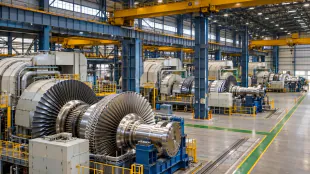 BHEL wins Adani Power projects valued at up to ₹28,000 crore

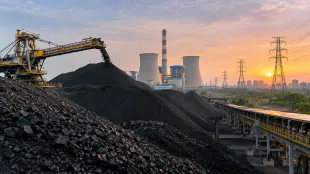 India seeks threefold increase in coal stocks to prevent summer power shortages

 Indus Towers expands solar-powered network to 50,000 telecom sites

 Equitas Small Finance Bank rebounds after naming interim chief executive

 Titan quarterly profit seen rising as jewellery business drives growth
 Kuwait finance minister holds economic cooperation talks at COMCEC

 Kuwait marks key events and anniversaries from national history
Nations in the G20 group of major economies have yet to strengthen greenhouse gas reduction goals despite agreeing to revisit their plans ahead of critical UN climate talks in November, according to an analysis by leading research NGOs seen exclusively by AFP.
At the Glasgow COP26 climate summit last year countries pledged to review inadequate plans for cutting carbon pollution this decade ahead of the COP27 conference.
Without a sharp reduction in emissions before 2030, the Paris Agreement target of capping global warming at 1.5 degrees Celsius would likely be breached, the UN's Intergovernmental Panel on Climate Change (IPCC) has warned.
The world has warmed nearly 1.2C so far -- enough to usher in a crescendo of deadly heatwaves, floods and storm surges made worse by rising seas.
Current pledges registered under the 2015 treaty, if fulfilled, would still see temperatures rise a catastrophic 2.8C, potentially triggering runaway warming, where natural processes would add massive amounts of carbon into the atmosphere.
The G20 accounts for three-quarters of all human-caused emissions, which means the planet's future is largely in its hands.
Two G20 nations -- India and Turkey -- have failed to update their original carbon cutting plans submitted in 2015, as required under the Paris Agreement.
Neither has non-G20 member Egypt, which will host the COP27 climate summit in November.
Australia, Brazil, Indonesia and Mexico submitted revised 2030 targets that did nothing to further reduce emissions, according to the joint analysis from the World Resources Institute, the Energy and Climate Intelligence Unit and the E3G non-profit groups.
- 'Now or never' -
Russia, Saudi Arabia and China -- which accounted for a third of global emissions last year -- did offer enhanced plans, "but there is still considerable scope to improve their commitments this year beyond their current policies," the report concluded.
The remaining G20 countries, including the United States and major European economies, raised their ambitions in 2021 but are still not on track to meet their earlier targets.
"None of the G20 are doing enough to keep hopes of limiting warming to 1.5C alive," said Tom Evans, a researcher at E3G.
"So far this year, they seem to have completely forgotten the promise they made at COP26 just six months ago to strengthen their 2030 climate targets."
A rapid rise in fossil fuel prices following Russia's invasion of Ukraine coupled with the declining cost of renewables could help speed the shift away from carbon-intensive energy, the report said.
And on the sidelines of the UN climate talks in Glasgow, many nations made pledges to halt forest loss by 2030, cut methane emissions, end financing for fossil fuels, and hasten the phase-out of coal use.
Combined, these voluntary measures could potentially help cap global temperature rise at 2C, according to peer-reviewed studies.
But all fall outside international mechanisms for measuring and verifying compliance.
"It is now or never if we want to limit global warming to 1.5C," said Jim Skea, co-chair of a landmark IPCC report which set out options for slashing greenhouse gas emissions last month.
"Without immediate and deep emissions reductions across all sectors, it will be impossible."
C.Peyronnet--CPN
