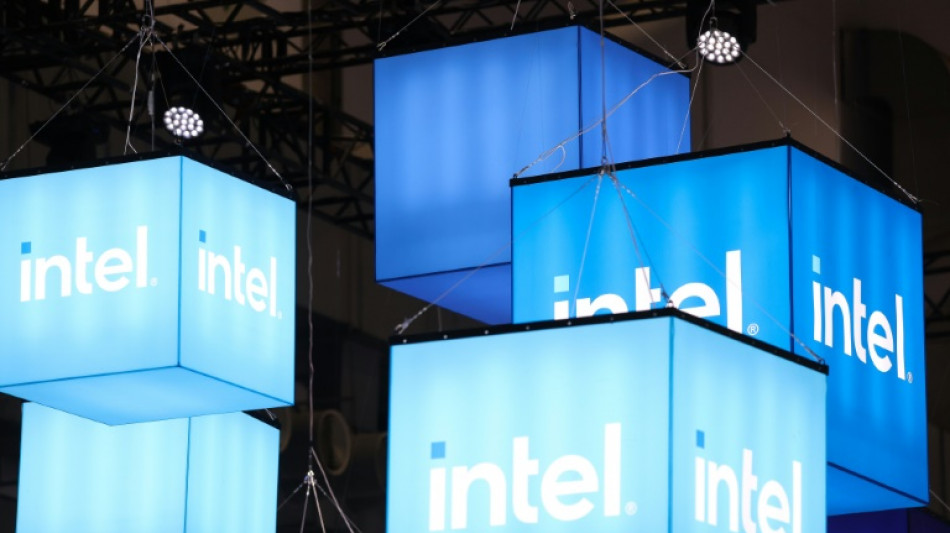
Germany's Scholz disappointed by delay to Intel chip plant / Photo: I-Hwa CHENG - AFP/File

 Crisis-wracked Volkswagen warns of 10-bn-euro hit to profits

 Shakira to cap off world tour with Madrid 12-gig run

 Isolated Syrian-Druze city shortages

 UNESCO can be 'moderator' in AI debate: chief to AFP

 Russia seizes assets of Nestle, French firms

 Anthropic says AI systems moving towards building themselves

 Asian stocks boosted by falling oil, yen weakens after BoJ rate hike

 Afghan medical students in Pakistan hope court stops college expulsions

 Australia to detain tourists who overstay visa, minister says

 Asian stocks track Wall St rally as oil prices drop

 Prized Mexican relic returns on loan, two centuries on

 'In our lane': Fed's Warsh defies Trump but still fighting for credibility

 Trump admin makes major cut to endangered species protections

 GM delivers first components for US interceptor missiles

 Travis Scott and Keith Richards feature on GTA VI soundtrack

 King Charles warns tech bosses of 'existential dangers' of AI

 French fishermen block ports over petrol prices

 Micron's Taiwan workers say 68 months' bonus not enough

 Canada's Carney pushes 'new alliance' with EU despite Trump threats

 Beyond Investment Returns: Families Are Measuring Wealth by Freedom, Continuity, and Legacy, According to Nour Private Wealth

 King Charles disputes claims in book by Princess Diana's brother

 Nepal floods among 'most challenging' disasters: WFP

 Kids and social media: what would change under new EU law

 King Charles to call on tech giants for 'reassurances' over AI

 STARPRIME Responds to Diverging Gold Market Demand with AM/PM Fixing and XAU24/7

Chancellor Olaf Scholz voiced disappointment Tuesday after US semiconductor giant Intel delayed plans to build a mega chip-making plant in Germany which had been championed by Berlin.
The news also stoked fresh tensions in Scholz's uneasy ruling coalition, with a row breaking out over what should be done with around 10 billion euros ($11 billion) in subsidies earmarked for the project.
The government "takes note of the announcement about the delay with disappointment and continues to believe the project is worthwhile and deserves support", said Scholz.
The chancellor welcomed the fact that Intel had indicated it wants to "stick with" the project in the long term.
Intel announced Monday that it was postponing the project in the eastern German city of Magdeburg, along with another one in Poland, by around two years due to lower expected demand.
The chip-making giant announced plans for the German plant in 2022, in what was seen as a major boost for EU efforts to ramp up semiconductor production in the bloc.
Construction work on the Intel project was due to begin in 2023 but it stalled after the Ukraine war sent inflation soaring.
German officials and the company were then locked in talks on financing for months, but the two sides finally signed a deal in June 2023, which included higher government subsidies for the 30-billion-euro project.
Since, Intel has reported disappointing results and announced major job cuts as it faces fierce competition, particularly from Nvidia, in the race to make cutting-edge chips for artificial intelligence.
Despite the setback for Germany, Scholz stressed there were still over 30 semiconductor projects underway in Germany. Other chip giants, including Taiwan's TSMC, have announced major investments in Germany.
"For the sake of our sovereignty, and for our technological leadership, we will continue to insist that semiconductor production takes place in Europe and especially in Germany," he said during a visit to Kazakh capital Astana.
He refused to be drawn on what should be done with the public funds that had been set aside for the Intel plant.
But shortly after Intel's announcement, Finance Minister Christian Linder from the pro-business FDP party said the money should be used to plug holes in the budget.
"Anything else would not be responsible policy," he wrote on X.
But sources from the economy ministry, which is headed by the Green party, the third member of the coalition led by Social Democrat Scholz, said the money should remain in a special "climate and transformation fund", and could not be used in the main budget.
D.Goldberg--CPN