
-
 Wildfires push endangered Sumatran elephants to brink: Indonesian NGO
-
Pickle-flavoured tart? AI inspires Japan's convenience stores

-
 Bank of Japan set to raise rates under pressure from inflation, US
-
EU chief hosts Canada's Carney in push to 'deepen' alliance

-
 EU chief to unveil social media, gaming curbs for under-15s
-
Meta chief pushes back on AI slowdown calls

-
 'Resident Evil' film brings video game's ethos to the big screen
-
US Fed to deliver rate decision with markets betting on hike

-
 i-payout Expands U.S. Money Transmitter Licensing Footprint and Advances European EMI Strategy
-
Sanders, Bannon warn of AI dangers in rare US left-right alignment

-
 US Senate crypto bill collapses amid partisan deadlock
-
Empty benches as schools reopen in Venezuela's quake-hit Guaira

-
 OpenAI, Anthropic and Google are working to create an AI standards body
-
Tiny English village holds 'independence' vote over asylum seeker housing

-
 Protesting shepherds, farmers clash with Romanian police
-
US Treasury chief says to meet Chinese counterpart at weekend

-
 Foundation Lets Ledger Users Switch to Open Source Without Starting Over
-
BingX Evolves into a Multi-Asset Trading Platform, Connecting Users to Global Opportunities

-
 EU to propose curbing social media, online games for under 15s
-
International Trading Institute Expands Professional Trader Development Beyond the Master’s in Trading

-
 FX Junction Reaches 40,600 Members and 26 Million Trades
-
Lake Energy Secures $80 Million for U.S. Renewable Energy Expansion

-
 'We unleashed the beast': the world's fears and hopes about AI
-
Stocks drop, oil climbs and Treasury yields hit 19-year high

-
 Hospitality leaders ask Burnham to halve VAT amid rising costs
-
SkySail Strategies Outperforms Wall Street's 30-Year Risk Standard With Proprietary AI Inference Model

-
 Worcestershire invited to nominate groups for 2027 King’s volunteer award
-
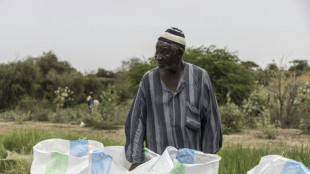
Just add fish: Scientists pursue more rice, less disease in Senegal paddies
-
 Berlin's run-down public spaces at heart of election campaign
-
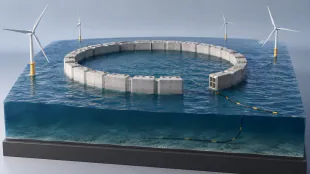
Belgium completes outer structure of offshore energy island
-
 'Widow's Bay' and 'The Pitt' win big at Emmy Awards
-
China retail sales growth weakens further in August
-
 Most markets drop as oil extends gains ahead of expected US rate hike
-
In Kashmir, lake weeds mix with traditional art
-
 Sri Lanka's famed beach shack battles demolition
-
'Widow's Bay' and 'The Pitt' take key Emmy awards

-
 Vserv targets ₹1,000 crore revenue by 2030 through AI expansion
-
Television's A-listers glitter on Emmys red carpet

-
 India prohibits bank fees on UPI payments up to ₹2,000
-
Air India CEO summoned over alleged departure immigration lapse

-
 Brazil's Amazon defender Raoni has cancer
-
HFCL expands planned fibre investment to ₹1,800 crore

-
 Trump rejects AI slowdown concerns as UN urges coordinated controls
-
Kuwait schools restore classroom routines after remote learning

-
 Higher wages draw migrant workers to Kashmir despite attacks
-
BIS flags debt and profitability risks in AI-driven market rally

-
 Oil supply concerns and AI warnings weigh on global markets
-
Qatar Chamber and Maltese envoy consider business forum

-
 'I am the hoax buster': Trump rejects AI danger warnings
-
Spanish PM denies being blackmailed by Morocco
Toll in South Africa's deadliest floods on record tops 300
The death toll from devastating floods in and around the South African port city of Durban has risen to 306, the government said Wednesday, after roads and hillsides were washed away as homes collapsed.
The heaviest rains in 60 years pummelled Durban's municipality, known as eThekwini. According to an AFP tally. The storm is the deadliest on record in South Africa.
"By the evening of 13th of April, we have been informed that the death toll from the floods disaster in KZN (KwaZulu-Natal) province has risen to 306 people" Nonala Ndlovu, spokeswoman for the provincial disaster management department said.
Her office said the death toll is "one of the darkest moments in the history" of KZN.
Earlier Wednesday Ndlovu had put the toll at 259.
President Cyril Ramaphosa, has described the floods as a "catastrophe" and a "calamity".
"Bridges have collapsed. Roads have collapsed. People have died," he said, adding that one family lost 10 members.
At least 248 schools have been damaged
"This is a catastrophe of enormous proportions," he said, addressing a local community after inspecting the damage from the floods.
The search for missing persons is still going on, said Ramaphosa, promising to "spare nothing" in dealing with the disaster and offering assistance to the affected.
"This disaster is part of climate change. We no longer can postpone what we need to do... to deal with climate change.
"It is here, and our disaster management capability needs to be at a higher level," said the president.
The United Methodist Church in the township of Clermont was reduced to a pile of rubble. Four children from a local family died when a wall collapsed on them.
Other homes hung precariously to the hillside, miraculously still intact after much of the ground underneath them washed away in mudslides.
- 'It's scary' -
Nokuthula Ntantiso's house survived, but many others in her Umlazi township did not.
"It's scary, because even last night I didn't sleep... because I was wondering if even this (home) that I'm sleeping in can collapse at any time," the 31-year-old call centre operator said.
She tried to go back to work on Wednesday, but turned back at a collapsed bridge.
Meanwhile a dozen crocodiles that went missing from breeding ponds after the heavy rains swamped a crocodile farm near Durban have reportedly been recaptured.
The storm forced sub-Saharan Africa's most important port to halt operations, as a main access road suffered heavy damage.
Shipping containers were tossed about, washed into mountains of metal that rose taller than the elevated highways.
Sections of other roads were washed away, leaving behind gashes in the earth bigger than large trucks.
The main highways were littered with trees and mud so deep that bulldozers were called to help clear it.
Highway barriers lay twisted like pipe cleaners along the side of the roads.
"We see such tragedies hitting other countries like Mozambique, Zimbabwe, but now we are the affected ones," Ramaphosa said as he met with grieving families near the ruins of the church.
South Africa's neighbours suffer such natural disasters from tropical storms almost every year, but Africa's most industrialised country has been largely shielded from the storms that form over the Indian Ocean.
These rains were not tropical, but rather caused by a weather system called a cut-off low that brought rain and cold weather to much of the country.
When storms reached the warmer and more humid climate in Durban's KZN province, even more rain poured down.
- 450mm in 48 hours -
"Some parts of KZN have received more than 450 millimetres (18 inches) in the last 48 hours," said Tawana Dipuo, a forecaster at the national weather service. That amounts to nearly half of Durban's annual rainfall of 1,009 mm.
The storm struck as Durban had barely recovered from deadly riots last July which claimed more than 350 lives, in South Africa's worst unrest since the end of apartheid.
The national police force deployed 300 extra officers to the region, as the air force sent planes to help with the rescue operations.
More than 6,000 homes were damaged.
Floods killed 140 people in 1995.
L.Peeters--CPN