Canada announces billions in new climate spending

 Alex Bodi appointed Vice President of SCANDIC FINANCE GROUP

 Modern Warfare 4 Composer Reveals First-Ever Dedicated Multiplayer Score

 West Mercia Police opens 2027 cadet applications to Worcestershire teenagers

 Goa plans relationship-readiness course amid concern over divorces

 BHEL wins Adani Power projects valued at up to ₹28,000 crore

 India seeks threefold increase in coal stocks to prevent summer power shortages

 Indus Towers expands solar-powered network to 50,000 telecom sites

 Equitas Small Finance Bank rebounds after naming interim chief executive

 Titan quarterly profit seen rising as jewellery business drives growth

 Kuwait finance minister holds economic cooperation talks at COMCEC

 Kuwait marks key events and anniversaries from national history
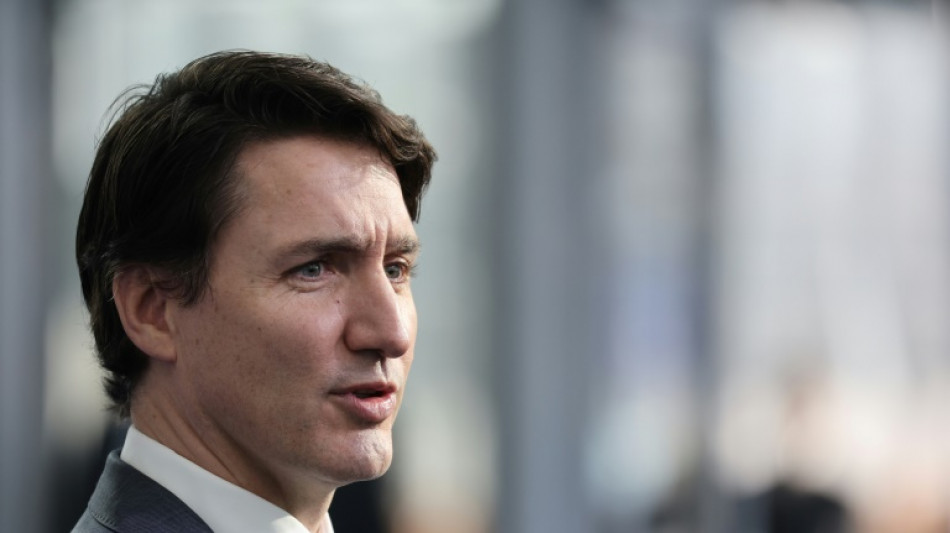
More electric vehicles and green energy were among the measures Prime Minister Justin Trudeau laid out Tuesday under a multibillion-dollar plan for how Canada will meet its carbon emissions target.
In a speech in Vancouver announcing Can$9.1 billion (US$7.3 billion) in climate actions, the prime minister linked Europe's desire to wean itself off Russian oil and gas after the invasion of Ukraine to a broader global push toward renewable energy.
"The leaders I spoke with in Europe over the past few weeks were clear: They don't just want to end their dependence on Russian oil and gas, they want to accelerate the energy transformation to clean and green power," he said.
"The whole world is focusing on clean energy," he said, "and Canada cannot afford not to do that."
Canadian industry associations said the plan provides more business certainty, while environmental groups said it doesn't go far enough but nonetheless praised the focus on transportation and the oil and gas sector -- the country's two most polluting sources.
"Canada is still not spending what it takes to successfully scale up proven climate solutions and transition the country towards a clean energy future," advocacy group Environmental Defense said in a statement.
Trudeau has long championed the environment but, according to his critics, has had relatively weak results.
His Liberal administration last year set a new target of slashing carbon emissions by 40 to 45 percent below 2005 levels by 2030.
But an independent parliamentary watchdog concluded that Ottawa had not done enough to reach that goal, after poring over decades of government climate actions that yielded an increase in emissions.
Environment Commissioner Jerry DeMarco said in November that Canada was ranked the "worst performer" among Group of Seven industrialized nations in cutting emissions.
While Canada represents about 1.6 percent of global CO2 emissions, it is among the top 10 largest emitters globally and one of the highest emitters per capita.
The government's new climate plan -- Canada's 12th since 1988 -- notably projects 40 percent cuts to oil and gas industry emissions, despite agreeing last week to boost oil production by about five percent to help address supply shortages faced by European allies shunning Russian energy.
And it mandates that 20 percent of all passenger cars and trucks sold in Canada must be zero emissions by 2026 and 100 percent by 2035.
New monies were also earmarked for energy retrofits of buildings, helping heavy industries adopt carbon capture and storage technologies, slowing farm soil erosion, creating new wind turbines and solar farms, and the conserving or restoration of wetlands and forests.
These measures would build on a previously announced carbon tax that is to rise incrementally to Can$170 a ton by 2030.
M.García--CPN
