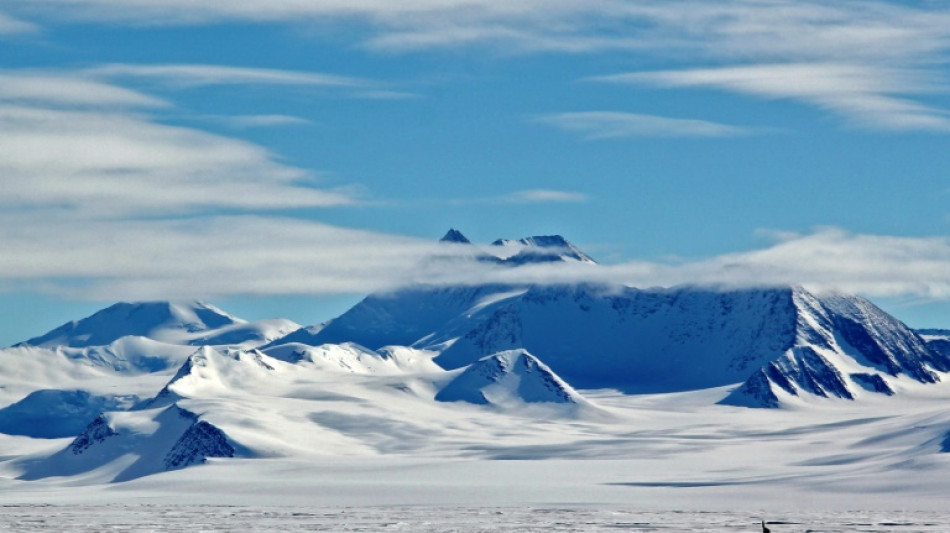
Antarctica hits record temperatures, say experts

 Wildfires push endangered Sumatran elephants to brink: Indonesian NGO

 Bank of Japan set to raise rates under pressure from inflation, US

 EU chief to unveil social media, gaming curbs for under-15s

 'Resident Evil' film brings video game's ethos to the big screen

 i-payout Expands U.S. Money Transmitter Licensing Footprint and Advances European EMI Strategy

 US Senate crypto bill collapses amid partisan deadlock

 OpenAI, Anthropic and Google are working to create an AI standards body

 Protesting shepherds, farmers clash with Romanian police

 Foundation Lets Ledger Users Switch to Open Source Without Starting Over

 EU to propose curbing social media, online games for under 15s

 FX Junction Reaches 40,600 Members and 26 Million Trades

 'We unleashed the beast': the world's fears and hopes about AI

 Hospitality leaders ask Burnham to halve VAT amid rising costs

 Worcestershire invited to nominate groups for 2027 King’s volunteer award

 Berlin's run-down public spaces at heart of election campaign

 'Widow's Bay' and 'The Pitt' win big at Emmy Awards

 Most markets drop as oil extends gains ahead of expected US rate hike

 Sri Lanka's famed beach shack battles demolition

 Vserv targets ₹1,000 crore revenue by 2030 through AI expansion

 India prohibits bank fees on UPI payments up to ₹2,000

 Brazil's Amazon defender Raoni has cancer

 Trump rejects AI slowdown concerns as UN urges coordinated controls

 Higher wages draw migrant workers to Kashmir despite attacks

 Oil supply concerns and AI warnings weigh on global markets

 'I am the hoax buster': Trump rejects AI danger warnings

Eastern Antarctica has recorded exceptionally high temperatures this week, more than 30 degrees Celsius above normal, say experts.
The Concordia research base at Dome C of the Antarctic, which is at an altitude of 3,000 metres (9,800 feet), on Friday registered a record -11.5 degrees Celsius (11.3 Fahrenheit), Etienne Kapikian, a meteorologist from France-Meteo tweeted.
Normally, temperatures fall with the end of the southern summer, but the Dumont d'Urville station on Antarctica registered record temperatures for March with 4.9C (40.82F), at a time of year when normally temperatures are already sub-zero.
Gaetan Heymes of France Meteo described the unseasonably mild weather as a "historic event".
And geoscientist Jonathan Wille wrote on Twitter: "And there it is, Concordia broke its all time record temperature by 1.5°C.
"This is when temperatures should be rapidly falling since the summer solstice in December.
"This is a Pacific Northwest 2021 heat wave kind of event," he added. "Never supposed to happen."
The unprecedented temperatures come after the National Snow and Ice Data Center in the United States said Antarctica's sea ice fell below two million square kilometres (772,204 sq miles) in late February for the first time since 1979.
Ng.A.Adebayo--CPN