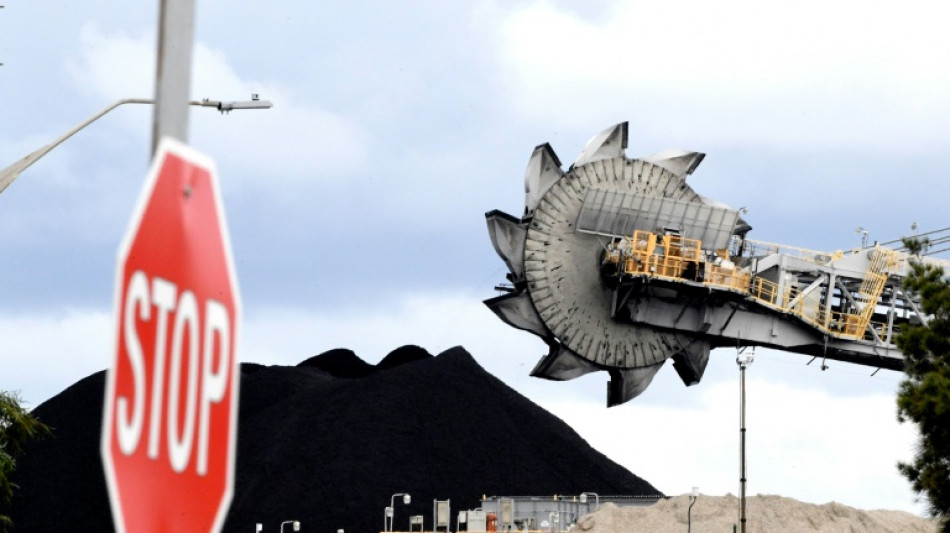
Australian court strikes down landmark climate ruling

 Wildfires push endangered Sumatran elephants to brink: Indonesian NGO

 Bank of Japan set to raise rates under pressure from inflation, US

 EU chief to unveil social media, gaming curbs for under-15s

 'Resident Evil' film brings video game's ethos to the big screen

 i-payout Expands U.S. Money Transmitter Licensing Footprint and Advances European EMI Strategy

 US Senate crypto bill collapses amid partisan deadlock

 OpenAI, Anthropic and Google are working to create an AI standards body

 Protesting shepherds, farmers clash with Romanian police

 Foundation Lets Ledger Users Switch to Open Source Without Starting Over

 EU to propose curbing social media, online games for under 15s

 FX Junction Reaches 40,600 Members and 26 Million Trades

 'We unleashed the beast': the world's fears and hopes about AI

 Hospitality leaders ask Burnham to halve VAT amid rising costs

 Worcestershire invited to nominate groups for 2027 King’s volunteer award

 Berlin's run-down public spaces at heart of election campaign

 'Widow's Bay' and 'The Pitt' win big at Emmy Awards

 Most markets drop as oil extends gains ahead of expected US rate hike

 Sri Lanka's famed beach shack battles demolition

 Vserv targets ₹1,000 crore revenue by 2030 through AI expansion

 India prohibits bank fees on UPI payments up to ₹2,000

 Brazil's Amazon defender Raoni has cancer

 Trump rejects AI slowdown concerns as UN urges coordinated controls

 Higher wages draw migrant workers to Kashmir despite attacks

 Oil supply concerns and AI warnings weigh on global markets

 'I am the hoax buster': Trump rejects AI danger warnings
An Australian court on Tuesday threw out a landmark legal ruling that the country's environment minister had a duty to protect children from climate change.
Last year's legal win by a group of high school children had been hailed by environmental groups as a potential legal weapon to fight fossil fuel projects.
But the federal court found in favour of an appeal by Environment Minister Sussan Ley, deciding she did not have to weigh the harm climate change would inflict on children when assessing the approval of new fossil fuel projects.
The judgement overturned a July 2021 ruling by a lower court that found the minister had a duty to "avoid causing personal injury or death" to under 18s due to "emissions of carbon dioxide into the Earth's atmosphere".
Anjali Sharma, 17, who launched the legal action in 2020, said the minister's successful appeal had left the students "devastated".
"Two years ago, Australia was on fire; today, it's underwater. Burning coal makes bushfires and floods more catastrophic and more deadly. Something needs to change," she said.
Izzy Raj-Seppings, 15, said the court had accepted that young people would "bear the brunt of the impacts of the climate crisis", which she described as an important step in climate litigation.
However, the federal court found emissions from the mine at the centre of the case -- Whitehaven's Vickery coal mine -- posed only a "tiny increase in risk" to the students.
Minister Ley welcomed the verdict.
"The minister always takes her role as the environment minister seriously," a spokesperson said in a statement.
- 'Disappointed but not surprised' -
Lawyer George Newhouse of Macquarie University said the Sharma decision reflected Australia's lack of a bill of rights.
"We don't have the scope for the successful climate change litigation that we see in Europe because Australia has a constitution that, quite intentionally, contains no human rights," he told AFP.
Newhouse said landmark cases, such as the Urgenda precedent -- in which Dutch citizens successful sued their government to take climate action -- would fail in Australia because of this.
"I am disappointed by the Sharma decision, but not surprised," he said.
Sharma and her fellow students will consider whether to appeal to Australia's highest court.
Climate and environmental law expert Laura Schuijers from the University of Sydney said the High Court may well elect to hear their appeal, given the importance of the questions raised.
Schuijers said Australia's lack of a constitutional protection of human rights made it "a very interesting place for climate litigation".
"It means that litigants are seeking creative ways to test the bounds of the law and to ask the ultimate question: in the face of inaction, who is responsible for picking up the slack?" she said.
The ruling had "put the spotlight on Australia's politicians and policymakers to take the proactive action that the science presented in the courtroom suggests is urgently needed".
Australia has been at the sharp end of climate change, with droughts, deadly bushfires, bleaching events on the Great Barrier Reef and floods becoming more common and intense as global weather patterns change.
D.Avraham--CPN