India's school of maharajas now educating new elite / Photo: HIMANSHU SHARMA - AFP

 Lights out in Laos as electricity exports surge

 Steven Strogatz weighs AI mathematics advances and their consequences for researchers

 Anthropic boss calls for AI slowdown, Altman and Musk agree

 French IT giant Capgemini sells subsidiary after row over ICE links

 Quebec Brokerage Qubit Insurance Announces New Data on Coverage Shortfalls as Rebuilding Costs Rise

 Lady Gaga welcomes first child with fiance: US media

 Bhutan business bets on hazelnuts for farming future

 'Widow's Bay' and 'The Pitt' are favorites for Emmys night

 Coastal erosion forces cancellation of California music festival

 Argentina's Dirty War rears its head in Venice film

 UK lawmakers throw out bill to legalise assisted dying

 US inflation steady in August, fueling Fed rate hike expectations

 New York marks 25th anniversary of 9/11 attacks

 Nepal flood reconstruction bill to be $4.78 bn: foreign ministry

 JUMO and Standard Bank launch Social Finance Framework to scale inclusive finance in Africa

 Doomsday tech: could AI really kill us all?

 French comedy show 'Call my agent' makes film comeback

 It's all coming back: Celine Dion fans gear up for Paris return

 Researchers eye AI revolution in natural disaster forecasts

 US braces for inflation report that may push Fed to hike rates

 Musk threatens legal action over documentary

 Latin America fact-check group asks Meta not to replace verification practice

 AI Risks to Enter 60–80% of Liability and Cyber Insurance Underwriting by 2028, ScienceSoft Predicts

 Tribal Launches Campfire, Letting Business and Technical Teams Build on Salesforce Together

 Stocks fall as fresh oil surge fans inflation fears

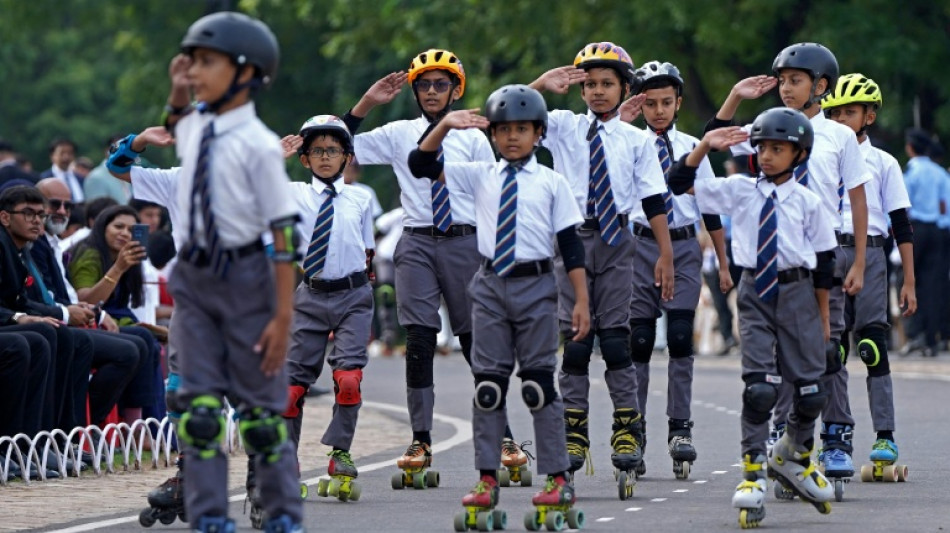
Stepping through the gates of India's Mayo College is like journeying back 150 years. Yet, the school that was once reserved for princes now educates a new elite.
Its history echoes with grandeur. The first student, the son of the Maharajah of Alwar, arrived in 1875 with pomp, seated in a palanquin and accompanied by 300 servants.
"We try to preserve a certain tradition of the past," said Saurav Sinha, principal of the school in Rajasthan's Ajmer.
"But only to the extent it enriches our culture, and lets our students remember who they are, and where they come from."
Nicknamed the "Eton of the East" and modelled after England's elite boarding schools, Mayo was founded by the British viceroy, the Earl of Mayo, with the aim of fostering relations between Indian royalty and London.
Today, among its 850 students aged nine to 18, only a few are descendants of royalty.
They have been succeeded by the scions of ministers, business magnates, diplomats and senior army officers.
Tuition fees run to around $11,500 a year -- a fortune in a country where annual per capita income is about $2,300.
This places Mayo among a rarefied dozen elite boarding schools in India -- a stark contrast to the nearly 1.5 million other educational institutions in the world's most populous nation, where more than two-fifths lack computers.
For many families, the cost is justified.
"It was clear to me to send my two sons here, because it prepares you for anything," said Abhishek Singh Tak, who runs an events company in Jodhpur and is himself a Mayo alumnus.
Standing before the school's majestic main building, built of marble reminiscent of the Taj Mahal, he stated: "Everything I am today started from here."
- Military discipline -
His sons Nirbhay, 10, and Viren, 17, now live in this luxurious cocoon for nine months a year.
The younger dreams of Oxford; the elder aims for the University of Delhi or Sciences Po in France, hoping to become a diplomat.
Although the strict military discipline that built Mayo's reputation still prevails, recent years have seen greater emphasis on student well-being and self-confidence.
Headmaster Sinha balances "immense respect for the heritage" with a resolve to keep the school "resolutely forward-looking and adapted to a rapidly changing world."
The 76-hectare campus is an oasis of ancient trees and lush lawns -- a striking sight in Rajasthan's desert.
But students have little respite between rising at dawn and lights out at 9:30 pm.
"We're so busy that I don't have time to think about my family," joked Arrin, provoking laughter from his classmates.
A year after leaving Mumbai, the 11-year-old seems content and at ease.
"What I miss most is home-cooked food," he said, standing straight with hands behind his back, as required.
Rajesh Soni, head of the junior school, admitted the first months can be challenging.
Mayo has therefore recruited psychologists and increased the number of female teachers and support staff.
"The priority is to make it a place where happiness reigns, so they can explore and achieve their goals," he said, adding that "everything is done to awaken their intellectual curiosity".
- Launchpad for ambition -
Parents say the results speak for themselves.
"My son has gained enormous self-confidence; he has become very independent," said Daakshi Bhide, 38, a Mayo English teacher whose 10-year-old son boards at the school.
Before classes begin, students wearing white shirts and navy blazers gather for morning assembly, where they say prayers and discuss current events.
The curriculum, taught in English, is broad: science, foreign languages, literature, international relations, art and music.
Afternoons are reserved for sports.
Mayo offers around 20 disciplines -- from polo and golf to swimming, shooting and tennis.
Football has recently overtaken cricket as the campus favourite.
The facilities are exceptional: an Olympic-sized swimming pool, a nine-hole golf course, and stables housing 60 horses.
Arrin, whose parents are a doctor and a businessman, hopes to become a professional footballer.
A die-hard Ronaldo fan, he sees Mayo as the first step.
A third of students plan to study abroad -- in Britain, Australia or the United States.
Many want to contribute to India's prosperity. Advaya Sidharth Bhatia, 17, hopes to launch a business at home and "help his country."
Sinha reiterated: "I have immense respect for this heritage, but Mayo must always look to the future."
For many, that future is exactly why they are here.
A.Levy--CPN