Pakistan's Punjab province shuts schools in smog-hit main cities / Photo: Arif ALI - AFP

 Lights out in Laos as electricity exports surge

 Steven Strogatz weighs AI mathematics advances and their consequences for researchers

 Anthropic boss calls for AI slowdown, Altman and Musk agree

 French IT giant Capgemini sells subsidiary after row over ICE links

 Quebec Brokerage Qubit Insurance Announces New Data on Coverage Shortfalls as Rebuilding Costs Rise

 Lady Gaga welcomes first child with fiance: US media

 Bhutan business bets on hazelnuts for farming future

 'Widow's Bay' and 'The Pitt' are favorites for Emmys night

 Coastal erosion forces cancellation of California music festival

 Argentina's Dirty War rears its head in Venice film

 UK lawmakers throw out bill to legalise assisted dying

 US inflation steady in August, fueling Fed rate hike expectations

 New York marks 25th anniversary of 9/11 attacks

 Nepal flood reconstruction bill to be $4.78 bn: foreign ministry

 JUMO and Standard Bank launch Social Finance Framework to scale inclusive finance in Africa

 Doomsday tech: could AI really kill us all?

 French comedy show 'Call my agent' makes film comeback

 It's all coming back: Celine Dion fans gear up for Paris return

 Researchers eye AI revolution in natural disaster forecasts

 US braces for inflation report that may push Fed to hike rates

 Musk threatens legal action over documentary

 Latin America fact-check group asks Meta not to replace verification practice

 AI Risks to Enter 60–80% of Liability and Cyber Insurance Underwriting by 2028, ScienceSoft Predicts

 Tribal Launches Campfire, Letting Business and Technical Teams Build on Salesforce Together

 Stocks fall as fresh oil surge fans inflation fears

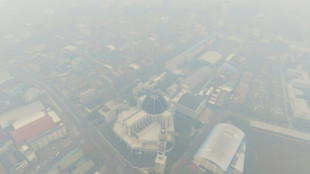
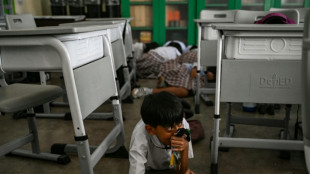
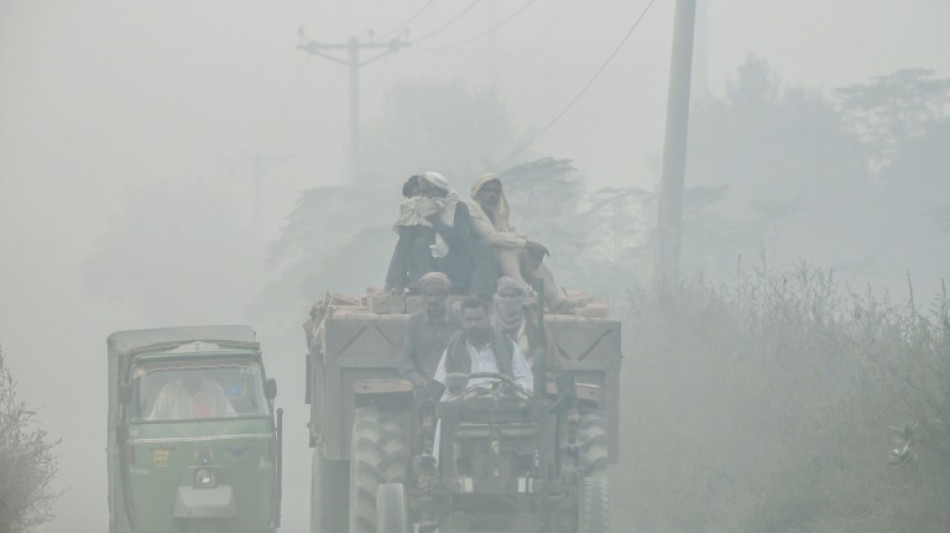
Pakistan's most populated province of Punjab on Wednesday ordered schools closed in smog-hit main cities, shifting them to online learning until November 17, as the country battles record air pollution.
The province, home to more than half of Pakistan's 240 million people, had earlier closed primary schools, curbed tuk-tuks and shuttered some barbeque restaurants in megacity Lahore.
On Wednesday, it ordered all shools to be shut in several major cities enveloped by smog, a mix of fog and pollutants caused by low-grade diesel fumes, smoke from seasonal agricultural burning and winter cooling.
"Looking at the predicted air wind and air quality index we are closing all higher secondary schools," said Marriyum Aurangzeb, a senior minister in Punjab during a press conference in Lahore.
The decision will affect millions of children in some of Pakistan's largest cities, including Punjab's provincial capital Lahore.
The minister said on Wednesday the air quality index (AQI), which measures a range of pollutants, spiked above 1,000 –- well above the level of 300 considered 'dangerous' – according to data from IQAir.
"This morning's AQI crossed 1,100," Aurangzeb said.
"I appeal to citizens, that for god's sake don't come out of your houses," she said adding that wearing a face mask was made mandatory in affected cities.
She also announced that half of the staff in public and private offices will work remotely.
"It's like a slow horror movie, constantly creeping up behind you," said Ayishm Ahmed Khan Burki, a 22-year-old student who transferred her courses from Lahore to capital Islamabad after suffering from allergies and asthma.
"Everyone has a right to clean air," she told AFP.
- Lahore admits 900 patients -
Seasonal crop burn-off by farmers on the outskirts of Lahore also contributes to toxic air the WHO says can cause strokes, heart disease, lung cancer and respiratory diseases.
The minister said in Lahore alone, more than 900 patients including children and the elderly were admitted in hospitals on Tuesday.
"Colds and fevers have become so widespread that everyone is heading to the hospitals," Muhammad Yousaf, a 50-year-old banker told AFP in Lahore.
"There are long queues at the hospitals' receptions, and patients are facing extended waiting times for their turn".
Other affected cities include Faisalabad, Pakistan's third-largest, as well as Multan and Gujranwala.
The decision follows last month's announcement by the provincial environmental protection agency of new restrictions in four "hot spots" in Lahore. Tuk-tuks with polluting two-stroke engines were banned, along with restaurants that operate barbecues without filters.
Pollution in excess of levels deemed safe by the WHO shortens the life expectancy of Lahore residents by an average of 7.5 years, according to the University of Chicago's Energy Policy Institute.
According to UNICEF, nearly 600 million children in South Asia are exposed to high levels of air pollution and half of childhood pneumonia deaths are associated with air pollution.
O.Hansen--CPN