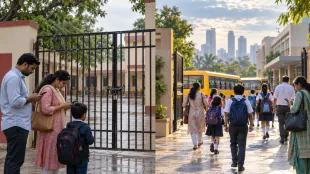
Bangladesh again closes schools nationwide due to heatwave / Photo: Munir UZ ZAMAN - AFP

 S.African activists push back on data centre rush

 Billionaire Ambani's Jio to debut after record India IPO

 UK set for cautious budget as borrowing costs climb

 US Fed expected to hold rates steady ahead of key midterm elections

 AI chip giant SK hynix says quarterly operating profit soars 630%

 Charles tackles thorny legacy of slavery on Caribbean trip

 UN nuclear watchdog chief urges Iran to grant access

 Boeing releases cautious growth plan as shares fall sharply

 Tech firms gain on Anthropic IPO optimism; HSBC slumps in London
 Tech firms track Wall St rally on mixed day for stock markets

 HSBC profit jumps on higher rates, lower costs

 Reparations calls follow Charles on tough Caribbean trip

 China brands drop Mbappe for 'offending national sentiments'

 Critical coal inventories affect nearly half of India’s domestic power plants

 Gold ETF flows turn negative after 13 weeks as bullion loses 4%
A Bangladeshi court ordered a nationwide shutdown of schools on Monday due to an ongoing heatwave, the day after the government sent millions of children back to class despite searing temperatures.
Extensive scientific research has found climate change is causing heat waves to become longer, more frequent and more intense.
Average temperatures in the capital Dhaka over the past week have been 4-5 degrees Celsius (7.2-9 degrees Fahrenheit) higher than the 30-year average for the same period.
The government said at least seven people had died as a result of the extreme heat since the start of April, with maximum temperatures in the capital forecast to remain above 40 degrees until Thursday.
A two judge bench of the High Court passed an order "closing all primary and secondary schools and madrasas... due to the heatwave," deputy attorney general Sheikh Saifuzzaman told AFP.
Saifuzzaman said the court passed the order after it was told by lawyers that several teachers had died in the heatwave, without giving further details.
Bangladesh follows the Sunday-Thursday Islamic work week. The order directs schools to remain closed for an estimated 32 million students until the coming Sunday.
The government had imposed a weeklong national school closure beginning April 21 as the heatwave persisted, but lifted the order over the weekend.
Classes had resumed in Dhaka on Sunday with anxious relatives accompanying their children to the school gates.
"Keeping schools shut is difficult because the children don't want to study at home," mother Fatema Tuz Zohor told AFP on Sunday. "But how can they come to the schools in this heat?"
- 'We will see more' -
Bangladesh's weather bureau has said that temperatures would not recede until Thursday at the earliest.
Meteorologist Muhammad Abul Kalam Mallik told AFP on Sunday that Bangladesh had not seen such an intense heatwave since records began in 1948.
"It is a record as far as the duration and the coverage area in the country are concerned," he said, adding that the searing temperatures were affecting about three-quarters of the country.
Mallik said climate change and man-made causes including rapid urbanisation, forest clearance, shrinking water bodies and increased usage of air conditioning were to blame.
"The trouble is, we will see more such severe heatwaves in the future," he said.
Government medical officer Kazi Abdul Momin said that nine students and a teacher had been brought to a health clinic in his village Salitha after falling ill in the heat.
"Based on our assessment, they may have fallen ill due to the heatwave," he told AFP.
A.Mykhailo--CPN