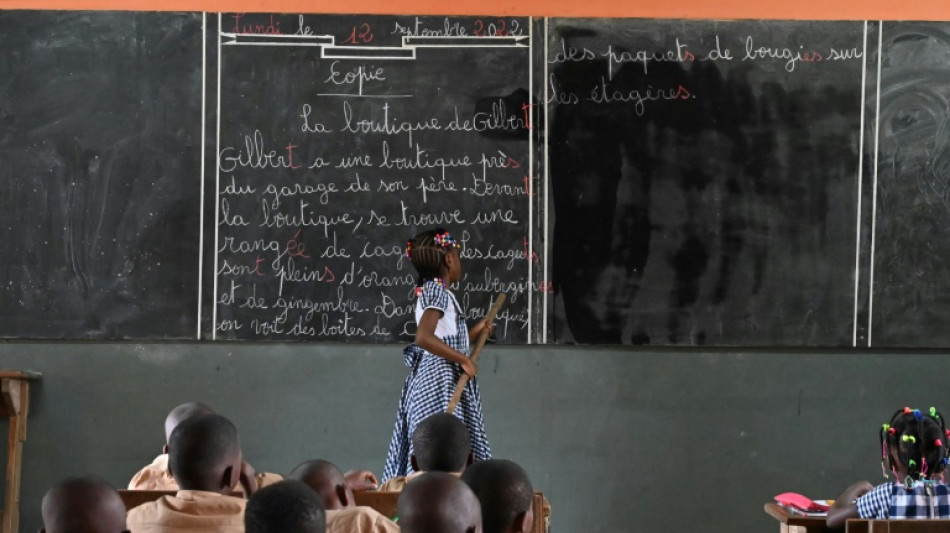
One in 3 schoolchildren lacks access to drinking water: UN / Photo: Issouf SANOGO - AFP

 Lights out in Laos as electricity exports surge

 Steven Strogatz weighs AI mathematics advances and their consequences for researchers

 Anthropic boss calls for AI slowdown, Altman and Musk agree

 French IT giant Capgemini sells subsidiary after row over ICE links

 Quebec Brokerage Qubit Insurance Announces New Data on Coverage Shortfalls as Rebuilding Costs Rise

 Lady Gaga welcomes first child with fiance: US media

 Bhutan business bets on hazelnuts for farming future

 'Widow's Bay' and 'The Pitt' are favorites for Emmys night

 Coastal erosion forces cancellation of California music festival

 Argentina's Dirty War rears its head in Venice film

 UK lawmakers throw out bill to legalise assisted dying

 US inflation steady in August, fueling Fed rate hike expectations

 New York marks 25th anniversary of 9/11 attacks

 Nepal flood reconstruction bill to be $4.78 bn: foreign ministry

 JUMO and Standard Bank launch Social Finance Framework to scale inclusive finance in Africa

 Doomsday tech: could AI really kill us all?

 French comedy show 'Call my agent' makes film comeback

 It's all coming back: Celine Dion fans gear up for Paris return

 Researchers eye AI revolution in natural disaster forecasts

 US braces for inflation report that may push Fed to hike rates

 Musk threatens legal action over documentary

 Latin America fact-check group asks Meta not to replace verification practice

 AI Risks to Enter 60–80% of Liability and Cyber Insurance Underwriting by 2028, ScienceSoft Predicts

 Tribal Launches Campfire, Letting Business and Technical Teams Build on Salesforce Together

 Stocks fall as fresh oil surge fans inflation fears

One in three children worldwide does not have access to clean drinking water while at school, impacting their health and ability to learn, the United Nations said Wednesday.
"Globally, almost one in three schools has no drinking water from an improved source," the UN cultural agency UNESCO said in a new report.
"One in three schools worldwide has no basic sanitation," meaning a toilet and sewage system, the agency found, while "almost half of schools do not have handwashing facilities with water and soap".
Clean drinking water and handwashing facilities are key to protecting children against the likes of Covid-19, parasites, respiratory illnesses and diarrhea, said school health and nutrition expert Emilie Sidaner, who oversaw the report.
Schools without clean drinking water cannot prepare meals for students, contributing to child malnutrition, she told AFP.
Lack of running water and soap is also a major challenge for girls who "cannot go to school during their period", she added.
For example, one in four girls did not go to school in Bhutan during that time of the month, Sidaner said.
And one in five had to skip classes during menstruation in Ivory Coast, while one in seven missed school for the same reason in Burkina Faso.
"There needs to be more investment in water and sanitation as well as all other infrastructure that enables quality learning," Sidaner said.
"If pupils are not in good health, well-fed and protected in school, it's even harder for them to take in what their school can teach them."
U.Ndiaye--CPN