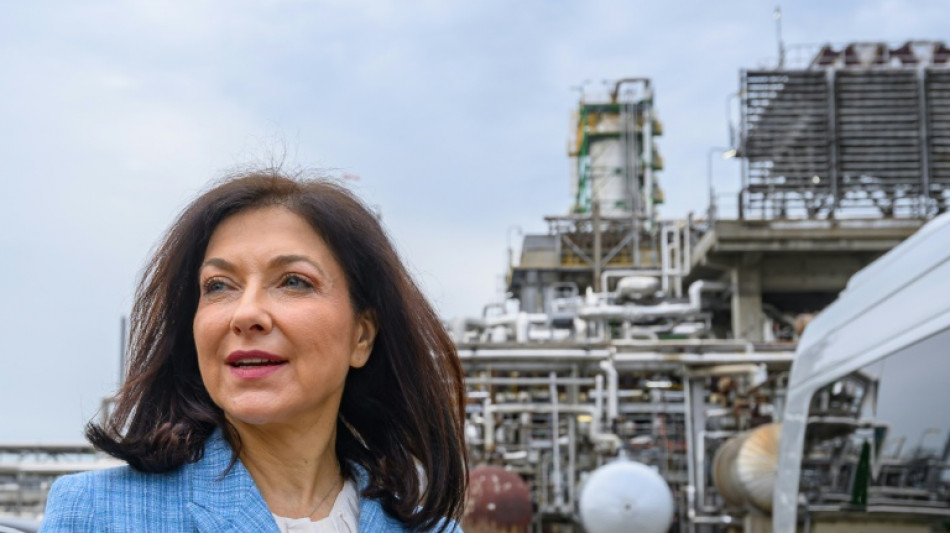
Germany lifts GDP forecast as economy withstands Iran war / Photo: Patrick Pleul - POOL/AFP

 OpenAI revenue gap report rattles AI stocks

 Trump gives 'national treasure' Musk top US medal after rift

 Protests, clashes as S. African anti-migrant tensions reignite

 B2PRIME Welcomes Christina Barbash as Commercial Manager

 'Stunned' Madrid mourns pensioner who sparked housing protests

 Alex Bodi mizează, alături de CRIF, pe investiții transparente și pe prevenirea riguroasă a spălării banilor

 Gulf Labs, Part of Thailand’s $27 Billion GULF Group, Goes Live as an Injective Validator
 Rwanda to host F1 Grand Prix: sources close to both sides

 WhiteBIT Launches Bitcoin Lightning Network Support, Powered by Voltage

 Oil surges, stocks sink as US reportedly eyes fresh Iran strikes

 France struggles to wean social housing off gas
 Alex Bodi pushes ahead with expansion: ALIX LASERS showroom planned for Bucharest

 Diplomats, schools in Saudi take safety measures after blasts heard: sources to AFP

 From refuge to repatriations: Malaysia's Myanmar U-turn

 The British historian helping the French rediscover de Gaulle

 Gas, health care, utilities: high costs squeeze US midterm voters

 As species decline, green turtles offer glimmer of hope
 Microsoft pushes AI vision with new, expensive Surface laptop

 French PM denies police ordered to confront student protesters

 Climate change strips island's title of largest penguin colony: study

 From 1800s to modern pharma: a Nobel-winning chemistry quest

 HSBC 'consults' over UK unit job cuts amid AI adoption

 Guinea caps bottled water prices after sachets banned

 Stocks slide as oil climbs on Mideast flareup

 Kyiv 'cannot agree' to EU membership limiting food exports: minister
Germany on Thursday sharply raised its growth forecast for this year, saying Europe's biggest economy had withstood the Iran war energy shock and was benefiting from the global AI boom.
The government lifted its full-year projection to 1.3 percent, up from its April forecast of just 0.5 percent.
The rosier outlook could take some pressure off Chancellor Friedrich Merz, who is facing criticism he has not done enough to kickstart the long-stagnant economy.
"The German economy proved more robust than projected in the spring," Economy Minister Katherina Reiche said in announcing the new forecasts.
"Despite geopolitical uncertainties, despite a global energy price shock, despite the closure of the Strait of Hormuz and despite tariffs, the economy was able to embark on a path of recovery," she told a press conference.
Germany's economy has faced a long decline due to weak export demand, high energy costs, US tariffs and Chinese competition, though recent indicators suggest it is starting to recover.
This year, Reiche said growth had been supported by strong foreign trade, particularly in the months following the outbreak of the US war against Iran.
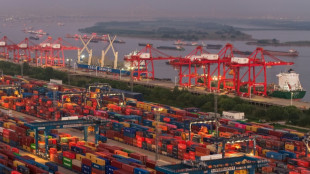
After the conflict began, foreign importers rushed to stockpile German-made goods such as steel, fertiliser and aluminium, she said.
German suppliers were also benefiting from the "global trend of investment in artificial intelligence", she said.
The boom in data centre construction has led to a flood of orders for German-made equipment such as lasers, semiconductor machinery and cooling systems, she said.
The economy ministry also raised its forecast for 2027 to 1.1 percent, from 0.9 percent previously, and said a public spending blitz on defence and infrastructure would support the economy in the coming years.
But it warned that household consumption would remain subdued as higher energy costs push up consumer prices. German inflation hit 3.3 percent in September, the highest level in nearly three years.
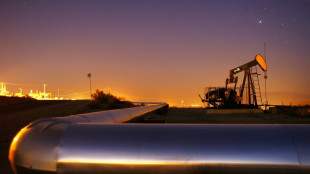
Like elsewhere, Germany has seen fuel costs surge amid the Iran war, prompting the government last week to introduce a subsidy to provide some relief for drivers.
The official growth forecast for 2026 is in line with recent estimates by economic think-tanks.
sr/bst/js
H.Cho--CPN