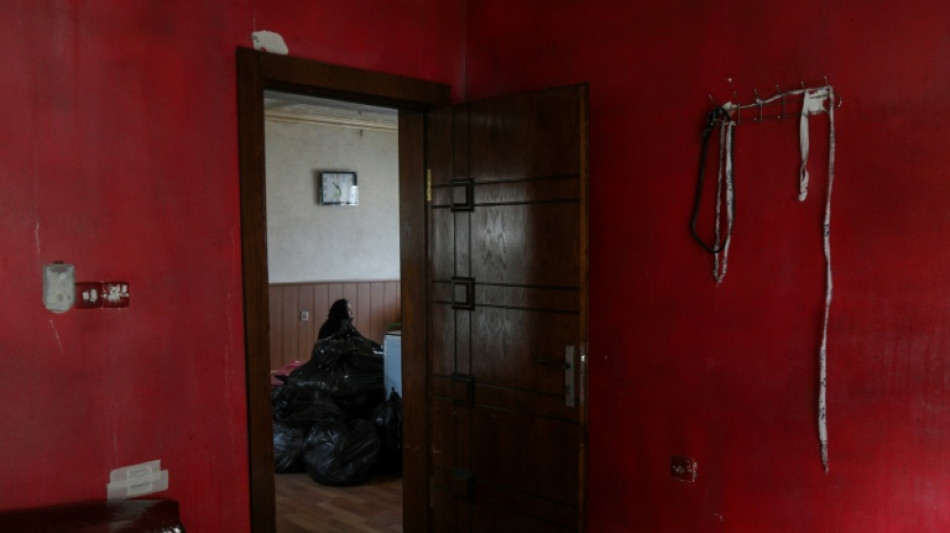
Iranian Kurds hunted by drones in Iraqi Kurdistan / Photo: Safin HAMID - AFP

 Japan's busiest rail station tests robot bins

 Backpackers fret over Australian visa crackdown

 Bank of Japan hikes rates to 31-year high to battle inflation

 AI doomsday warnings unlikely to slow IPOs but questions linger

 In Brazil's Amazon, the hunt for oil fuels hopes and fears

 Baby orangutans in India expose 'frightening' scale of trafficking

 Oversight Board blasts 'inadequate' Meta safeguards for AI deepfakes

 Harry makes first public appearance since return to UK

 Princess Diana's brother makes new explosive claims against Charles

 Trump admin overhauls key protection for endangered species

 Mbappe draws political fire over Ceuta t-shirt controversy

 Third malaria death in Germany from outbreak tied to Frankfurt airport

 AtlasClear Holdings Reports Preliminary Fiscal 2026 Revenue of Approximately $20.1 Million, Up 85%; Revenue Plus Interest Income of Approximately $21.9 Million

 'Another arrow to the quiver': World Bank posts record private capital mobilization

 Ireland to boycott Eurovision 2027 over Gaza

 India's Tata Sons reappoints N. Chandrasekaran as chairman

 Germany urges EU action against China to defend carmakers

 Japan eyes changing prostitution law to punish sex buyers

 Modi pitches India as global chipmaking hub

 Ukraine plans record defence spending in 2027

 NASA scan discovers new, 'once in a century' Moon crater

 Most stocks rise as Fed hikes and indicates drive to curb inflation

 UK-Sudanese author pens book to give children 'African history of Africa'

 Argentine judge orders suspension of Falklands oil project

 US Fed raises rates to tackle 'too high' inflation, irking Trump

When a deafening drone tore a hole in her roof in northern Iraq, Iranian Kurd Amine Poursaid, gripped by fear of another attack, packed her family's belongings and prepared to escape.
She is one of thousands of Iranian Kurds opposed to the Islamic republic and who are living in exile in neighbouring Iraq. For years, they were safe, but since the Iran war began, their bases have become targets.
"Everything came crashing inside," said Poursaid, the wife of an Iranian opposition party member.
It took her a moment to realise what had happened on Thursday night: a drone had struck her yard, sending glass shards across her house in the town of Soran, nestled in the Zagros mountains near the Iranian border.
"I am still trembling," said the 55-year-old mother of four, while busy packing her family's belongings.
Iraq's autonomous Kurdistan region has been drawn into the Middle East conflict, with Tehran targeting Iranian Kurdish militants who have long maintained bases there.
Poursaid's husband Taha Karimi is a member of the Democratic Party of Iranian Kurdistan (PDKI), whose positions have been struck several times in the past week, including on Thursday.
Poursaid, still distraught, said that the family is now leaving the area after their neighbours, fearing further strikes, were reluctant to rent to them.
Karimi, 58, told AFP he believes his house was deliberately targeted.
"We were sitting at home when we heard a loud bang. I rushed outside only to find that a drone had struck the yard," he said.
"It's a miracle we survived."
Karimi said that, after inspecting the scene, security forces told him the drone appeared to have been guided by GPS and suggested that someone might have placed a tracker on his truck.
"Anything can be expected from Iran. They might target us again."
- 'Suicide' -
A former political prisoner in Iran, Karimi said he hopes for regime change that can only be achieved with ground forces.
While the US has ruled out the possibility of sending American troops into Iran, there have been reports suggesting Iranian Kurdish militants in Iraq could enter the fray.
President Donald Trump has ruled this idea out, and some Kurds have said they would only enter Iran in the event of a resurgence of the popular uprising there.
Kurdish parties "must be united and speak with one voice for this struggle to succeed," Karimi said, calling the Islamic republic a "virus that has become deeply entrenched".
Iran has threatened to target "all the facilities" in Iraq's Kurdistan if militants cross into Iran from there.
Iranian Kurd journalist Saleh Babashekh has been living in Erbil, the capital of Iraq's Kurdistan, for 36 years.
He now fears for Iraqi Kurdistan after US bases there became a main target for drones attacks.
"Of course, everyone is afraid of drones and missiles," Babashekh, 58, told AFP.
"But if the Kurdistan region were to become involved in the war, it would be suicide," he warned.
"I am part of this community. Authorities here protected me, and if they are in danger, then so am I."
Mohsin Khalidi, 63, an Iranian Kurdish poet who has lived in Erbil since 2004, said regime change is a "common desire" among Kurds, but their forces alone cannot achieve it.
"Iran has missiles, drones, bombs, and it is not afraid to kill," he said.
"The regime must fall, but only with a precise plan and the backing of great powers."
For now, Kurds must "wait for events to unfold," Khalidi said.
But even if the Islamic Republic falls, Khalidi said he would never leave Erbil.
"I will stay in Erbil until the last day of my life."
Y.Uduike--CPN
