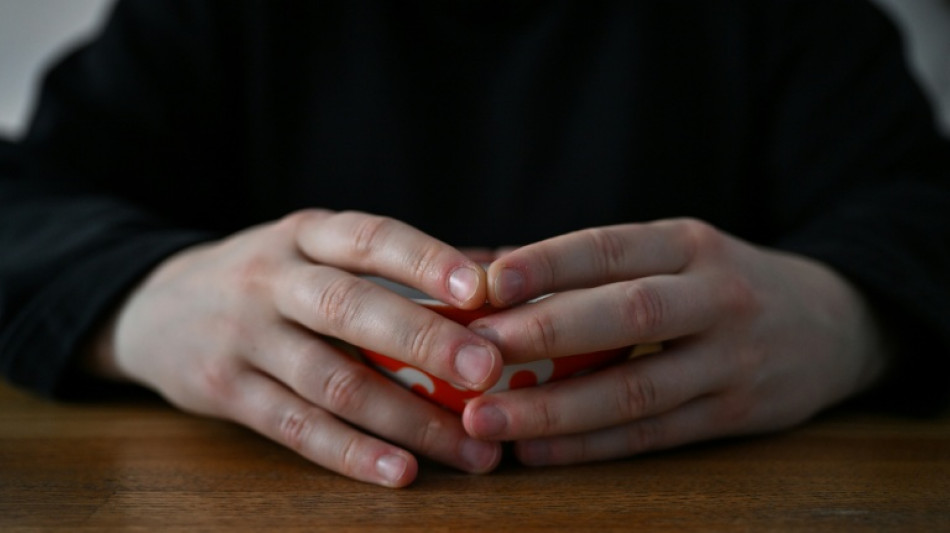
The silent struggle of an anti-war woman in Russia / Photo: Hector RETAMAL - AFP

 UK actor Naomi Watts honoured at Spain film festival
 Trump signs bill authorizing sweeping Russia sanctions

 Anthropic picks Accenture for in-house AI safety evaluation

 Hushing and hedging: US companies retreat on climate

 Crisis-wracked Volkswagen warns of 10-bn-euro hit to profits

 Shakira to cap off world tour with Madrid 12-gig run

 Isolated Syrian-Druze city shortages

 UNESCO can be 'moderator' in AI debate: chief to AFP

 Russia seizes assets of Nestle, French firms

 Anthropic says AI systems moving towards building themselves

 Asian stocks boosted by falling oil, yen weakens after BoJ rate hike

 Afghan medical students in Pakistan hope court stops college expulsions

 Australia to detain tourists who overstay visa, minister says

 Asian stocks track Wall St rally as oil prices drop

 Prized Mexican relic returns on loan, two centuries on

 'In our lane': Fed's Warsh defies Trump but still fighting for credibility

 Trump admin makes major cut to endangered species protections

 GM delivers first components for US interceptor missiles

 Travis Scott and Keith Richards feature on GTA VI soundtrack

 King Charles warns tech bosses of 'existential dangers' of AI

 French fishermen block ports over petrol prices

 Micron's Taiwan workers say 68 months' bonus not enough

 Canada's Carney pushes 'new alliance' with EU despite Trump threats

 Beyond Investment Returns: Families Are Measuring Wealth by Freedom, Continuity, and Legacy, According to Nour Private Wealth

 King Charles disputes claims in book by Princess Diana's brother

When Vladimir Putin launched Russia's large-scale offensive against Ukraine on February 24, 2022, Varvara felt "despair and anger" -- and joined an anti-war protest in central Moscow.
Four years later and amid an unrelenting crackdown on dissent inside Russia, the 32-year-old said she is now simply trying to "survive", keeping quiet and not daring to criticise the Kremlin or the war.
She has little hope that will change soon.
"Any resistance from below will be crushed," Varvara, who asked for her name to be changed, told AFP in an interview in Moscow.
It is a snapshot of the resignation with which many anti-war Russians or would-be activists must now live in a country that has been rigidly mobilised to get behind the war.
Russia has ratcheted up repression at home to levels unseen since the era of the Soviet Union.
Thousands have been jailed or fined for simply speaking out against the offensive. Public protests against the Kremlin are virtually unheard of.
All major opposition figures are in jail, exiled or dead and anti-war groups outside the country are hobbled by bitter factional infighting.
– 'Do something good here' –
Like thousands of others, Varvara took to the streets at the start of the war, joining rallies that were put down forcefully by Russian riot police.
"I went there without knowing what's next," she said.
"I warned loved ones that I might be arrested, leaving a spare set of keys and hoping my cat wouldn't starve in my absence."
She managed to avoid being caught in the brutal police clampdown.
But when she signed a petition against the war, she was fired from her job at a public institution.
Many of her friends -- who were briefly detained by police -- decided to leave the country.
But for Varvara, the uncertainty of emigration outweighed the risks of staying.
"I didn't feel an immediate physical threat. No one was knocking on my door, I wasn't jailed or tortured."
She eventually found a job at a charity and realised that the only way she could get by was to "do something good here", in Russia.
In the summer of 2022, she met her future husband.
"The only reason to leave would be if one of us was facing arrest," she said.
Despite her decision to stop speaking out and commitment to staying inside Russia, the war has completely overshadowed Varvara's life.
It was two years before she could feel happy again without a sense of guilt.
"A friend and I went for a walk. It was summer, we just walked and talked. I realised it was simply a nice day -- and I don't feel guilty about enjoying it," she told AFP.
– 'Escapism' –
Varvara now cares for her husband's two children from a previous marriage -- something she calls "a form of escapism", and which has reinforced her decision to stay quiet.
"If I was alone, I wouldn't be hiding my name. But now I'm a stepmother, part of a complex family structure, and I feel a sense of responsibility," she said.
Wanting children of her own, Varvara said she "can no longer afford to take this kind of optional risk" of speaking out.
Despite her silence, the war still looms large.
In her charity job, she worries about who to cooperate with and who to take money from given how many people and organisations are now connected with the military campaign.
"There's this constant inner struggle: whom can you work with and whom you can't?" explained the young woman.
And in her private life, the war has complicated her relationship with her father.
A member of Russia's security services, he went to fight in Ukraine and regularly offers her financial help.
"He's my father, I love him. But for me, it's impossible to accept this money," she told AFP.
D.Avraham--CPN