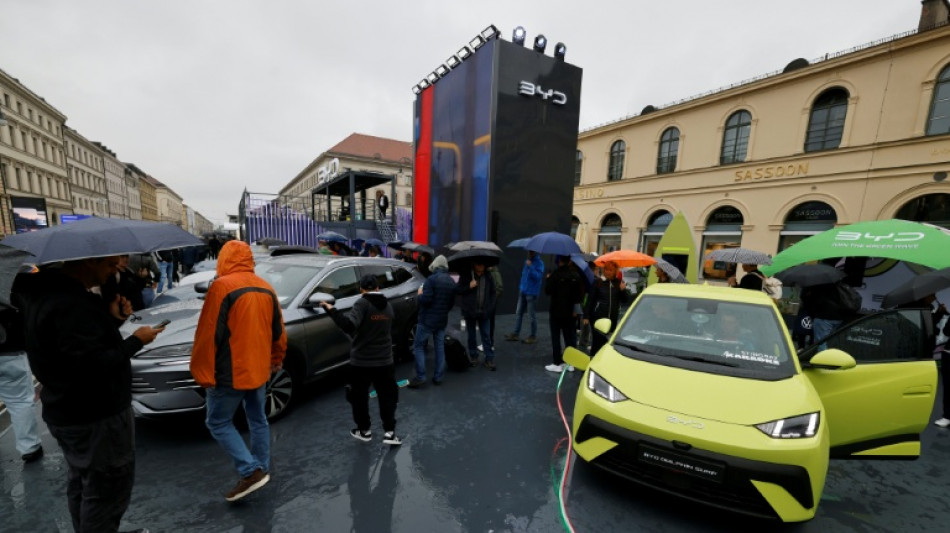
EV sales rebound in Germany as Chinese brands make inroads / Photo: Alexandra BEIER - AFP

 Multi-Asset Trading Venue Monochrome Exchange Announces IEO of Its Native Token, $MCR

 Data centre command hub keeps AI up and running

 Leo XIV, first US pope transcends his restrained style

 France's debt climbs to highest since 1978: ministry

 Thousands protest inaction over climate crisis in Switzerland

 UK actor Naomi Watts honoured at Spain film festival

 Trump signs bill authorizing sweeping Russia sanctions

 Anthropic picks Accenture for in-house AI safety evaluation

 Hushing and hedging: US companies retreat on climate

 Crisis-wracked Volkswagen warns of 10-bn-euro hit to profits

 Shakira to cap off world tour with Madrid 12-gig run

 Isolated Syrian-Druze city shortages

 UNESCO can be 'moderator' in AI debate: chief to AFP

 Russia seizes assets of Nestle, French firms

 Anthropic says AI systems moving towards building themselves

 Asian stocks boosted by falling oil, yen weakens after BoJ rate hike

 Afghan medical students in Pakistan hope court stops college expulsions

 Australia to detain tourists who overstay visa, minister says

 Asian stocks track Wall St rally as oil prices drop

 Prized Mexican relic returns on loan, two centuries on

 'In our lane': Fed's Warsh defies Trump but still fighting for credibility

 Trump admin makes major cut to endangered species protections

 GM delivers first components for US interceptor missiles

 Travis Scott and Keith Richards feature on GTA VI soundtrack

 King Charles warns tech bosses of 'existential dangers' of AI

Electric vehicle sales rebounded strongly in Germany in 2025, official data showed Tuesday, with Chinese manufacturers making inroads from a low base in the EU's largest economy despite tariffs.
EV sales rose 43.2 percent last year to 545,142 in total, the KBA federal transport authority said, representing 19.1 percent of all new cars sold.
Chinese EV giant BYD -- which last year overtook Elon Musk's Tesla to become the world's largest electric carmaker -- saw its German sales rise over 700 percent to more than 23,000 cars, giving it 0.8 percent of the overall auto market.
"International vehicle manufacturers with affordable battery electric vehicles and plug-in hybrids have contributed disproportionately to growth in these segments," said Imelda Labbe, head of the VDIK foreign carmakers' lobby in Germany.
The European Union in 2024 introduced higher tariffs on Chinese-made electric cars, alleging that they benefitted from unfair subsidies.
That has not stopped sales of Chinese cars rising across the bloc, with the country's carmakers keen to crack foreign markets amid cut-throat competition at home.
- Electric troubles -
Rising EV sales are also some rare good news for Germany's beleaguered carmakers, which have invested heavily in the technology in recent years, and are seeking to comply with European Union environmental rules.
Though the European Commission in December proposed scrapping a planned 2035 ban on new combustion-engine vehicles, carmakers would still have to cut emissions by 90 percent from 2021 levels under its latest plan, and need to see dramatic sales growth.
The rise in EV sales last year comes after a fall of almost 30 percent in 2024 following the withdrawal of government subsidies, and Germany's electric car market is still smaller than optimists had hoped for.
"We haven't seen a real boom yet," EY analyst Constantin Gall said.
"The hoped-for surge in e-mobility in Germany is proving to be much more protracted and difficult than expected."
After the decline in the market in 2024, the government said in December it would introduce subsidies again.
Some motorists will be able to benefit from 5,000 euros ($5,855) for the purchase of new EVs or hybrids so long as their components are largely made in Germany.
But industry figures say that better charging infrastructure and cheaper power would be needed to really boost EVs and warned that the planned subsidy would have limited impact.
"The state subsidies will only be available to households on low and middle incomes," Gall said. "But it is high-earners who tend to buy new electric cars."
- Tricky times -
Weak sales at home have compounded the challenges facing Germany's car industry.
It was already contending with the costs of investing in EVs and cratering sales in key market China even before US President Donald Trump last year slapped tariffs on cars and auto parts.
Volkswagen, Europe's largest carmaker, is in the process of cutting 35,000 jobs in Germany by 2030 under a deal reached with unions in a bid to slash costs.
Overall car sales in Germany rose just 1.4 percent last year to about 2.9 million vehicles, the KBA said -- roughly 750,000 fewer than were sold in 2019 before the Covid pandemic and Germany's economy sank into stagnation.
"The weak economy, increasing job insecurity and the multitude of political, social and economic crises are taking their toll," Gall said.
X.Wong--CPN