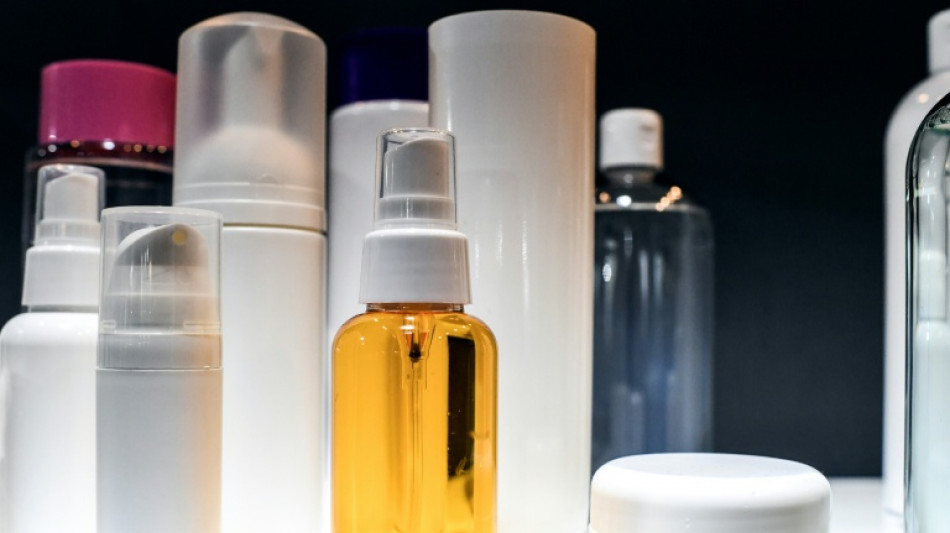
French ban on 'forever chemicals' in cosmetics, clothing to enter force / Photo: ALAIN JOCARD - AFP/File

 Multi-Asset Trading Venue Monochrome Exchange Announces IEO of Its Native Token, $MCR

 Data centre command hub keeps AI up and running

 Leo XIV, first US pope transcends his restrained style

 France's debt climbs to highest since 1978: ministry

 Thousands protest inaction over climate crisis in Switzerland

 UK actor Naomi Watts honoured at Spain film festival

 Trump signs bill authorizing sweeping Russia sanctions

 Anthropic picks Accenture for in-house AI safety evaluation

 Hushing and hedging: US companies retreat on climate

 Crisis-wracked Volkswagen warns of 10-bn-euro hit to profits

 Shakira to cap off world tour with Madrid 12-gig run

 Isolated Syrian-Druze city shortages

 UNESCO can be 'moderator' in AI debate: chief to AFP

 Russia seizes assets of Nestle, French firms

 Anthropic says AI systems moving towards building themselves

 Asian stocks boosted by falling oil, yen weakens after BoJ rate hike

 Afghan medical students in Pakistan hope court stops college expulsions

 Australia to detain tourists who overstay visa, minister says

 Asian stocks track Wall St rally as oil prices drop

 Prized Mexican relic returns on loan, two centuries on

 'In our lane': Fed's Warsh defies Trump but still fighting for credibility

 Trump admin makes major cut to endangered species protections

 GM delivers first components for US interceptor missiles

 Travis Scott and Keith Richards feature on GTA VI soundtrack

 King Charles warns tech bosses of 'existential dangers' of AI

A French ban on the production and sale of cosmetics and most clothing containing polluting and health-threatening "forever chemicals" goes into force on Thursday.
Per- and polyfluoroalkyl substances (PFAS) are human-made chemicals used since the late 1940s to mass produce the non-stick, waterproof and stain-resistant treatments that coat everything from frying pans to umbrellas, carpets and dental floss.
Because PFAS take an extremely long time to break down -- earning them their "forever" nickname -- they have seeped into the soil and groundwater, and from there into the food chain and drinking water.
These chemicals have been detected virtually everywhere on Earth, from the top of Mount Everest to inside human blood and brains.
Chronic exposure to even low levels of the chemicals has been linked to liver damage, high cholesterol, reduced immune responses, low birthweights and several kinds of cancer.
The French law, approved by lawmakers in February, bans the production, import or sale from January 2026 of any product for which an alternative to PFAS already exists.
These include cosmetics and ski wax, as well as clothing containing the chemicals, except certain "essential" industrial textiles.
A ban on non-stick saucepans was removed from the draft law after intense lobbying from the owners of French manufacturer Tefal.
It will also make French authorities regularly test drinking water for all kinds of PFAS.
There are thousands of different PFAS and certain ones have been banned since 2019 under the Stockholm Convention on Persistent Organic Pollutants, but China and the United States are not among the more than 150 signatories.
This includes perfluorooctanoic acid (PFOA), used since the 1950s by US company DuPont to manufacture its non-stick Teflon coating for textiles and other everyday consumer products.
The Stockholm Convention also bans perfluorooctane sulfonic acid (PFOS), known for its use as a waterproofing agent by the US group 3M, which has been heavily restricted since 2009.
A handful of US states, including California, implemented a ban on the intentional use of PFAS in cosmetics beginning in 2025, and several other states are slated to follow in 2026.
Denmark will ban the use of PFAS in clothing, footwear and certain consumer products with waterproofing agents beginning on July 1, 2026.
Denmark has banned the use of PFAS in food packaging since 2020.
The European Union has been studying a possible ban on the use of PFAS in consumer products, but has not yet presented or implemented such a regulation.
A.Agostinelli--CPN