
Swedish steel startup Stegra gets more state aid / Photo: Jonathan NACKSTRAND - AFP/File

 Asia stocks rise on AI, US-China trade talks optimism
 Multi-Asset Trading Venue Monochrome Exchange Announces IEO of Its Native Token, $MCR
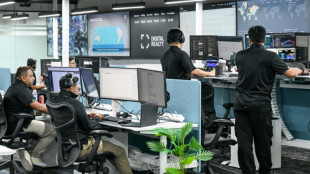 Data centre command hub keeps AI up and running
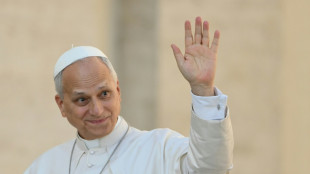 Leo XIV, first US pope transcends his restrained style
 France's debt climbs to highest since 1978: ministry
 Thousands protest inaction over climate crisis in Switzerland
 UK actor Naomi Watts honoured at Spain film festival
 Trump signs bill authorizing sweeping Russia sanctions
 Anthropic picks Accenture for in-house AI safety evaluation

 Hushing and hedging: US companies retreat on climate

 Crisis-wracked Volkswagen warns of 10-bn-euro hit to profits

 Shakira to cap off world tour with Madrid 12-gig run

 Isolated Syrian-Druze city shortages

 UNESCO can be 'moderator' in AI debate: chief to AFP

 Russia seizes assets of Nestle, French firms

 Anthropic says AI systems moving towards building themselves

 Asian stocks boosted by falling oil, yen weakens after BoJ rate hike

 Afghan medical students in Pakistan hope court stops college expulsions

 Australia to detain tourists who overstay visa, minister says

 Asian stocks track Wall St rally as oil prices drop

 Prized Mexican relic returns on loan, two centuries on

 'In our lane': Fed's Warsh defies Trump but still fighting for credibility

 Trump admin makes major cut to endangered species protections

 GM delivers first components for US interceptor missiles

 Travis Scott and Keith Richards feature on GTA VI soundtrack

The Swedish Energy Agency said Wednesday it was giving some $40 million in support to low-carbon steelmaker Stegra, amid fears surrounding the ambitious startup's finances.
Stegra is building a new steel mill it says will produce steel using technology that gives off 95 percent less CO2 emissions than traditional methods.
Approximately 60 percent of the work has been completed.
In October, Stegra announced another round of financing to bring in an additional 10 billion kronor ($1 billion) to cover higher project costs.
"The project has great potential to accelerate the transition in the iron and steel industry," said a Swedish Energy Agency statement.
It is awarding Stegra 390 million kronor through the "Industrial Leap" programme, which is part of the EU initiative NextGenerationEU.
The agency noted that Stegra had previously been granted 1.2 billion kronor from the programme.
The additional support "increases Stegra's chances of securing the additional capital needed" to complete the project, the agency said.
In a separate statement, Stegra CEO Henrik Henriksson said they were "grateful" for the decision.
"It gives us the possibility to strengthen Swedish and European competitiveness," he said.
At the same time, Henrikson noted that that there was still a gap between what Stegra had been granted and the 265 million euros ($307 million) that had been approved at the EU level.
"We hope that further steps can be taken to close it and provide a more level playing field in relation to other projects," he said.
In early November, French investment fund Hy24 -- a major shareholder in Stegra -- called for the government to step in to offset the increased production costs.
Stegra's finances have in recent months come under increased scrutiny, and observers have started making comparisons to another former leader of Sweden's green industrial boom, battery maker Northvolt.
Northvolt was seen as a cornerstone in European efforts to catch up with Chinese battery producers before production delays and its mounting debts led it to declare bankruptcy in March.
Behind Stegra is investment firm Vargas Holding, which was also a co-founder of Northvolt.
Approximately $7.5 billion has already been invested in the project, raised from both loans and equity.
Speaking at a conference in Stockholm in early November, Stegra CEO Henrik Henriksson denied the company was in "crisis".
"We are proceeding with our project at full speed," Henriksson said, while adding that they had already secured about half of additional financing needs from prior investors.
M.García--CPN