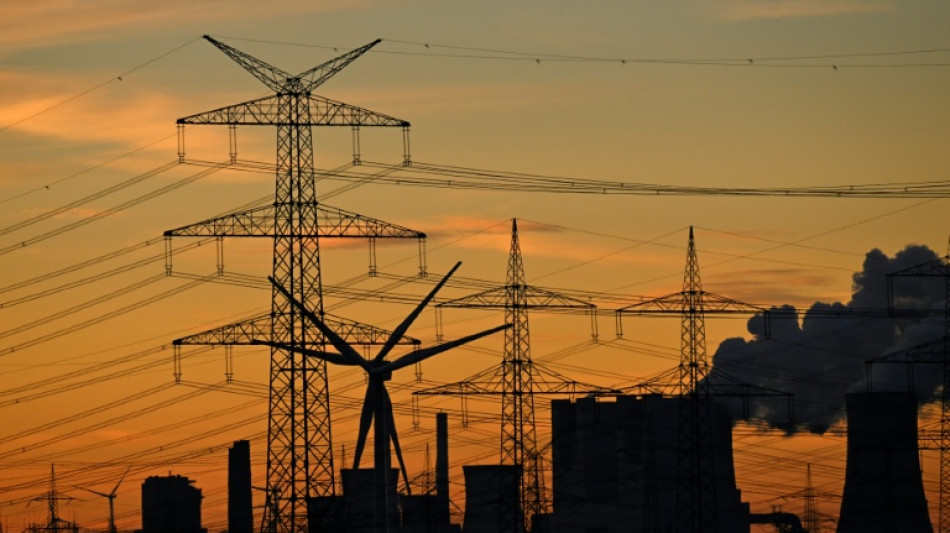
IMF urges Germany to enact 'pro-growth' reforms / Photo: Ina FASSBENDER - AFP

 Asia stocks rise on AI, US-China trade talks optimism
 Multi-Asset Trading Venue Monochrome Exchange Announces IEO of Its Native Token, $MCR

 Data centre command hub keeps AI up and running

 Leo XIV, first US pope transcends his restrained style

 France's debt climbs to highest since 1978: ministry

 Thousands protest inaction over climate crisis in Switzerland

 UK actor Naomi Watts honoured at Spain film festival

 Trump signs bill authorizing sweeping Russia sanctions
 Anthropic picks Accenture for in-house AI safety evaluation

 Hushing and hedging: US companies retreat on climate

 Crisis-wracked Volkswagen warns of 10-bn-euro hit to profits

 Shakira to cap off world tour with Madrid 12-gig run

 Isolated Syrian-Druze city shortages

 UNESCO can be 'moderator' in AI debate: chief to AFP

 Russia seizes assets of Nestle, French firms

 Anthropic says AI systems moving towards building themselves

 Asian stocks boosted by falling oil, yen weakens after BoJ rate hike

 Afghan medical students in Pakistan hope court stops college expulsions

 Australia to detain tourists who overstay visa, minister says

 Asian stocks track Wall St rally as oil prices drop

 Prized Mexican relic returns on loan, two centuries on

 'In our lane': Fed's Warsh defies Trump but still fighting for credibility

 Trump admin makes major cut to endangered species protections

 GM delivers first components for US interceptor missiles

 Travis Scott and Keith Richards feature on GTA VI soundtrack

The International Monetary Fund said Wednesday that Germany's public spending ramp-up must be accompanied by "pro-growth" reforms to ensure Europe's beleaguered top economy makes a sustained recovery.
Chancellor Friedrich Merz's coalition is making huge extra outlays on infrastructure and defence, which it hopes will spur a turnaround after two years of recession.
After a visit to Germany by several of its officials, the IMF praised the country's "landmark" decision this year to ease strict debt rules, which paved the way to a sharp increase in public spending.
This had "set the stage for economic recovery," it said in a statement.
But the financial institution called for the extra money to be spent wisely to put the economy on a sustainable long-term footing.
It also said the efforts "should be complemented by pro-growth structural reforms, including measures to foster more innovation and digitalisation, cut red tape, reduce labour supply constraints... and deepen European economic integration".
According to the institution's most recent forecasts, Germany's economy will return to growth this year, with output of 0.2 percent, and pick up pace in 2026 with a 0.9-percent expansion.
There is growing unease about Merz's economic plans however -- critics say public spending is moving too slowly, is being misdirected, and there is little focus on deep reform.
Merz on Tuesday defended his government against criticism it is going too slowly, pointing to planned overhauls in the areas of corporate income tax and industry power prices.
"Germany is not a speedboat, Germany is a large ship," he told an event hosted by the BDA employers' association.
"A tanker of this size cannot be turned around in a matter of days, like a speedboat turning 180 degrees in the other direction. It takes time."
Germany's economy has suffered in recent years due to the energy price shock from the Ukraine war, an industrial slump and growing competition in traditional industries, particularly from China.
The tariff blitz launched by the United States -- Germany's top export market -- has added to headwinds.
M.Davis--CPN