Solar storm brings new chance of vivid auroras, signal disruptions / Photo: Sanka VIDANAGAMA - AFP

 Asia stocks rise on AI, US-China trade talks optimism

 Multi-Asset Trading Venue Monochrome Exchange Announces IEO of Its Native Token, $MCR

 Data centre command hub keeps AI up and running

 Leo XIV, first US pope transcends his restrained style

 France's debt climbs to highest since 1978: ministry

 Thousands protest inaction over climate crisis in Switzerland

 UK actor Naomi Watts honoured at Spain film festival

 Trump signs bill authorizing sweeping Russia sanctions

 Anthropic picks Accenture for in-house AI safety evaluation

 Hushing and hedging: US companies retreat on climate

 Crisis-wracked Volkswagen warns of 10-bn-euro hit to profits

 Shakira to cap off world tour with Madrid 12-gig run

 Isolated Syrian-Druze city shortages

 UNESCO can be 'moderator' in AI debate: chief to AFP

 Russia seizes assets of Nestle, French firms

 Anthropic says AI systems moving towards building themselves

 Asian stocks boosted by falling oil, yen weakens after BoJ rate hike

 Afghan medical students in Pakistan hope court stops college expulsions

 Australia to detain tourists who overstay visa, minister says

 Asian stocks track Wall St rally as oil prices drop

 Prized Mexican relic returns on loan, two centuries on

 'In our lane': Fed's Warsh defies Trump but still fighting for credibility

 Trump admin makes major cut to endangered species protections

 GM delivers first components for US interceptor missiles

 Travis Scott and Keith Richards feature on GTA VI soundtrack

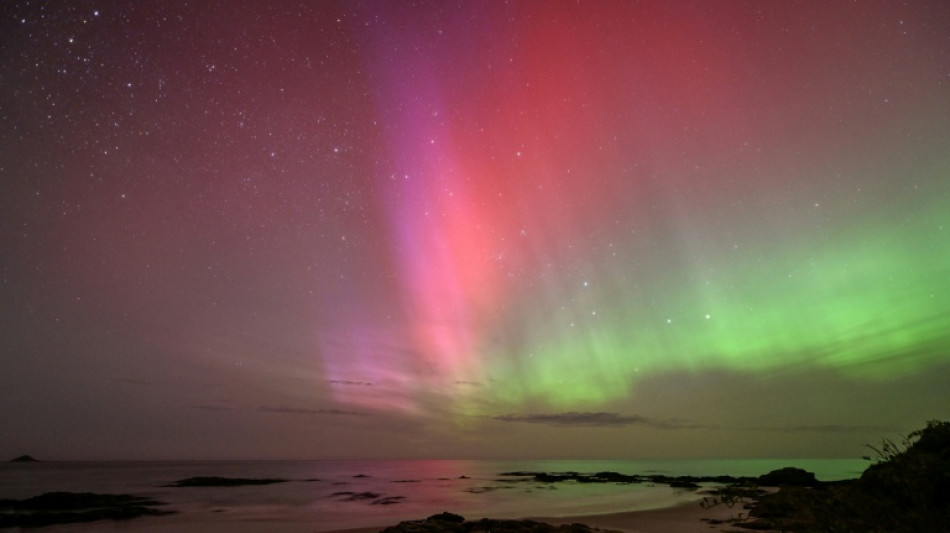
Spectacular displays of auroras at abnormally low latitudes were expected again Wednesday night into Thursday, a result of intense solar activity which also carries risks to communication networks.
After kicking off earlier this week, the rare event could continue until Thursday, according to the US National Oceanic and Atmospheric Administration (NOAA).
The phenomenon, which could be seen Wednesday night in the skies of New Zealand and Australia, is caused by massive ejections of solar particles from the Sun -- known as coronal mass ejections (CMEs) -- that trigger geomagnetic storms when they reach our planet.
NOAA said a level 4 storm out of 5 occurred Tuesday, and that another CME's arrival could mean a repeat again on Thursday.
Skies as far south as Mexico lit up Tuesday night with faint pink and green glows, delighting many people who would normally have to travel much closer to the Earth's poles to see such phenomena.
Last year, a level 5 geomagnetic storm occurred for the first time in 20 years, resulting in similarly spectacular views of the Northern and Southern Lights.
Strong solar storms however bring more than just stunning light displays -- they can also disrupt communication systems and cause satellite malfunctions and power grid overloads.
Due to risks from this week's solar event, Amazon founder Jeff Bezos's space company, Blue Origin, was forced on Wednesday to once again postpone the launch of its New Glenn rocket.
To see the aurorae, enthusiasts are advised to seek darker skies away from city lights and to bring a camera or smartphone, which could reveal the lights in long-exposure photos if they are not visible to the naked eye.
Ng.A.Adebayo--CPN