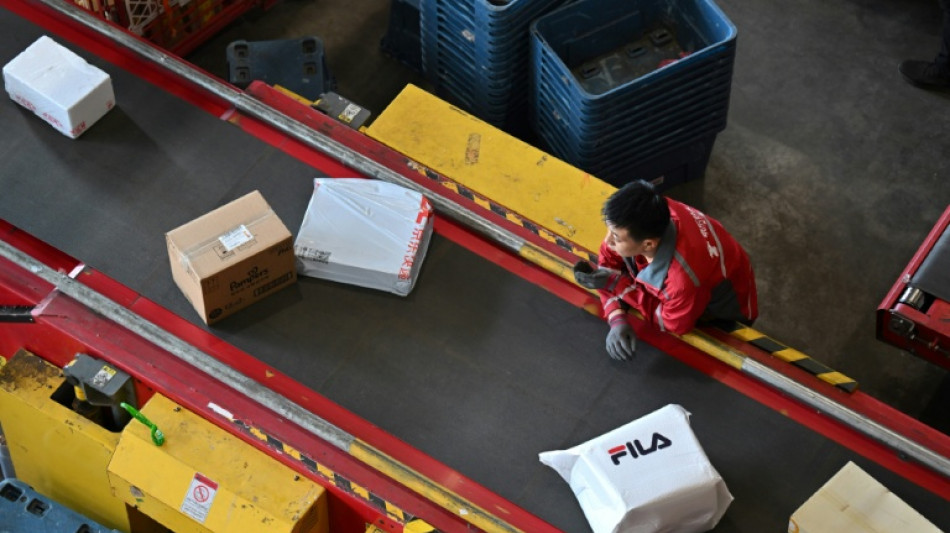
China's 'Singles Day' shopping fest loses its shine for weary consumers / Photo: Adek BERRY - AFP

 Indonesia doing 'everything' but struggling to curb fires

 France's Macron, Canada's Carney announce closer ties

 AI 'warning shots' focus Beijing on national security risks

 Philippine tribe in limbo over US-led tech hub

 Saudi-led coalition says Houthis fired ballistic missile at Riyadh

 Cuba works to restore power after another blackout

 Brigitte Bardot widower slams sale of star's belongings

 Indonesia accepts Malaysia's help to tackle wildfires

 Nvidia, OpenAI CEOs to attend Xi dinner at White House

 Cuba hit with seventh major blackout of the year

 Nigeria miners struggled to breathe in cell before 37 died: survivors

 Warren Buffett steps down as Berkshire Hathaway chairman

 Isolated Syrian-Druze city blames Damascus for shortages

 Kerry James Marshall: American 'blackness' painter celebrated in Europe

 Infantino 'must go', says German FA vice-president

 Japan's busiest rail station tests robot bins

 Backpackers fret over Australian visa crackdown

 Bank of Japan hikes rates to 31-year high to battle inflation

 AI doomsday warnings unlikely to slow IPOs but questions linger

 In Brazil's Amazon, the hunt for oil fuels hopes and fears

 Baby orangutans in India expose 'frightening' scale of trafficking

 Oversight Board blasts 'inadequate' Meta safeguards for AI deepfakes

 Harry makes first public appearance since return to UK

 Princess Diana's brother makes new explosive claims against Charles

 Trump admin overhauls key protection for endangered species

Chinese shoppers worried about the economy and overwhelmed by near-constant retail promotions are growing weary of the annual "Singles Day" sales bonanza, a discouraging sign as the government tries to boost consumption.
"Singles Day" -- named for its 11/11 date and first launched by tech giant Alibaba in 2009 -- has ballooned into a month-long promotional period for e-commerce platforms.
The shopping spree was once an annual opportunity for Alibaba and major rival JD.com to announce new purchase records, but they have withheld detailed sales totals in recent years.
"The discounts aren't as attractive now," said 29-year-old Shanghai resident Zhang Jing, who told AFP she bought "nothing" during this year's sales.
Zhang said she was discouraged by online platforms' increasingly complex promotions, which often require shoppers to claim multiple coupons or combine purchases in a specific order before they can enjoy a discount.
"I've never participated in these complicated rules, not once," she said.
Shi Xuebin, the 42-year-old owner of a clothing boutique, said she bought a new iPhone 17, but only because "I wanted to buy a new phone in the first place".
She told AFP she had bought far fewer Singles Day products compared to last year and that she had noticed a belt-tightening trend among Chinese consumers.
- 'Downgrading consumption' -
"I feel the general economy hasn't been great this year and people are avoiding buying things that aren't absolutely necessary," Shi said.
"Before, if you liked something, you'd buy it without much thought... but now, there's a real sense of downgrading consumption."
China's leaders have fought to overcome sluggish domestic spending, a protracted crisis in the property sector and a trade war with the United States.
The Communist Party's top brass vowed to "vigorously boost consumption" after a key planning meeting in Beijing last month.
Consumer prices have been stagnant or in decline in recent months, although they rose in October after a weeklong national holiday boosted demand for travel and food.
Zhu, a 30-year-old Shanghai resident who declined to give his full name, said his mother had taken advantage of November sales to stock up on household products such as laundry detergent and toilet paper.
However, outside daily necessities, Zhu said he mostly shopped second-hand instead of buying new versions of the tools and books he needed for his calligraphy hobby.
"We're pretty practical -- if I need something I will buy it but if I don't need it, I just won't get it no matter how cheap it is," he told AFP.
M.Davis--CPN