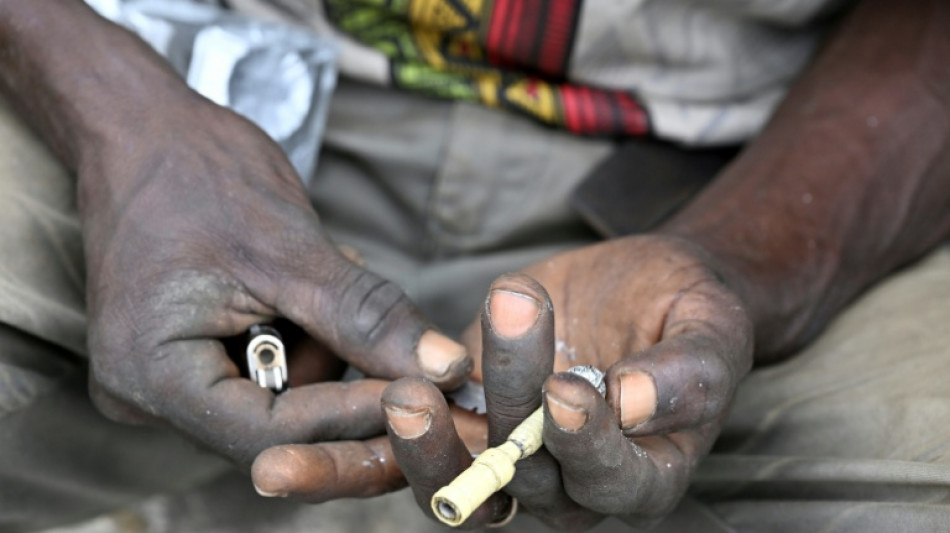
Addicts swap drug dens for support centre in Abidjan / Photo: Issouf SANOGO - AFP

 In Bangladesh, Pakistan's Jinnah photo stirs anger

 China's robot dancers limber up for America's Got Talent final

 Green policies just good politics, says UK minister

 El Nino weather pattern enters record territory: scientist
 US networks halt Trump coverage in revolt over White House ban

 NOWPayments Releases Cross-Chain Payout Data Revealing Key Performance Benchmarks Across TRON, BNB Chain, and Solana

 COP31 host says AI climate footprint to be a summit priority
 Global stocks rally on lower oil prices, US-China hopes

 Spanish PM says unregulated AI could be 'devastating'

 From Korean Chipmakers to Leveraged Semiconductor ETFs: STARTRADER Launches 49 New 24/7 Stock and ETF CFDs
 Asia stocks rise on AI, US-China trade talks optimism

 France's Macron, Canada's Carney announce closer ties

 AI 'warning shots' focus Beijing on national security risks

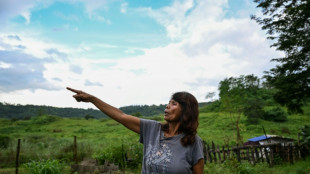 Philippine tribe in limbo over US-led tech hub

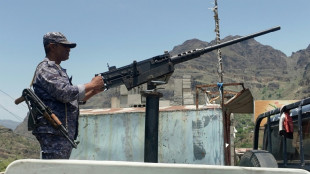 Saudi-led coalition says Houthis fired ballistic missile at Riyadh
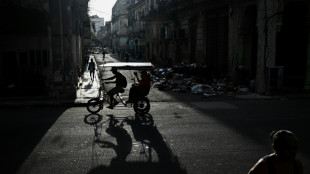 Cuba works to restore power after another blackout
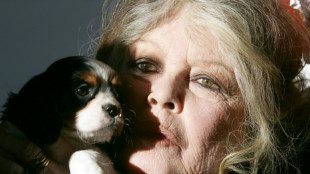 Brigitte Bardot widower slams sale of star's belongings

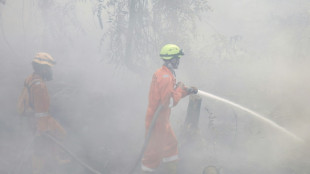
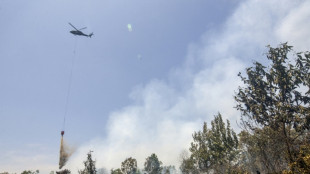 Indonesia accepts Malaysia's help to tackle wildfires
 Nvidia, OpenAI CEOs to attend Xi dinner at White House

 Cuba hit with seventh major blackout of the year

 Nigeria miners struggled to breathe in cell before 37 died: survivors

 Warren Buffett steps down as Berkshire Hathaway chairman

 Isolated Syrian-Druze city blames Damascus for shortages

 Kerry James Marshall: American 'blackness' painter celebrated in Europe

 Infantino 'must go', says German FA vice-president

In Ivory Coast's biggest city Abidjan, vulnerable drug addicts say that discovering a secluded care and support centre in an upscale part of the city has helped them to turn around their lives.
In recent years, the coastal west African nation has become a pivotal transit hub for the global heroin and cocaine trade, as well as prescription drug misuse.
While official data on illicit drug use is limited, an addiction specialist at the centre, Feriole Zahoui, told AFP there are between 30,000 and 40,000 drug users in Abidjan -- three to four times more than a decade ago.
Behind a discreet entrance, the Addiction Care and Support Centre (CASA) has caught on through word of mouth, offering free social, medical and psychological support for addiction recovery.
CASA estimates it has supported more than 3,000 people since it was launched in 2018, spearheaded by the medical charity Medecins du Monde and managed by the NGO Espace Confiance.
The Ivorian government has so far not opted for a particularly repressive approach in the fight to tackle substance abuse. A 2022 law reduced prison sentences for users from one to five years down to just a few months.
By late morning, calm reigns inside CASA's large resting room.
Some people dozed off, while others could be heard chatting as a television droned gently in the background.
About 20 people visit the centre every day, a place in which many claim to have found a home away from the harsh reality of drug addiction.
Hassan Mohana, perched beside his partner sleeping on the ground, told AFP he comes to CASA every day to get his methadone -- a substitute for heroin -- but also to rest and shower before his night shifts at work.
"It allowed me to find myself, keep a job and reintegrate into society," said the 40-year-old, who has been going to the centre since it opened.
- 'Like dogs' -
CASA's annual operation costs around 218,000 euros ($256,000), largely funded by the agency Expertise France.
In the southwestern city of San Pedro, another major port for drug trafficking, a second centre based on a similar model has also opened.
Heroin and "Kadhafi," a cheap mix of tramadol and alcohol sold at less than one euro ($1.17) per dose, are the main drug addictions seen at CASA in Abidjan, the country's economic capital.
Mamadou Toure, 47, said his life changed as a result of methadone treatments at the centre, helping him to recover from a heroin addiction he had been struggling with since he was a teenager.
"For years, I alternated between drug dens and prison," said Toure, now a peer educator at the centre, working with others to overcome addiction.
Cradling her nine-month-old daughter, 35-year-old Massita Konate reflected on the harsh years spent inside drug dens.
"People there die like dogs, no one comes to get them," said the young mother, her arms scarred from repeated heroin injections.
Konate is also on methadone. While she now lives in her own home, she still spends her days at CASA to "be with people who understand (her)".
But CASA cannot accommodate all users, so outreach efforts are made in drug dens, also known as ghettos.
Inside these makeshift shelters, people smoke crack, cannabis, and inject heroin, while trying to survive.
CASA workers often visit to raise awareness, distribute free condoms and provide single-use syringes.
"We don't have the strength, we're weak. But with help, we can change and work," said David Junior, 34.
"Many sick people in drug dens don't dare come to CASA," said Anicet Tagnon, head of community activities at CASA.
"So, the centre goes to them," he continued.
"There's a strong need for information. Some don't even know they could access methadone," said Zahoui, the addiction specialist.
H.Meyer--CPN