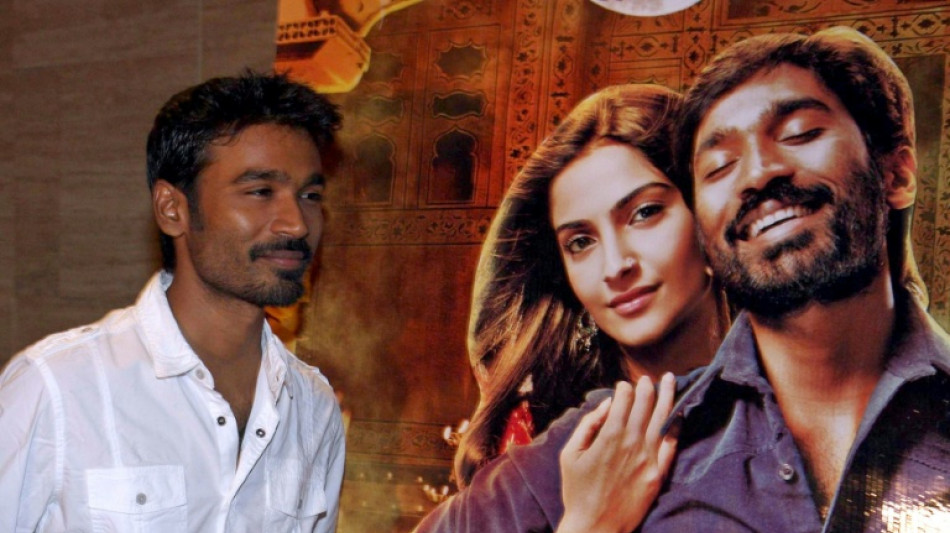
Bollywood reels as AI reshapes Indian films / Photo: STRDEL - AFP/File

 Mandela Digital Extends Early Access Programme to 11 February 2027 Following Strong Response

 McDonald's to boost franchisees as inflation weighs on consumers
 Archaelogical 'breakthrough' could confirm origins of Paris
 Fendi brings disco bling, Italian style, to Milan Fashion Week
 アレックス・ボディ氏とシュテファン・ハウプト教授、ルーマニアの伝説的な美術コレクションをめぐり提携に合意
 Stocks dip, oil rises as traders eye chances of Iran deal

 Oil falls, stocks steady as Trump hails 'good' Iran talks
 Canada judge to decide prison term for suicide poison seller

 Meta leans into AI, smart glasses amid privacy pushback

 Oil prices fall after Trump hails 'good' talks with Iran
 AI political ads warp reality ahead of US midterms
 Oil prices retreat as markets welcome US-Iran talks

 French prosecutors probe secret filming of women with smart glasses
 Trump renames AI "super intelligence," rejects international oversight
 How is the EU approaching record fuel prices?

 11 hurt as teen opens fire outside school in western Turkey

 UN chief says 'Big Oil' treats atmosphere as open sewer

 Memoir by Diana's brother goes on sale after rocking UK monarchy

 Stocks climb as oil slides, AI buzz returns

 MEXC Launches “Real Stocks, Real Friends” with Rewards for Bringing Friends to Wall Street

 Stocks rise on AI buzz, oil prices cool

 In Bangladesh, Pakistan's Jinnah photo stirs anger

 China's robot dancers limber up for America's Got Talent final
 Green policies just good politics, says UK minister
 El Nino weather pattern enters record territory: scientist

Bollywood, famed for its lavish song-and-dance numbers and vast production crews, now finds itself confronting a new kind of spectacle: artificial intelligence.
From altering iconic endings to generating entire films, AI is shaking up India's multibillion-dollar film industry, raising alarm for some, excitement for others.
The debate first erupted when producers re-released the 2013 hit "Raanjhanaa" with an AI-modified finale, when the Hindi film was dubbed into India's southern language of Tamil.
The new ending changed the tragic death finale into a hopeful one -- with the protagonist's eyes seen to flicker open -- triggering outrage from director Aanand L. Rai and star Dhanush.
They decried the change as a violation of creative rights.
"This alternate ending has stripped the film of its very soul," Dhanush posted on social media, after the new version was released in August.
"The concerned parties went ahead with it despite my clear objection," Dhanush said, calling the use of AI to alter films "a deeply concerning precedent for both art and artists".
"It threatens the integrity of storytelling and the legacy of cinema", he added.
Director Rai said that while AI is "definitely the future... it is not there to change the past".
Then, days later, entertainment firm Collective Artists' Network announced India's first fully AI-generated feature film, "Chiranjeevi Hanuman -– The Eternal".
The mythological epic, set for a 2026 release, aims to merge ancient legend with cutting-edge technology for a global audience, telling the story of the Hindu monkey god Hanuman.
Not all filmmakers were impressed.
"And so, it begins," wrote filmmaker Vikramaditya Motwane on social media. "Who needs writers and directors when it's 'Made in AI'?"
- 'Flesh and blood' -
The industry is bracing for a fight.
On one side are those who see AI as a cost-saving disruptor capable of replacing armies of extras and technicians in Bollywood's famously labour-intensive productions.
On the other are defenders of artistry, unpredictability, and human expression.
Some see opportunity in using AI to boost traditional films.
"I don't think AI means there can't be flesh and blood," said director Shakun Batra, who has created a five-part short film series using AI. "The best future would be when two skill sets merge."
But he insists that technology must complement, not override, human creativity.
"I don't encourage AI as a replacement to human endeavour of expression," said Batra, known for emotional Bollywood dramas such as "Ek Main Aur Ekk Tu", "Kapoor & Sons" and "Gehraiyaan".
Veteran filmmaker Shekhar Kapur, director of classics such as "Masoom", "Mr. India", and the 1998 movie "Elizabeth" that was nominated for seven Academy Awards, shrugged off the threat.
He said AI could not replace good storytelling.
"The best stories are unpredictable and AI cannot handle unpredictability," he told AFP.
"AI can't, at this moment, create great performances on screen -- because if you look at any big stars of this world, it is their eyes that act, not their face."
Kapur said AI would be destructive only for filmmakers who rely on formulaic tropes.
"If your movies are predictable... then of course, AI will destroy you," he added. "Perhaps some kid somewhere will be able to do what you are doing."
Instead, he said AI, at its best, would open the industry to new ideas.
"AI is a hugely democratic technology because it gives opportunities to those who would never get it," he said. "How many people in India can afford to go to film schools?"
- 'Level the playing field' -
The emergence of AI would initially hit high-budget films such as superhero movies where you are "relying on action", Kapur said.
Kapur is actively integrating AI into his own work, and even plans to establish an AI-focused film school in Mumbai's Dharavi slum.
"AI will empower creators, level the playing field for independent filmmakers, and even lead to the creation of entirely new, AI-generated movie stars and characters," he said.
But filmmakers also point out that the future of movies lies in the hands of the audience.
"Raanjhanaa" director Rai says he was comforted by the support of his fans backing the unchanged version, even 12 years after its original release.
"The way they reacted to AI is much bigger than the way I reacted," he said. "It is more of their film than mine."
M.Anderson--CPN