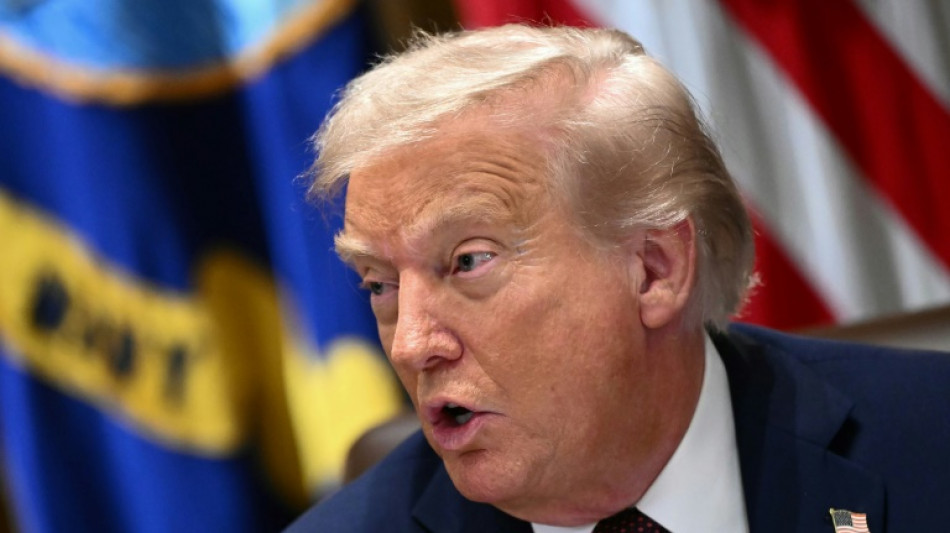
Small parcels in limbo as Trump moves to end US tariff exemption / Photo: Mandel NGAN - AFP/File

 Mandela Digital Extends Early Access Programme to 11 February 2027 Following Strong Response

 McDonald's to boost franchisees as inflation weighs on consumers
 Archaelogical 'breakthrough' could confirm origins of Paris
 Fendi brings disco bling, Italian style, to Milan Fashion Week

 アレックス・ボディ氏とシュテファン・ハウプト教授、ルーマニアの伝説的な美術コレクションをめぐり提携に合意

 Stocks dip, oil rises as traders eye chances of Iran deal

 Oil falls, stocks steady as Trump hails 'good' Iran talks

 Canada judge to decide prison term for suicide poison seller

 Meta leans into AI, smart glasses amid privacy pushback
 Oil prices fall after Trump hails 'good' talks with Iran

 AI political ads warp reality ahead of US midterms

 Oil prices retreat as markets welcome US-Iran talks

 French prosecutors probe secret filming of women with smart glasses

 Trump renames AI "super intelligence," rejects international oversight
 How is the EU approaching record fuel prices?

 11 hurt as teen opens fire outside school in western Turkey

 UN chief says 'Big Oil' treats atmosphere as open sewer

 Memoir by Diana's brother goes on sale after rocking UK monarchy

 Stocks climb as oil slides, AI buzz returns

 MEXC Launches “Real Stocks, Real Friends” with Rewards for Bringing Friends to Wall Street

 Stocks rise on AI buzz, oil prices cool
 In Bangladesh, Pakistan's Jinnah photo stirs anger

 China's robot dancers limber up for America's Got Talent final

 Green policies just good politics, says UK minister

 El Nino weather pattern enters record territory: scientist

An approaching US deadline to end tariff exemptions on small parcels has tripped up global deliveries to the world's biggest economy, with businesses halting shipments to American consumers and mulling price hikes.
Come Friday, US President Donald Trump's administration is abolishing a rule that allows packages valued at $800 or below to enter the country duty-free.
But the monthlong lead time he provided to implement the change has sparked a frenzy.
Postal services, including in France, Britain, Germany, Italy, India, Australia and Japan, have announced that most US-bound packages would no longer be accepted.
The United Nations' Universal Postal Union noted that 25 member countries' postal operators have suspended outbound postal services to the country.
UK retailer Liz Nieburg, for one, has stopped shipping products to US customers while the Royal Mail works out a system to honor the changes.
She told AFP that some American customers of her online business SocksFox -- which sells socks, underwear and sleepwear -- tried to place orders ahead of time to avoid additional costs.
But this is risky, given a likely rush of goods entering the United States as other buyers do the same, meaning that products might come up against tariffs anyway.
US buyers form about 20 percent of her sales, and she sees little choice but to hike prices if new duties are here to stay: "Our margins are too tight to be able to absorb that."
The Trump administration has imposed tariffs in rapid succession this year.
But Cornell Professor Li Chen warned that it takes time for postal services to work out systems for duty collection, to close the so-called "de minimis" exemption for small parcels.
"It's not like there's a switch you can turn on and turn off," he said.
- Delays, cost hikes -
"On the consumer side, there will be potential delays, because now all the parcels have to clear customs," Chen added. Prices may also rise if businesses pass on the tariffs.
"The impact on small businesses probably will be much greater than larger ones," he said. Larger companies tend to be more diversified and can absorb the shock.
These include businesses like Chinese-founded consumer platforms Shein and Temu, for example, which were hit when Washington ended the exemption for Chinese products this year. They might have to raise costs, Chen said, but they are not fully dependent on US consumers.
Online marketplaces like Etsy, where small businesses sell products, could also see sales impacted.
Elsewhere, Ken Huening, whose California-based business CoverSeal manufactures outdoor protective covers in China and Mexico, has had to eliminate free shipping for customers.
Most of his shipments went direct to consumers under the duty-free exemption, but the hit to China and now Mexico are posing challenges.
"Textile and manufacturing is not available in the US currently," Huening told AFP.
"It might be in the future, but by that time, we're all out of business," he said.
- Confusion -
The changes have fueled uncertainty, with Deutsche Post and DHL Parcel Germany saying they would stop accepting US-bound parcels from Monday, citing lingering questions over customs duties collection.
"It's pretty detrimental for us, because it's a super confusing time for our customers," said Haley Massicotte, who runs Canada-based cleaning products company Oak & Willow.
She said US consumers do not always understand how tariffs work, and how they might have to bear added costs.
"We are going to do everything in our power to not raise prices," she stressed.
Similarly, ceramics retailer Sarah Louise Jour in Bangkok, Thailand, has been striving to keep shipping costs down after the Thai postal service halted US parcel shipments.
This forced her to tap more expensive services to send products to US buyers, constituting some 90 percent of her business.
"I don't have time to worry, because I have to think about my team. I do employ people here," she said. "I have rent I need to pay for the office."
While she expects sales to hold up in the holiday season, the outlook is murkier afterwards.
Massicotte said: "This tariff war is just going to hurt the American and the Canadian consumer, especially small business owners."
M.García--CPN