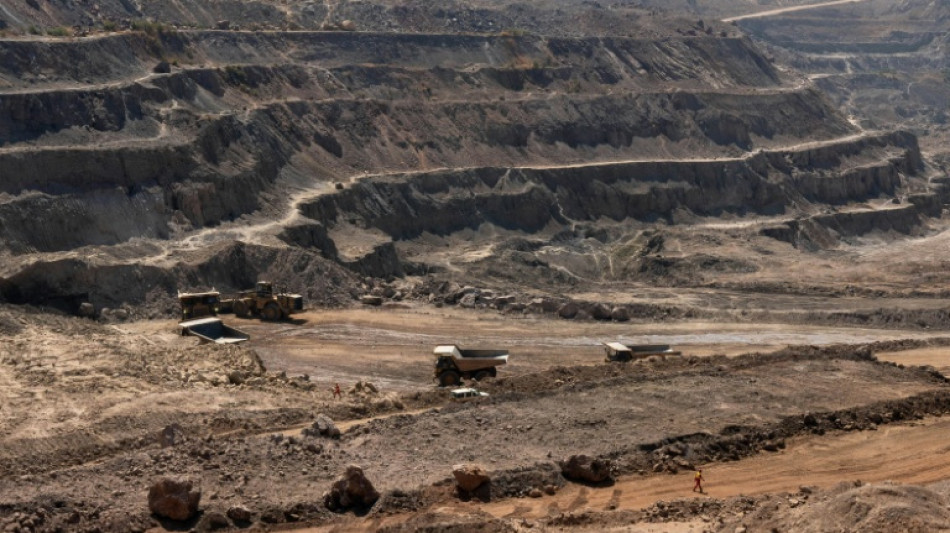
US bids to trump China in DR Congo mining rush / Photo: Emmet LIVINGSTONE - AFP

 Rio breaks record for rainiest September amid powerful El Nino
 Mandela Digital Extends Early Access Programme to 11 February 2027 Following Strong Response

 McDonald's to boost franchisees as inflation weighs on consumers
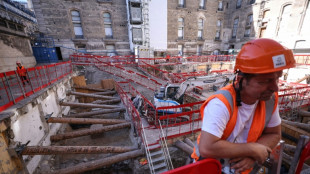 Archaelogical 'breakthrough' could confirm origins of Paris
 Fendi brings disco bling, Italian style, to Milan Fashion Week

 アレックス・ボディ氏とシュテファン・ハウプト教授、ルーマニアの伝説的な美術コレクションをめぐり提携に合意

 Stocks dip, oil rises as traders eye chances of Iran deal

 Oil falls, stocks steady as Trump hails 'good' Iran talks

 Canada judge to decide prison term for suicide poison seller

 Meta leans into AI, smart glasses amid privacy pushback
 Oil prices fall after Trump hails 'good' talks with Iran
 AI political ads warp reality ahead of US midterms

 Oil prices retreat as markets welcome US-Iran talks
 French prosecutors probe secret filming of women with smart glasses

 Trump renames AI "super intelligence," rejects international oversight
 How is the EU approaching record fuel prices?

 11 hurt as teen opens fire outside school in western Turkey

 UN chief says 'Big Oil' treats atmosphere as open sewer
 Memoir by Diana's brother goes on sale after rocking UK monarchy
 Stocks climb as oil slides, AI buzz returns

 MEXC Launches “Real Stocks, Real Friends” with Rewards for Bringing Friends to Wall Street

 Stocks rise on AI buzz, oil prices cool

 In Bangladesh, Pakistan's Jinnah photo stirs anger

 China's robot dancers limber up for America's Got Talent final
 Green policies just good politics, says UK minister
The United States wants to secure its supply of strategic minerals in conflict-torn Democratic Republic of Congo, hoping to challenge China's near-monopoly on the lucrative sector.
While the strategy has been in the works for years, Washington has doubled down on it since Donald Trump's return to the White House in January.
- Risky El Dorado -
Although it is among the world's 15 least developed countries, the DRC has some of the richest mineral veins on the planet.
Besides gold and uranium, its mines contain significant deposits of copper, cobalt, coltan and lithium, with uses ranging from weaponry to mobile phones and electric cars.
More than three-quarters of the world's cobalt came from the DRC in 2024, according to the US Geological Survey.
Threatened by the resurgence of the Rwanda-backed M23 militia in the DRC's east, Congolese President Felix Tshisekedi has sought to strike a deal with the United States, trading direct access to those minerals for beefed-up security cooperation.
But the Congolese mining sector is rife with chronic trafficking, organised crime and corruption, discouraging businesses from investing.
- Skirting the eastern conflict -
Since taking up arms again in 2021, the M23 has taken control of a raft of mining sites in the eastern DRC, notably in North and South Kivu provinces, with Rwanda's help.
However, Washington's gaze has turned further to the southeast, to the cobalt and copper-rich Katanga region, which has been spared by conflict in recent times, according to experts.
To rival China's Belt and Road global infrastructure initiative, the United States has worked for years to establish the "Lobito Corridor", an ambitious infrastructure project which would allow minerals mined in the southeastern DRC to be transported thousands of kilometres (miles) overland to the Atlantic Ocean.
- China's dropped anchor -
Chinese businesses are involved in mining the vast majority of the DRC's deposits, often taking over from Western companies put off by conflicts or the business environment.
"If the Americans want to enter into the sector today and begin to make a profit immediately, that will involve snatching mining permits away from certain companies," said Christian-Geraud Neema, an expert for the China-Global South Project, a non-profit group.
"If they want to start from zero, they will have to request research permits and get involved in exploration, which could take a minimum of eight to nine years before achieving any results," he added.
- AI mapping -
To that end, KoBold Metals, an American start-up specialised in using artificial intelligence to discover new mineral deposits, especially of lithium, signed a declaration of principles with the DRC's government in July for the exploration of 1,700 new potential mining sites.
With financiers including Jeff Bezos and Bill Gates, the group likewise obtained the authorities' assent to comb through its precious mining information database.
"All the mines which we know of come from searches done 80, even 100 years ago," under Belgian colonial rule, said Jean-Jacques Kayembe, coordinator for the Extractive Industries Transparency Initiative (EITI) in the DRC.
"Less than 20 percent of the territory has been subject to sustained study," he added.
- Plots up for grabs -
In July, the DRC's mining registry made more than 600 mining titles up for grabs following a major clean-up of its records.
Several sources and security officials said the government was piling on the pressure to make those plots available to respond to US demands.
Crispin Mbindule, chairman of the board of directors of the Congolese mining registry, denies those claims, insisting that the DRC "is not selling off its assets".
He said that the Americans "followed all the procedures and paid all the fees".
Besides discovering new deposits, the DRC is attempting to respond to the United States's interests by offering up joint ventures in mining companies owned by the state, according to Kayembe.
- Israeli billionaire's shadow -
Looming over proceedings is Israeli investor Dan Gertler, who continues to wield significant influence in the DRC's mining sector despite being sanctioned by the United States over his dealings and business practices.
"He still collects royalties from three of the biggest mining projects in the country," said Jean Claude Mputu of the non-profit group The Congo is Not for Sale.
In March 2021, the United States re-imposed sanctions on Gertler, first set in 2017 for allegedly cheating the DRC of about $1.4 billion in revenues through opaque mining deals.
Trump had reversed some of the sanctions just before the end of his first term.
"It's impossible that someone who has his know-how will not be involved" in the ongoing negotiations, a European diplomat said.
Congolese civil society representatives launched a campaign in July demanding an end to the sanctions against Gertler.
The Israeli businessman, who has denied any suggestion of being involved in any massive resource corruption in Africa, could not be reached for comment.
D.Goldberg--CPN