'Curly is beautiful': Tunisian women embrace natural hair / Photo: FETHI BELAID - AFP/File

 Australian PM says OpenAI hacked government health website

 Rio breaks record for rainiest September amid powerful El Nino

 Mandela Digital Extends Early Access Programme to 11 February 2027 Following Strong Response

 McDonald's to boost franchisees as inflation weighs on consumers
 Archaelogical 'breakthrough' could confirm origins of Paris

 Fendi brings disco bling, Italian style, to Milan Fashion Week
 アレックス・ボディ氏とシュテファン・ハウプト教授、ルーマニアの伝説的な美術コレクションをめぐり提携に合意
 Stocks dip, oil rises as traders eye chances of Iran deal

 Oil falls, stocks steady as Trump hails 'good' Iran talks
 Canada judge to decide prison term for suicide poison seller

 Meta leans into AI, smart glasses amid privacy pushback
 Oil prices fall after Trump hails 'good' talks with Iran

 AI political ads warp reality ahead of US midterms

 Oil prices retreat as markets welcome US-Iran talks
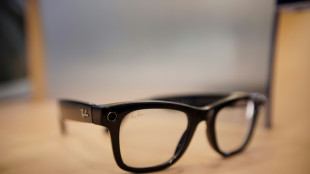 French prosecutors probe secret filming of women with smart glasses

 Trump renames AI "super intelligence," rejects international oversight

 How is the EU approaching record fuel prices?

 11 hurt as teen opens fire outside school in western Turkey

 UN chief says 'Big Oil' treats atmosphere as open sewer

 Memoir by Diana's brother goes on sale after rocking UK monarchy

 Stocks climb as oil slides, AI buzz returns

 MEXC Launches “Real Stocks, Real Friends” with Rewards for Bringing Friends to Wall Street

 Stocks rise on AI buzz, oil prices cool

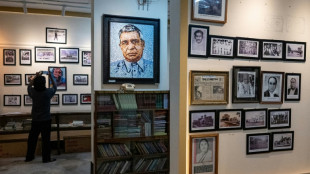 In Bangladesh, Pakistan's Jinnah photo stirs anger

 China's robot dancers limber up for America's Got Talent final
Tunisian mother Mouna Jebali had long used a flat iron to straighten her thick hair, but with women everywhere challenging the stigma around natural looks, she has finally learned to love her curls.
To help her make what she called the "transition" to wearing her hair curly, she visited the North African country's first beauty salon specialising in natural hair.
"For years, I was taught that curly hair was not neat, that it had to be straightened or tied back," Jebali told AFP at Pineapple Studio in the capital, Tunis.
She said she finally came to accept her natural hair after tiny curls started forming on her little boy's head.
"That's when I said to myself: actually no, curly hair is beautiful," she said.
In countries around the world, beauty standards have shifted radically in recent years, with a growing number of beauty salons and cosmetic brands promoting natural styles.
Still, the battle is far from won, and many women in Tunisia still rush to get their hair straightened ahead of a wedding or a meeting, and some fear that if they do not wear their hair straight for a job interview, they might not get hired.
- Indigenous and African -
Advocates for wearing one's natural hair believe that at the root of the stigma around curls lies a form of discrimination that they call "texturism".
"The further you move away from what is considered Afro, kinky or curly, the more socially accepted you are," said Nawal Benali, a journalist and host of a podcast on racism in North Africa.
"Because that's a marker of proper appearance and presentability."
Benali said the standards had first been set in "the white, Western world", calling the obsession around straight hair an attempt to "erase our Indigenous and African features".
Dhouha Mechergui, who co-founded Pineapple Studio, recalled having her hair straightened by her mother ahead of every religious holiday growing up.
She said it took courage to make her own switch to natural, and that she had to work hard to convince women to embrace their curls and come to her salon.
"Sometimes I play the role of psychiatrist, because I know making that decision is very difficult," she said.
Aside from the drive for greater authenticity, health concerns have become a part of the debate, with one major study by the US National Institutes of Health linking chemical hair straightening products to a higher risk of uterine cancer.
- 'We are proud' -
For generations, people around the world were told to straighten, braid, cut or otherwise conceal their curls, or else get sent home from school or work.
A global drive buoyed by the Black Lives Matter movement gave rise to a major pandemic-era trend of beauty videos celebrating natural hair.
The push did not go unnoticed: French lawmakers last year voted to ban discrimination based on hair texture, while several US states have passed similar legislation.
Tunisia has no such initiative, so women entrepreneurs are leading the change.
In 2021, Sirine Cherif cofounded Kamaana -- or "as I am" -- Tunisia's first homegrown haircare brand dedicated to curly locks.
"When we started, we were the only specialised brand on the market," she said.
"A few months later, there was a domino effect: bigger brands launched their own curly-hair lines."
And today, Tunisian companies such as Zynia and Lilas Cosmetics have joined the growing industry.
For Cherif, the boom is both a lucrative business opportunity and a marker of profound social change.
"We are proud to have encouraged people to be themselves, to resist this societal pressure and embrace their natural hair," she said.
Her company has seen 42-percent annual growth since its founding, she said, adding: "We want to start a curl revolution."
M.García--CPN