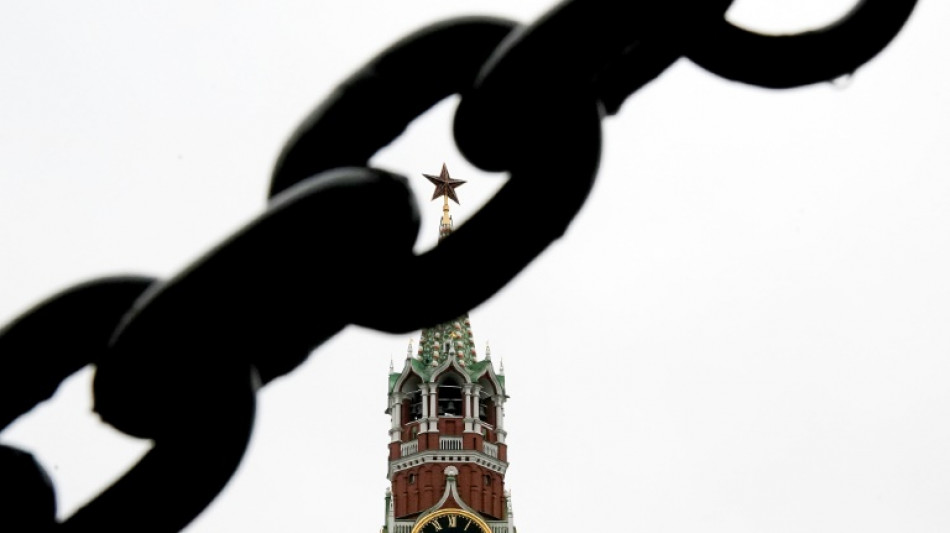
New cryptocurrency may be aiding Russia to dodge sanctions / Photo: TATYANA MAKEYEVA - AFP/File

 South Lebanon children return to school destroyed by Israel strike

 European stock markets climb as oil prices drop

 Asian markets mixed after recent oil surge

 Cash for nature protection: hotelier's offer to Principe islanders
 India rape cases turn focus back onto women's safety

 Rich nations should foot climate bill, says Nepal minister
 Italy bans burqas in schools, caps numbers of foreign students per class

 Napoli hoping to build new stadium, says owner
 What happens if the US bans diesel exports
 Oscar-winner Cotillard fears being moved by AI actor

 Stocks fall, oil prices rise as global bonds back under pressure
 Streamex Converts Interest Into Capital as GLDY Investment Strategy Secures $1M+ Institutional Allocation

 STARTRADER Named Best Fintech Forex Broker at Forex Expo Dubai 2026
 German think tanks urge Merz to stick with reforms after election defeats

 France's top-selling newspaper to slash jobs

 BaazEX Enters the Asian Trading Market With a New Approach to Online Forex Trading.
 Sao Tome voters want to stop exodus of 'neglected' youth
 Mexican cartels target Australia with their African meth
 Rapper-turned-PM faces first big test after Nepal disaster

 Meta launches camera-free AI glasses amid privacy pushback

 Anthropic touts AI-led biology discovery

 Stocks fall on soaring bond yields, higher oil prices

 ArcPoint Expands Globally with Institutional Intelligence Platform for Modern Investors

 Outgoing UN chief makes final climate push at New York summit

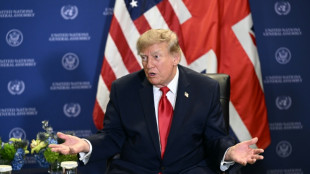 Stocks dip, oil soars despite Trump hailing "productive" Iran talks

Russia could be turning to a new cryptocurrency called A7A5 to allow money to flow in and out of the country and avoid Western sanctions, experts have told AFP.
Multiple rounds of international sanctions have been imposed on Moscow since its February 2022 invasion of Ukraine seeking to ramp up economic pressure to halt the war.
But the launch of A7A5 in February this year opened up an alternative payment method for Russian businesses and individuals to sidestep sanctions when trading with foreign partners, the UK-based non-profit Centre for Information Resilience (CIR) said in a report.
A7A5 is a stablecoin -- a form of cryptocurrency backed by traditional assets -- in this case pegged to the ruble, making it harder for Western authorities to monitor than dollar-based alternatives.
It was launched by a pro-Russian Moldovan oligarch and a Russian state-owned bank as "the first ever ruble-pegged stablecoin," George Voloshin from anti-money laundering group ACAMS told AFP.
While it is not widely used yet, experts say its creation marks a significant step in Russia's efforts to reduce its dependence on major crypto companies -- many of which cooperate with Western governments.
- Russian stablecoin -
Since Russia was kicked out of the international banking system SWIFT and hit with asset freezes and investment bans, Moscow has already turned to crypto to sidestep financial restrictions imposed by the United States and its allies.
Stablecoins are especially attractive because they are less volatile than other cryptocurrencies.
People have also used cryptocurrency to donate directly to both the Ukrainian army and Russian militias, according to several analytics firms such as Elliptic.
But Russia has faced a problem: USDT, the most popular stablecoin, is tied to the US dollar and controlled by a company called Tether, which cooperates with US and European authorities.
Earlier this year, Tether blocked $28 million in USDT held in wallets on Garantex, Russia's largest crypto exchange, which was shut down following a global crackdown on illegal transactions.
"That was a real wake-up call" for Russia, said Elise Thomas, senior investigator at CIR.
"It made them think that they need their own stablecoin, they need something that they control," she added.
Just before Garantex was shut down, tens of millions of dollars were moved from USDT into A7A5, according to data from crypto tracking firm Global Ledger.
- How it works -
A7A5 is backed by deposits in Promsvyazbank, a Russian bank under sanctions for its ties to the government and the military.
The coin is traded on Grinex, a crypto exchange based in Kyrgyzstan -- a country seen as friendlier to Russian interests and less vulnerable to Western pressure.
A7A5 is also registered in Kyrgyzstan rather than Russia because the country offers a crypto-friendly legal environment and is less exposed to "sanctions and other economic pressures," project director Leonid Shumakov said in an interview posted online.
Less than six months after its launch, around $150 million is now held in A7A5.
These transactions are not necessarily illegal, but they could become problematic if used by sanctioned individuals or entities to reconnect with the global financial system, warned ACAMS's Voloshin.
The man behind the A7 group, which developed A7A5, is Ilan Shor, a Moldovan businessman and politician now living in Russia.
Investigators found links between A7A5 and Shor's political activities in Moldova, including websites related to both sharing the same IP address.
These findings have suggested that the cryptocurrency could be used as a tool for political influence.
Shor and his company have already been sanctioned by the UK, and more recently by the European Union, which accused them of trying to meddle in Moldova’s 2024 presidential election and its referendum on joining the EU -- all while keeping close ties with Moscow.
Y.Ibrahim--CPN