
-
 First US trial against TikTok to open Monday
-
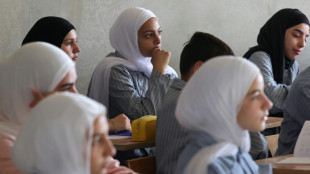
South Lebanon children return to school destroyed by Israel strike
-
 French literary prize removes novel from longlist after AI claims
-
European stock markets climb as oil prices drop

-
 Trump accuser E. Jean Carroll finally has her damages
-
Asian markets mixed after recent oil surge

-
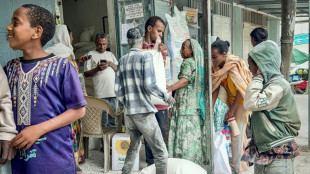 Heavy fighting, internet disruption as Ethiopia conflict rages
-
Cash for nature protection: hotelier's offer to Principe islanders

-
 Asian markets mixed after oil gains
-
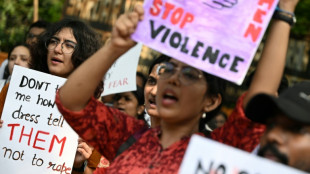
India rape cases turn focus back onto women's safety
-
 UN approves resolution on dealing with rising sea levels
-
Rich nations should foot climate bill, says Nepal minister

-
 Global stocks mostly fall as oil prices and bond yields rise
-
Italy bans burqas in schools, caps numbers of foreign students per class

-
 Starbucks to close 250 more cafes in North America
-
Napoli hoping to build new stadium, says owner

-
 Stocks fall as oil prices rise and bonds back under pressure
-
What happens if the US bans diesel exports
-
 Top ECB official to resign to take up IMF role
-
Oscar-winner Cotillard fears being moved by AI actor

-
 Eviction of pensioner puts Spain housing crisis in spotlight
-
Stocks fall, oil prices rise as global bonds back under pressure
-
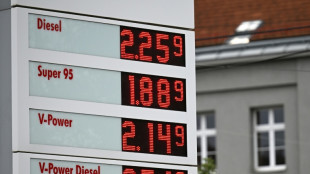 Average EU diesel price hits record 2.23 euros a litre: AFP analysis
-
Streamex Converts Interest Into Capital as GLDY Investment Strategy Secures $1M+ Institutional Allocation

-
 Whitetip Investments Marks 10 Years of Regulation, Transparency & Responsible Trading
-
STARTRADER Named Best Fintech Forex Broker at Forex Expo Dubai 2026

-
 Stocks fall, oil prices rise as global bonds under pressure
-
German think tanks urge Merz to stick with reforms after election defeats
-
 Hungary detects invasive spotted lanternfly for first time in EU
-
France's top-selling newspaper to slash jobs

-
 Forex Expo Dubai 2026 Breaks Guinness World Record Again With 23,816 Attendees
-
BaazEX Enters the Asian Trading Market With a New Approach to Online Forex Trading.

-
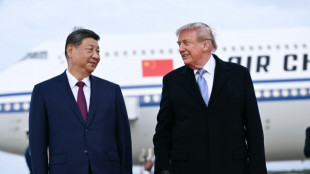 Asian markets fall on US-China jitters as leaders meet
-
Sao Tome voters want to stop exodus of 'neglected' youth

-
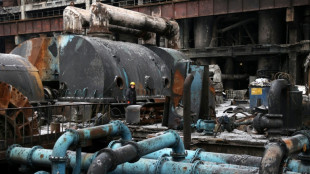 As Moscow steps up attacks, Kyiv residents brace for harsh winter
-
Mexican cartels target Australia with their African meth

-
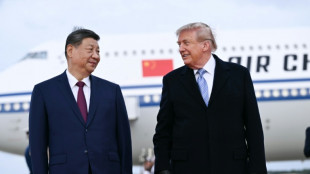 Markets mixed as China's Xi arrives for US talks
-
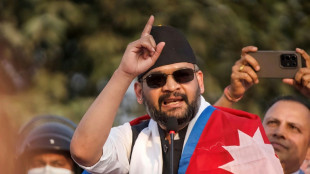
Rapper-turned-PM faces first big test after Nepal disaster
-
 Archaeological 'breakthrough' could confirm origins of Paris
-
Meta launches camera-free AI glasses amid privacy pushback

-
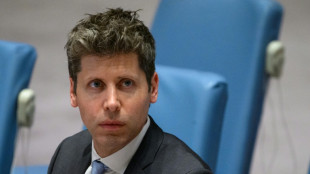 Australian PM says OpenAI hacked government health website
-
Anthropic touts AI-led biology discovery

-
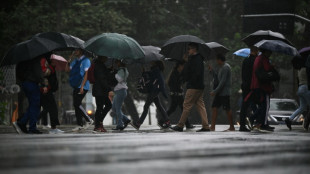 Rio breaks record for rainiest September amid powerful El Nino
-
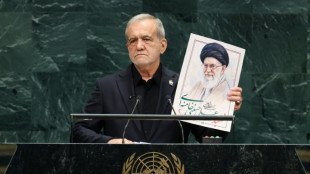
Stocks fall on soaring bond yields, higher oil prices
-
 Mandela Digital Extends Early Access Programme to 11 February 2027 Following Strong Response
-
ArcPoint Expands Globally with Institutional Intelligence Platform for Modern Investors

-
 McDonald's to boost franchisees as inflation weighs on consumers
-
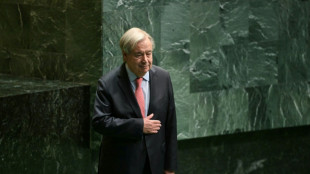
Outgoing UN chief makes final climate push at New York summit
-
 Archaelogical 'breakthrough' could confirm origins of Paris
-
Stocks dip, oil soars despite Trump hailing "productive" Iran talks
Syria says pulling troops from Druze heartland after US request
Syria announced that its army had begun to withdraw from violence-hit Sweida on Wednesday, following a wave of Israeli strikes on the capital and a US call for government forces to leave the majority-Druze southern city.
The United States, which is close allies with Israel and has been trying to reboot its relationship with Syria, said an agreement had been reached to restore calm in the area, and urged "all parties to deliver on the commitments they have made".
The Syrian government earlier announced a new ceasefire in Sweida that would bring a halt to military operations there, after clashes that a war monitor said had left more than 300 people dead since Sunday.
The Syrian army "has begun withdrawing from the city of Sweida in implementation of the terms of the adopted agreement, after the end of the sweep of the city for outlaw groups", a defence ministry statement said.
The statement did not mention any withdrawal of other government security forces, which had deployed to the city on Tuesday with the stated aim of overseeing a previous truce agreed with Druze community leaders following days of deadly fighting with local Bedouin tribes.
That ceasefire appeared to have little effect, however, with witnesses reporting that the government forces joined with the Bedouin in attacking Druze fighters and civilians in a bloody rampage through the city.
The Syrian Observatory for Human Rights war monitor said that the violence in Sweida province had left more than 300 people dead, including government forces, local fighters and 27 Druze civilians killed in "summary executions".
The Syrian presidency vowed to investigate the "heinous acts" in Sweida and to punish "all those proven to be involved".
- Damascus strikes -
Israel, which has its own Druze community, has presented itself as a defender of the group, although some analysts say that is a pretext for pursuing its own military goal of keeping Syrian government forces as far from their shared frontier as possible.
Following the fall of Syria's longtime ruler Bashar al-Assad in December, the Israeli military took control of the UN-monitored demilitarised zone in the Golan Heights and conducted hundreds of strikes on military targets in Syria.
After carrying out air strikes in Sweida province earlier this week in what it said was defence of the Druze, Israel launched a series of attacks on the capital Damascus on Wednesday.
Israel said it had also struck a "military target" in the area of the presidential palace, while a Syrian interior ministry source reported strikes outside the capital in "the vicinity of the Mazzeh (military) airport".
Israeli Defence Minister Israel Katz called on Damascus to "leave the Druze in Sweida alone", and threatened to unleash "painful blows" until government forces pulled back.
Syria's foreign ministry slammed the attacks as a "dangerous escalation", while Israel's military chief insisted his forces were "acting with responsibility, restraint and sound judgment".
The Syrian health ministry said that at least three people were killed and 34 wounded in the strikes on Damascus.
- Halt to Sweida operations -
Announcing the new ceasefire on Wednesday, Syria's interior ministry said there would be a "total and immediate halt to all military operations", as well as the formation of a committee comprising government representatives and Druze spiritual leaders to supervise its implementation.
An AFP correspondent in Sweida, however, reported hearing gunfire in the city even after the announcement.
In a video carried by state television, Sheikh Youssef Jarboua, one of Syria's main Druze spiritual leaders, read out the 10 points of the accord, which also includes "the full integration of the province" of Sweida into the Syrian state.
Until now, Druze areas have been controlled by fighters from the minority community.
The latest fighting was the most serious outbreak of violence in Syria since government forces battled Druze fighters in Sweida province and near Damascus in April and May, leaving more than 100 people dead.
The clashes between the Bedouin and the Druze that first prompted the government deployment were triggered by the kidnapping of a Druze vegetable merchant, according to the Observatory. The two groups have been at loggerheads for decades.
The Islamist authorities have had strained relations with Syria's patchwork of religious and ethnic minorities, and have been repeatedly accused of not doing enough to protect them.
US Secretary of State Marco Rubio had expressed concern on Wednesday about the Israeli bombings, adding "we want it to stop".
A State Department spokesperson said Washington was also asking Syria to "withdraw their military in order to enable all sides to de-escalate".
Rubio later announced on X that all sides had "agreed on specific steps that will bring this troubling and horrifying situation to an end".
"This will require all parties to deliver on the commitments they have made and this is what we fully expect them to do," he wrote, without elaborating on the nature of the agreement.
burs/ami/smw
H.Meyer--CPN