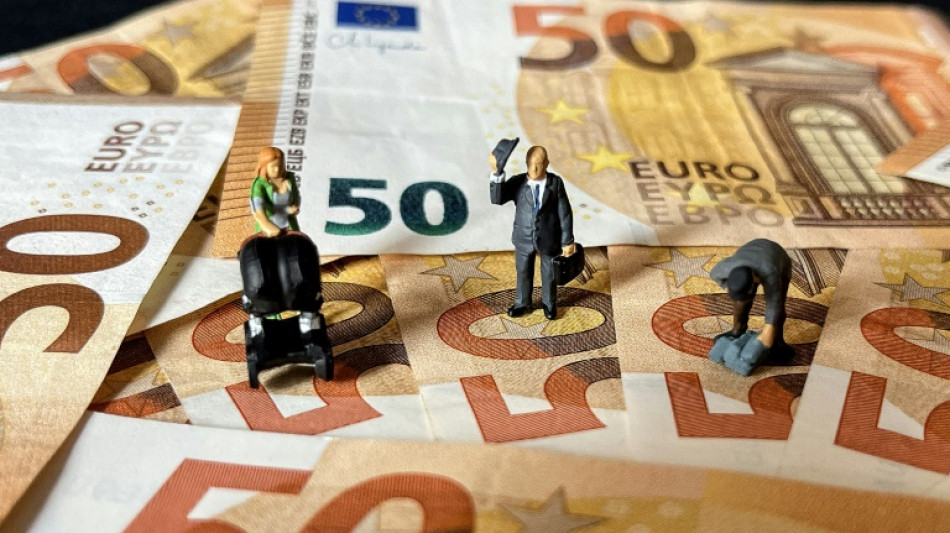
EU unveils bigger long-term budget but risks fight with farmers / Photo: DENIS CHARLET - AFP/File

 First US trial against TikTok to open Monday

 French literary prize removes novel from longlist after AI claims
 Trump accuser E. Jean Carroll finally has her damages
 Heavy fighting, internet disruption as Ethiopia conflict rages

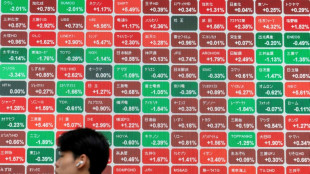 Asian markets mixed after oil gains

 UN approves resolution on dealing with rising sea levels

 Global stocks mostly fall as oil prices and bond yields rise
 Starbucks to close 250 more cafes in North America
 Stocks fall as oil prices rise and bonds back under pressure
 Top ECB official to resign to take up IMF role

 Eviction of pensioner puts Spain housing crisis in spotlight
 Average EU diesel price hits record 2.23 euros a litre: AFP analysis

 Whitetip Investments Marks 10 Years of Regulation, Transparency & Responsible Trading

 Stocks fall, oil prices rise as global bonds under pressure
 Hungary detects invasive spotted lanternfly for first time in EU
 Forex Expo Dubai 2026 Breaks Guinness World Record Again With 23,816 Attendees

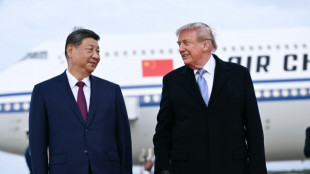 Asian markets fall on US-China jitters as leaders meet
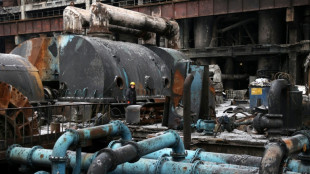 As Moscow steps up attacks, Kyiv residents brace for harsh winter

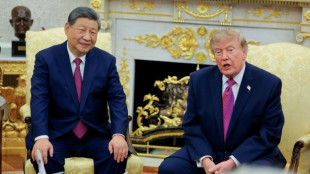
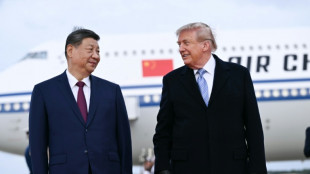 Markets mixed as China's Xi arrives for US talks
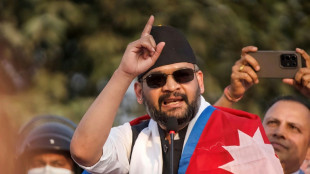
 Archaeological 'breakthrough' could confirm origins of Paris

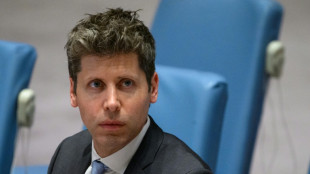 Australian PM says OpenAI hacked government health website

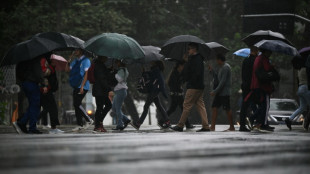 Rio breaks record for rainiest September amid powerful El Nino
 Mandela Digital Extends Early Access Programme to 11 February 2027 Following Strong Response

 McDonald's to boost franchisees as inflation weighs on consumers
 Archaelogical 'breakthrough' could confirm origins of Paris
The EU executive proposed on Wednesday a two-trillion-euro long-term budget bazooka focused on tackling overseas competition and Russian aggression at Europe's borders -- at the risk of a new showdown with farmers.
Presenting the $2.3-trillion 2028-2034 budget blueprint to reporters in Brussels, EU chief Ursula von der Leyen said it "will be the most ambitious ever proposed".
The plans seek to bolster Europe's security and ramp up its competitiveness, while paying off debts from a massive Covid-era loan as of 2028 -- against a backdrop of soaring trade tensions with the bloc's biggest commercial partner, the United States.
The European Commission put 451 billion euros on the table under a broad "competitiveness" tag that encompasses defence and space -- together allocated 131 billion euros, a five-fold increase.
The budget plan earmarks up to 100 billion euros for the reconstruction of war-torn Ukraine -- as well as substantial new "flexibility" funds kept available in event of crises.
But Brussels came under heavy criticism by EU lawmakers who accused it of not leaving sufficient funds for priorities including climate adaptation and the agriculture subsidies that currently make up the biggest share of the EU's budget.
Budget commissioner Piotr Serafin said under the commission's plans, 300 billion euros would remain ring-fenced to support farmers -- against around 387 billion euros, of which 270 billion in direct payouts, under the current seven-year budget.
- 'Black Wednesday for farmers' -
Brussels says the difference reflects an overhaul of the massive subsidies known as the common agricultural policy (CAP) -- with some funding moved to other budget columns.
But the future of the CAP is headed for a fight, with farmers warning against cuts to their slice of the EU pie -- and marching Wednesday in Brussels to show their resolve.
Hundreds of European farmers joined a protest outside the commission building in Brussels organised by a pan-European agriculture lobby group, Copa-Cogeca.
The group described it as a "Black Wednesday" for farmers, accusing Brussels of having "effectively decided to dismantle the 'common' nature of the CAP through concealed budget cuts".
The warning raised the spectre of another confrontation after last year's protests across Europe by farmers upset at cheap imports, low margins and the burden of environmental rules.
Hungary, a staunch critic of Brussels and Russia's closest ally in Europe, meanwhile tapped into their anger ahead of the plan's release -- while slamming the money for Kyiv.
"Ukraine would get a massive funding boost, while European farmers lose out," Hungarian Prime Minister Viktor Orban said.
- Battle lines drawn -
The announcement sets the stage for two years of fraught negotiations between the European Parliament and 27 member states.
Already stretched thin, some states are unwilling to contribute more to the common pot.
Unlike in the previous budget, the EU has debts due from the Covid pandemic, when states teamed up to borrow 800 billion euros to support the bloc's economy. These are estimated to cost 25-30 billion euros a year from 2028.
The previous 2021-2027 budget was worth around 1.2 trillion euros and made up from national contributions and money collected by the EU such as customs duties.
National contributions will grow slightly, from 1.13 percent of member states' gross national income to 1.15 percent plus 0.11 percent devoted to repaying the Covid loan.
The commission will also seek to raise about 58 billion euros a year collecting money directly through five instruments, including its carbon border tax and a levy on electronic waste.
Member states gave a sneak peek at the fights to come.
France's Europe minister Benjamin Haddad hailed the commission's "ambition" but Dutch finance minister Eelco Heinen -- representing one of the frugal states -- said the proposed budget was "too high".
Members of the EU parliament, however, made it clear the budget was not enough in their view.
"However you try to package this, what we have is a real-terms investment and spending freeze," said a joint statement from the EU lawmakers tasked with steering the budget through parliament.
St.Ch.Baker--CPN