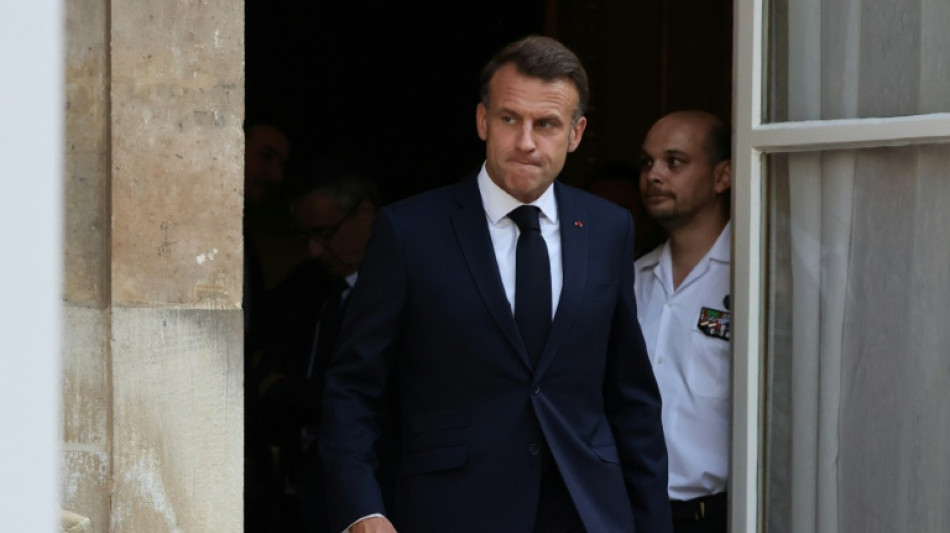
Macron to raise defence targets, citing Russia threat / Photo: Ludovic MARIN - POOL/AFP

 First US trial against TikTok to open Monday
 French literary prize removes novel from longlist after AI claims
 Trump accuser E. Jean Carroll finally has her damages
 Heavy fighting, internet disruption as Ethiopia conflict rages

 Asian markets mixed after oil gains

 UN approves resolution on dealing with rising sea levels

 Global stocks mostly fall as oil prices and bond yields rise
 Starbucks to close 250 more cafes in North America
 Stocks fall as oil prices rise and bonds back under pressure
 Top ECB official to resign to take up IMF role

 Eviction of pensioner puts Spain housing crisis in spotlight
 Average EU diesel price hits record 2.23 euros a litre: AFP analysis

 Whitetip Investments Marks 10 Years of Regulation, Transparency & Responsible Trading

 Stocks fall, oil prices rise as global bonds under pressure
 Hungary detects invasive spotted lanternfly for first time in EU
 Forex Expo Dubai 2026 Breaks Guinness World Record Again With 23,816 Attendees

 Asian markets fall on US-China jitters as leaders meet
 As Moscow steps up attacks, Kyiv residents brace for harsh winter

 Markets mixed as China's Xi arrives for US talks
 Archaeological 'breakthrough' could confirm origins of Paris
 Australian PM says OpenAI hacked government health website

 Rio breaks record for rainiest September amid powerful El Nino
 Mandela Digital Extends Early Access Programme to 11 February 2027 Following Strong Response

 McDonald's to boost franchisees as inflation weighs on consumers
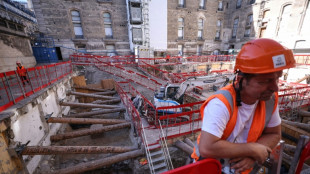 Archaelogical 'breakthrough' could confirm origins of Paris
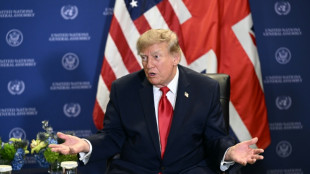
President Emmanuel Macron on Sunday called for a massive boost to France's defence spending, saying freedom in Europe was facing a greater threat than at any time since the end of World War II.
"We are living a pivotal moment," Macron said in a speech to the armed forces on the eve of the national Bastille Day holiday, denouncing "imperialist policies", "annexing powers" and the notion that "might is right", all a reference to Russia.
"Never has peace on our continent depended to such an extent on the decisions that we take now," said Macron.
France faced the challenge "of remaining free and masters of our destiny", he added.
Macron said France's defence budget should rise by 3.5 billion euros ($4.1 billion) in 2026, and then by a further three billion euros in 2027.
- 'Present at their battle stations' -
"If you want to be feared, you must be powerful," he said, calling for "mobilisation" for national defence by all government departments.
"Everyone must be present at their battle stations," Macron said.
"We are still ahead, but if we remain at the same speed we will be overtaken tomorrow," he added.
French military and security officials have been warning of global threats weighing on France, with Defence Chief of Staff Chief Thierry Burkhard saying on Friday that Russia posed a "durable" threat to Europe and that the "rank of European countries in tomorrow's world" was being decided in Ukraine, invaded by Russia in 2022.
Russia currently views France as its "main adversary in Europe", Burkhard said.
He also warned of the consequences of a diminished US commitment to Europe, along with cyber threats, disinformation campaigns and the risk of terror attacks.
"We have to take account of the fact that there has been a change in strategic parameters," he said.
On Sunday, Defence Minister Sebastien Lecornu weighed in, telling the La Tribune weekly newspaper that "it's our job to provide answers".
France needed to make "a new effort" if it wanted to "depend on nobody" in the future, the minister said.
France's defence budget has already increased sharply since Macron took power, rising from 32.2 billion euros ($37.6 billion at current rates) in 2017 to 50.5 billion currently, and is projected to reach 67 billion euros in 2030.
- 'Sacrosanct' defence budget -
If confirmed, the major defence spending boost could, however, threaten French efforts to cut deficits and reduce its debt mountain, amid pressure from the EU Commission on Paris to impose more fiscal discipline.
The servicing of France's debt alone will cost the Treasury 62 billion euros this year.
But Prime Minister Francois Bayrou, who on Tuesday is to outline his budget plan for 2026, has declared the defence budget to be "sacrosanct" and exempt from budgetary cuts.
In Sunday's speech, Macron rejected any financing of the additional defence spending through additional debt.
Several NATO countries are boosting their military spending, after the alliance's members agreed last month to spend five percent of their gross domestic product (GDP) on security.
Britain aims to increase its defence budget to 2.5 percent of GDP by 2027, and to 3.0 percent after 2029. Germany plans to reach a defence budget of 162 billion euros by 2029, equivalent to 3.5 percent of its GDP, while Poland already dedicates 4.7 percent of GDP to defence.
"Very clearly, we need to revise our programming and strategy today, in light of the changing nature of risks," Macron said on Thursday.
Lecornu this month detailed the most urgent needs for the French armed forces, including ground-to-air defences, ammunition, electronic warfare and space capabilities.
In Sunday's interview, he said France was mostly worried about falling behind in "disruptive technologies" including artificial intelligence and quantum technology.
Beyond budget increases, the French government is also seeking to boost "national cohesion" in the face of global crises, Elysee officials said.
Macron is expected to outline a potential mobilisation drive for young people who should be given "an opportunity to serve", Elysee officials said.
M.Anderson--CPN