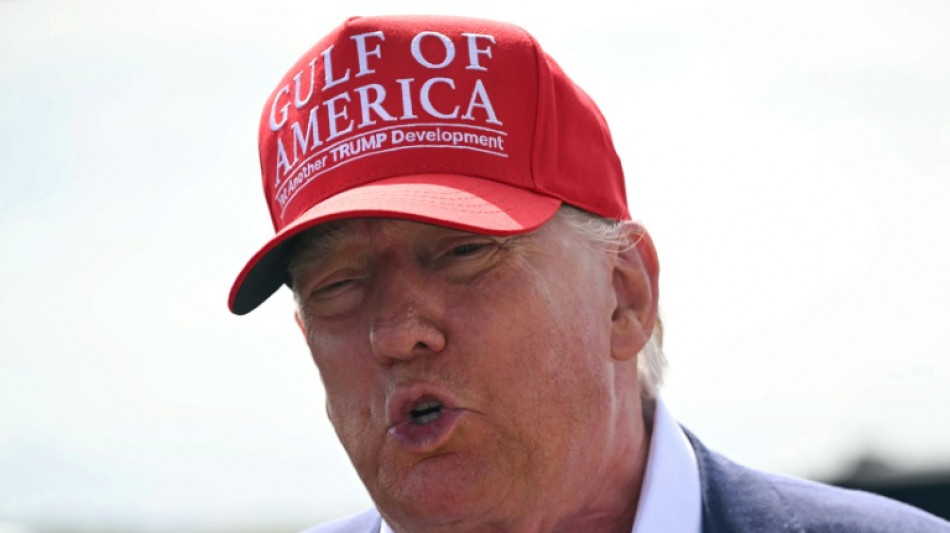
Trump's dealmaker name on the line in high stakes tariff talks / Photo: ANDREW CABALLERO-REYNOLDS - AFP/File

 First US trial against TikTok to open Monday

 French literary prize removes novel from longlist after AI claims
 Trump accuser E. Jean Carroll finally has her damages
 Heavy fighting, internet disruption as Ethiopia conflict rages

 Asian markets mixed after oil gains

 UN approves resolution on dealing with rising sea levels

 Global stocks mostly fall as oil prices and bond yields rise
 Starbucks to close 250 more cafes in North America
 Stocks fall as oil prices rise and bonds back under pressure
 Top ECB official to resign to take up IMF role

 Eviction of pensioner puts Spain housing crisis in spotlight
 Average EU diesel price hits record 2.23 euros a litre: AFP analysis

 Whitetip Investments Marks 10 Years of Regulation, Transparency & Responsible Trading

 Stocks fall, oil prices rise as global bonds under pressure
 Hungary detects invasive spotted lanternfly for first time in EU

 Forex Expo Dubai 2026 Breaks Guinness World Record Again With 23,816 Attendees

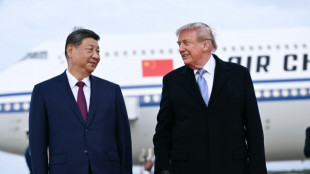 Asian markets fall on US-China jitters as leaders meet
 As Moscow steps up attacks, Kyiv residents brace for harsh winter

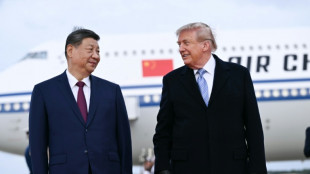 Markets mixed as China's Xi arrives for US talks
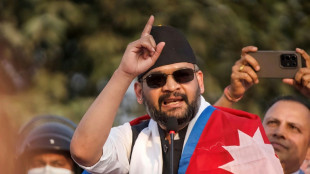
 Archaeological 'breakthrough' could confirm origins of Paris

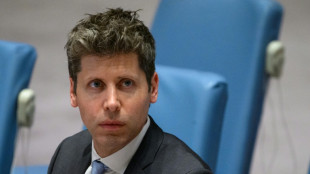 Australian PM says OpenAI hacked government health website

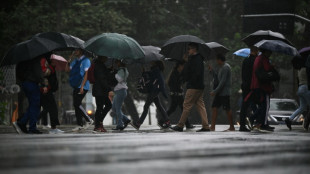 Rio breaks record for rainiest September amid powerful El Nino
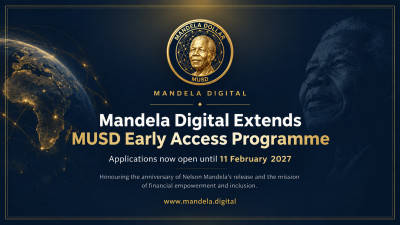 Mandela Digital Extends Early Access Programme to 11 February 2027 Following Strong Response

 McDonald's to boost franchisees as inflation weighs on consumers
 Archaelogical 'breakthrough' could confirm origins of Paris
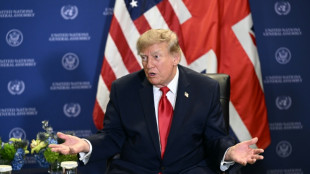
President Donald Trump set out early in his second term to fulfill a decades-long desire of reshaping US trade with the world, but the main outcomes so far have been discord and uncertainty.
The real estate tycoon, who has staked his reputation on being a consummate dealmaker, embarked on an aggressive strategy of punitive tariffs that his administration predicted could bring "90 deals in 90 days."
The score so far? Two. Three if you count a temporary de-escalation agreement with China.
The 90-day deadline was due on July 9, with dozens of economies including the European Union, India and Japan facing tariff hikes without a deal.
But days before it arrived, Trump issued a delay to August 1.
It was his second extension since unveiling the tariffs in April -- reigniting the "TACO Theory" that has gained traction among some Wall Street traders.
The acronym coined by a Financial Times writer stands for "Trump Always Chickens Out," highlighting the president's inclination to roll back policies if markets turn sour.
Treasury Secretary Scott Bessent, part of Trump's multi-leader trade team, has reportedly been a key advocate for the pauses.
But the label has irked Trump and he insisted Tuesday that the deadline had always been in August.
"I didn't make a change. A clarification, maybe," Trump said at a cabinet meeting.
This week, he published more than 20 letters dictating tariff rates to world leaders including in Japan, South Korea and Indonesia.
"We invite you to participate in the extraordinary Economy of the United States, the Number One Market in the World, by far," Trump wrote.
He also issued letters to the EU, Canada, Mexico and Brazil -- although Brazil was not previously targeted by the steeper "reciprocal" tariffs and Canada and Mexico face a separate tariff regime.
The documents "appear to be Trump's way of combatting the TACO label," said Inu Manak, a fellow for trade policy at the Council on Foreign Relations.
"He wants to show that he's not just kicking the can down the road on the deadline, but that he means business," she told AFP.
"He's likely frustrated that there isn't a parade of deals coming in."
- 'Politically complicated' -
"The shift in his rhetoric from 'there is no cost -- the foreigners pay the tariffs' to 'there is a short term cost, but there will be a long term gain' has put him in a more politically complicated position," said William Reinsch, senior adviser at the Center for Strategic and International Studies.
Trump has repeatedly claimed that foreign countries foot the bill for tariffs, although the reality is more complicated with US companies generally paying them.
"In the public's mind, the tariffs are the pain, and the agreements will be the gain," said Reinsch, a former US commerce official.
He warned that without trade agreements, Americans could conclude Trump's strategy was flawed and deem his tactics a failure.
While the 90-deal goal was probably unrealistic, Reinsch said, "it's clear that three (UK, China, Vietnam) with only one actual text made public (UK) is too small."
- Deflecting attention -
Meanwhile, Trump has announced a 50 percent levy on copper imports starting August 1.
Commerce Secretary Howard Lutnick said officials would also conclude investigations into semiconductors and pharmaceuticals -- which could lead to tariffs -- at month-end.
"That timing is not coincidental -- it lines up with the new deadline of August 1, adding more pressure and deflecting attention from any lack of deals that get made in that time frame," Manak said.
Analysts believe Trump's supporters will likely not pay much attention to trade talks unless the tariffs fuel inflation.
"Trade policy is not top-of-mind for the average voter," said Emily Benson, head of strategy at Minerva Technology Futures.
She expects the Trump administration's focus on boosting US manufacturing and reinvigorating the defense industrial base means it could be willing to bear some political heat to achieve those objectives.
But it's a delicate balance.
Voters will likely pay more attention if Trump follows through on his August tariff threats, Manak said.
"And we could see a negative market reaction as well, which would not go unnoticed."
L.K.Baumgartner--CPN