Impact of US tariffs varies across European Union / Photo: ANDREW CABALLERO-REYNOLDS - AFP/File

 First US trial against TikTok to open Monday

 French literary prize removes novel from longlist after AI claims
 Trump accuser E. Jean Carroll finally has her damages
 Heavy fighting, internet disruption as Ethiopia conflict rages

 Asian markets mixed after oil gains

 UN approves resolution on dealing with rising sea levels

 Global stocks mostly fall as oil prices and bond yields rise

 Starbucks to close 250 more cafes in North America

 Stocks fall as oil prices rise and bonds back under pressure

 Top ECB official to resign to take up IMF role

 Eviction of pensioner puts Spain housing crisis in spotlight
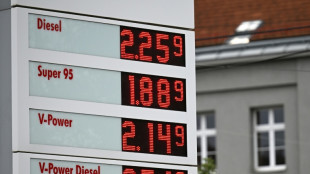 Average EU diesel price hits record 2.23 euros a litre: AFP analysis

 Whitetip Investments Marks 10 Years of Regulation, Transparency & Responsible Trading

 Stocks fall, oil prices rise as global bonds under pressure

 Hungary detects invasive spotted lanternfly for first time in EU

 Forex Expo Dubai 2026 Breaks Guinness World Record Again With 23,816 Attendees

 Asian markets fall on US-China jitters as leaders meet
 As Moscow steps up attacks, Kyiv residents brace for harsh winter

 Markets mixed as China's Xi arrives for US talks

 Archaeological 'breakthrough' could confirm origins of Paris

 Australian PM says OpenAI hacked government health website

 Rio breaks record for rainiest September amid powerful El Nino
 Mandela Digital Extends Early Access Programme to 11 February 2027 Following Strong Response

 McDonald's to boost franchisees as inflation weighs on consumers
 Archaelogical 'breakthrough' could confirm origins of Paris
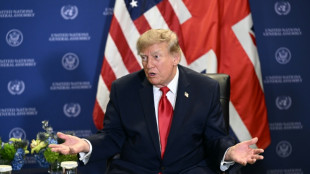
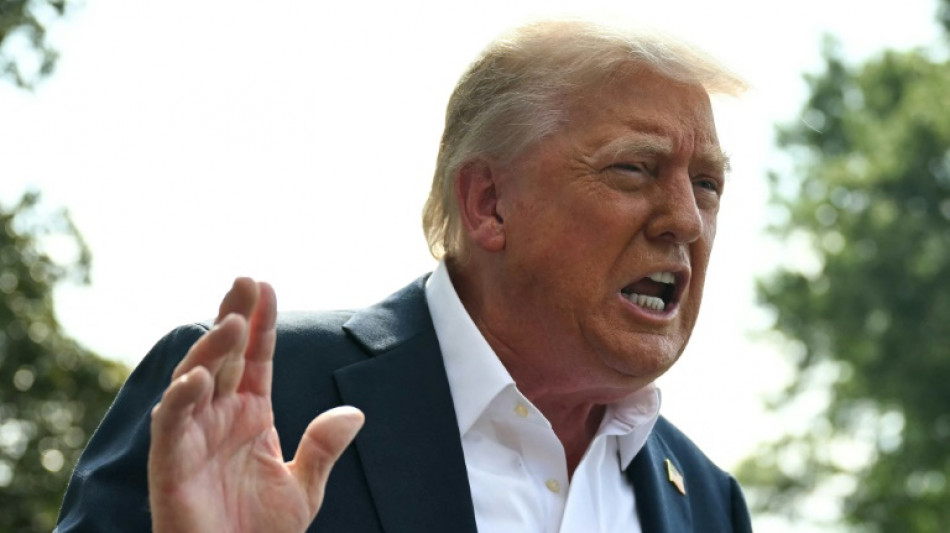
European countries are not all equally exposed to the US market and so will not suffer the same consequences should President Donald Trump go ahead with his threats to impose 30-percent tariffs on the European Union.
Ireland, with a major pharmaceutical industry, is in the front line along with Germany, for whom the United States is a major outlet for its cars, steel and machine tools.
France is less exposed, even if it does have aeronautics, food, wine and luxury goods companies that risk losing markets.
The EU as a whole has an annual trade surplus with the United States of $235.6 billion, according to the Bureau of Economic Analysis (BEA), which reports to the U.S. Department of Commerce. Only China has a higher amount.
- Ireland, Europe's lab -
Ireland has the largest surplus among EU members, at $86.7 billion.
That is largely due to the presence of major American pharmaceutical companies such as Pfizer, Eli Lilly, and Johnson & Johnson. They all set up in Ireland to benefit from a 15 percent corporate tax, compared to 21 percent in the United States.
These companies can thus host their patents in Ireland and sell on the American market, where drug prices are traditionally higher than in the rest of the world.
Ireland also hosts most of the European headquarters of American tech giants, such as Apple, Google and Meta, also attracted by the attractive Irish tax system.
Overall, pharmaceuticals account for 22.5 percent of EU exports to the United States, according to Eurostat, with many major players having announced major investments in the United States.
- Germany, the industrial powerhouse -
Germany, the EU's largest economy, is under particular pressure due to its dependence on exports: it has a surplus of $84.8 billion with the United States, thanks to its large automobile, chemical, steel and machine industries.
The United States accounts for 23 percent of the revenue of Mercedes Benz. While some of that is accounted for by SUVs manufactured in the United States and exported, they risk being hit by any tariff reprisals from the EU.
The Federation of German Industries (BDI) reacted promptly to Donald Trump's announcements on Saturday, calling on the EU and the United States to "quickly find solutions and to avoid an escalation".
- Italy, France in the second line -
Italy and France, with surpluses of $44 billion and $16.4 billion respectively, according to US statistics (French data says the surplus is much smaller), would appear to be less affected. But some sectors are heavily exposed.
The food and wine industries would be particularly affected in both countries, as is also the case for Spain.
A 30-percent tariff would be a "catastrophe" for the French wine and spirits sector, Jerome Despey, head of the viticulture branch of the FNSEA union, said Saturday.
Coldiretti, Italy's main agricultural organisation, said Saturday that tariffs of 30 percent would cost US consumers and Italian food producers some $2.3 billion.
Like Germany, Italy is also concerned about its automotive sector. Franco-Italian manufacturer Stellantis (particularly Fiat and Peugeot) has suspended its forecasts for the year due to these uncertainties.
Exposed French sectors also include aeronautics and luxury goods. LVMH, the world's largest luxury conglomerate, makes a quarter of its sales in the United States.
About a fifth of France's exports to the United States come from the aerospace industry, much of it from Airbus.
Austria and Sweden also have surpluses with the United States, $13.1 billion and $9.8 billion respectively.
D.Philippon--CPN